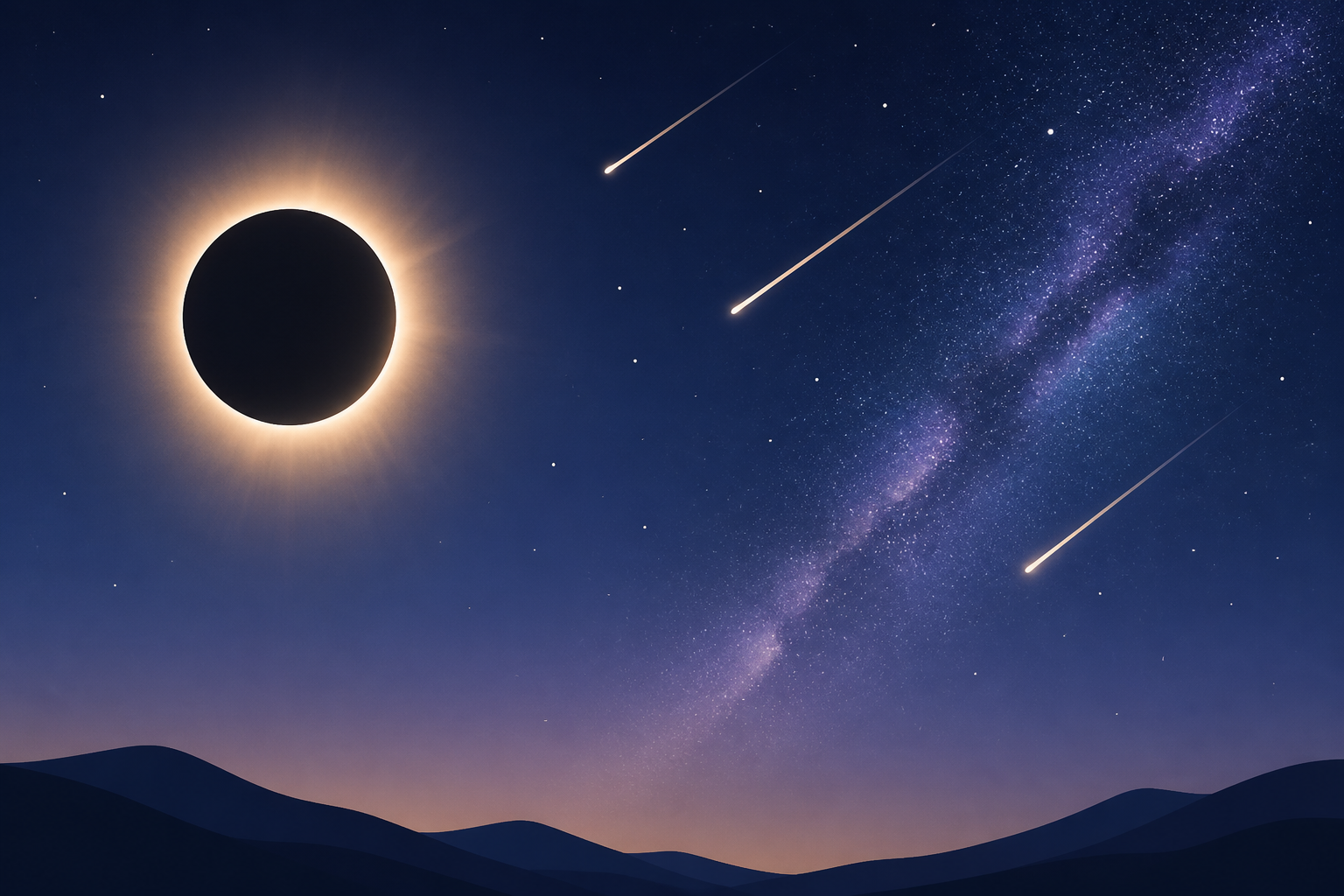
AI Generated Image
Total eclipse, shooting stars, and the Milky Way: Why Aug. 12 could be the greatest single day and night for skywatching for years
Live Science • • general
Key Points:
- On August 12, a rare combination of celestial events will occur, including a partial solar eclipse visible across North America, Europe, and North Africa, with a total eclipse path crossing eastern Greenland, western Iceland, and northern Spain.
- Northern Canada will witness the deepest partial eclipse in North America, with up to 93% sun coverage, while major cities like London and Paris will see over 90% coverage; viewers are advised to use certified solar eclipse glasses and proper solar filters.
- After sunset, Venus will reach dichotomy, appearing half illuminated and visible through small telescopes or binoculars, offering a unique viewing opportunity.
- The Perseid meteor shower will peak overnight on August 12-13 under a new moon, allowing observers in dark skies to see up to 75 meteors per hour, with the best viewing between midnight and 2 a.m. local time.
- Observers in rural areas will also enjoy spectacular views of the Milky Way, making August 12 potentially one of the best skywatching days and nights of the year.


