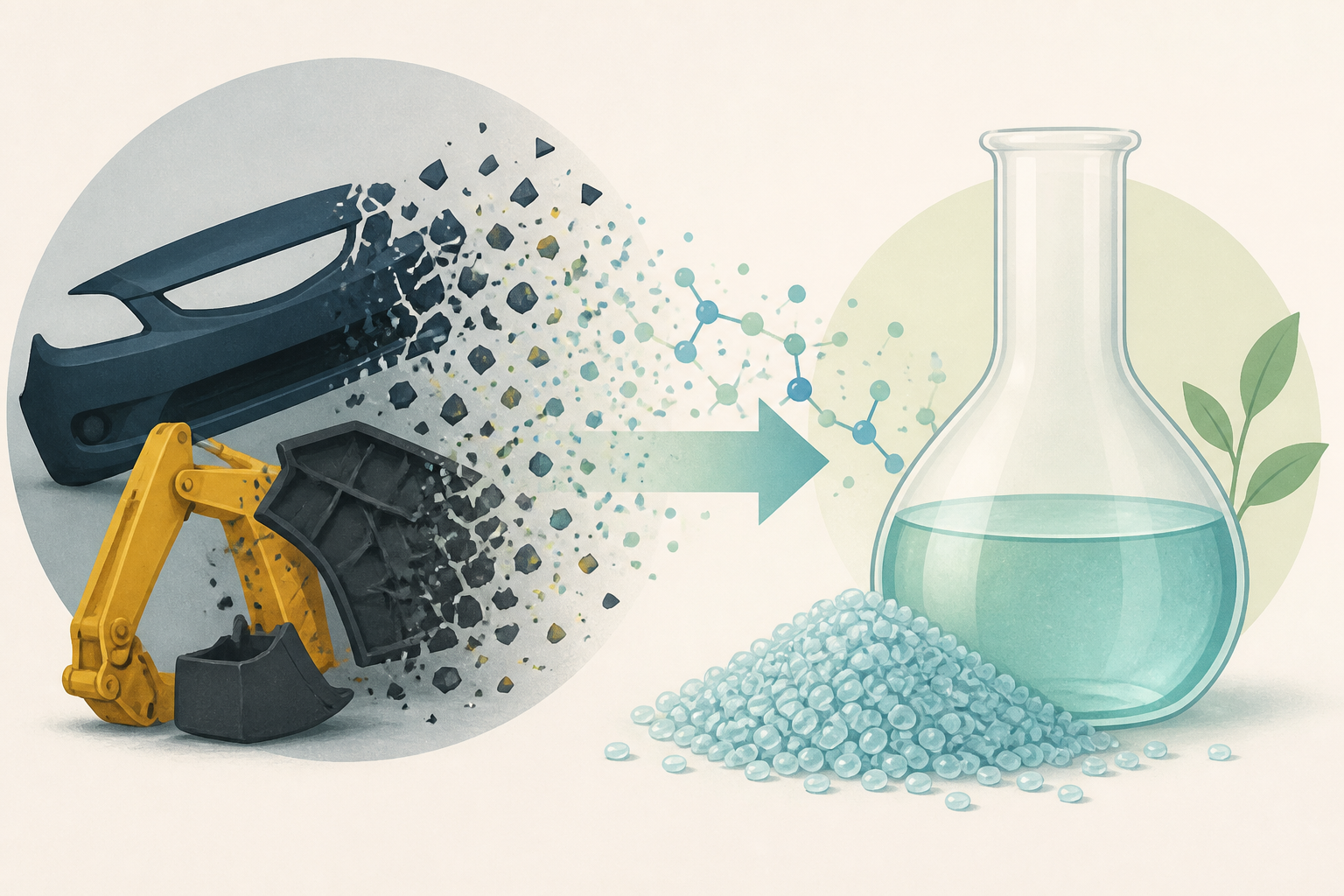
AI Generated Image
Tough vehicle and construction plastics dissolve into reusable material with low-waste method
Phys.org • • science
Key Points:
- Researchers from The University of Texas at Austin and Sandia National Laboratories have developed a new recycling method that breaks down durable poly(dicyclopentadiene) (pDCPD) plastics using less energy and producing less waste than incineration.
- The process involves dissolving pDCPD in an environmentally friendly solvent with a ruthenium-containing catalyst, allowing the plastic to deconstruct and leave behind reusable fibers and powder for new plastics.
- This technique offers a practical recycling solution for pDCPD, a tough plastic commonly used in vehicle bumpers and construction equipment, which previously had no effective recycling method and was often incinerated.
- A key question remains about whether the ruthenium catalyst can be recovered and reused to enhance the sustainability and cost-effectiveness of the process.
- The discovery was unexpected, originating from an experiment intended to strengthen pDCPD, which instead led to its breakdown, challenging previous assumptions about the material's stability.


