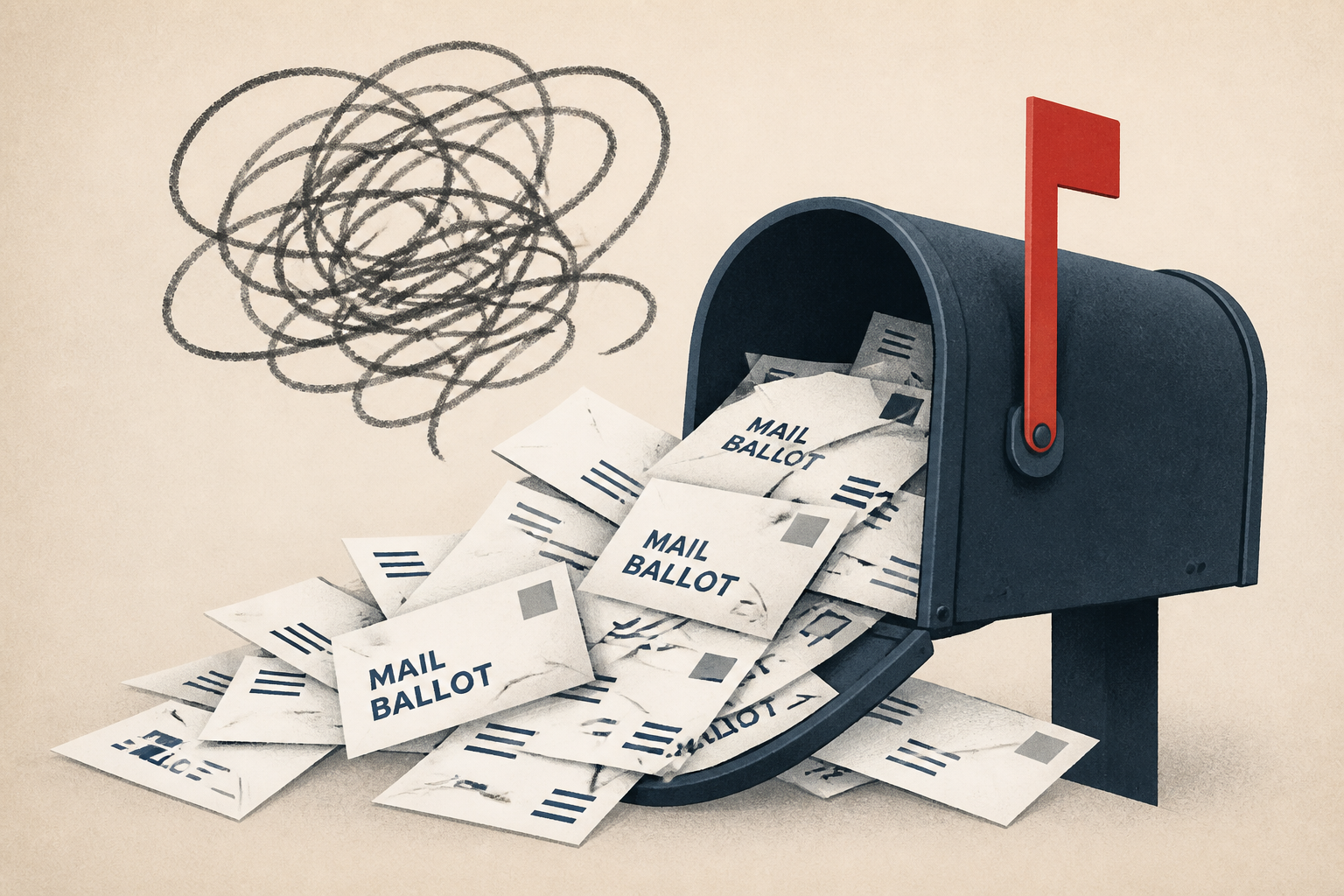
AI Generated Image
Trump is getting the mail-ballot chaos he wants.
Slate • • nation
Key Points:
- President Trump’s executive order aiming to nationalize U.S. elections through the U.S. Postal Service (USPS) and Homeland Security has sparked ongoing legal battles, with the Supreme Court allowing it to proceed temporarily but leaving its merits undecided, leading to further injunctions and litigation.
- The order mandates new ballot envelope designs, a 90-day notification to USPS, and requires states to provide USPS with lists of mail ballot recipients, potentially enabling USPS to refuse ballots not matching federal lists, which many states find costly and practically unfeasible so close to the midterms.
- States are divided in their readiness: those relying heavily on mail voting face high costs to comply; states that have already printed ballots risk having to reprint; and decentralized election states face organizational challenges, increasing the risk of ballot rejections and voter disenfranchisement.
- Legal experts warn that while the order may not improve election integrity, it is likely to sow confusion and disenfranchise voters, playing into Trump’s narrative of election fraud and potentially fueling federal investigations and lawsuits that could undermine public trust in the midterm elections.
- Despite Trump’s efforts, broader attempts to restrict mail voting or impose proof of citizenship have largely failed, reflecting the resilience of U.S. election systems amid ongoing political and legal turmoil surrounding election administration.


