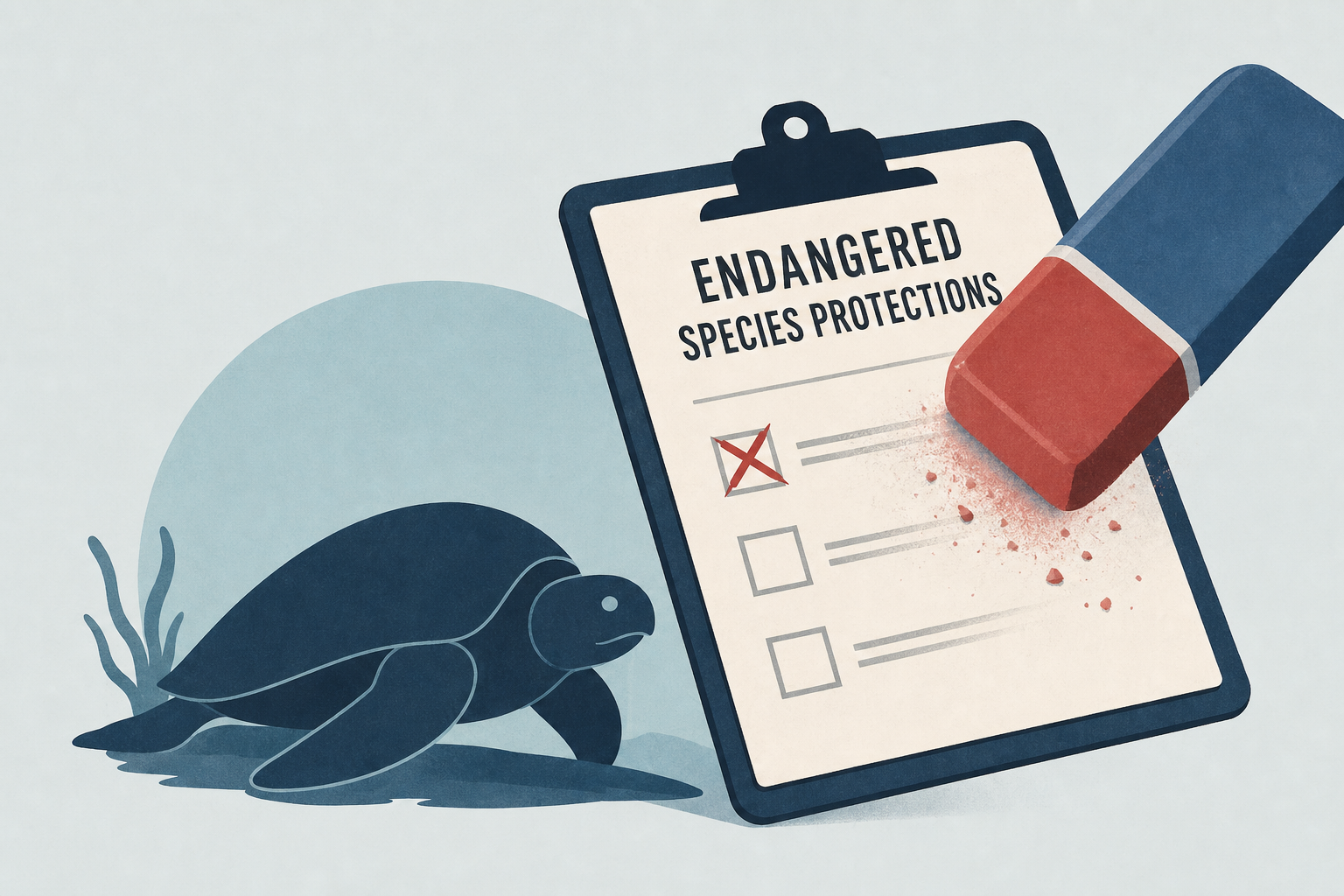
AI Generated Image
Trump’s Fish and Wildlife Service just made it much easier to harm endangered species
vox.com • • nation
Key Points:
- The Trump administration has issued a new rule narrowing the definition of "harm" under the Endangered Species Act (ESA), excluding habitat destruction that indirectly threatens endangered species, a shift that environmental advocates say undermines decades of conservation efforts.
- Previously, "harm" included habitat destruction that impaired essential behaviors like breeding, but the new rule limits it to direct, intentional harm to individual animals, allowing activities like logging or construction that could indirectly drive species to extinction without clear legal repercussions.
- This change threatens the viability of Habitat Conservation Plans, which have been crucial in balancing development with species protection by mitigating incidental harm, as these plans rely on the broader, previous definition of harm.
- The rule faces legal challenges from environmental groups and may be reviewed by the Supreme Court, especially following the recent overturning of the Chevron doctrine, which previously gave agencies deference in interpreting ambiguous statutory language.
- Critics warn that if the narrower interpretation of harm is upheld, it could severely weaken the ESA's ability to prevent extinctions by removing vital protections for the habitats that endangered species depend on for survival.


