AI Image
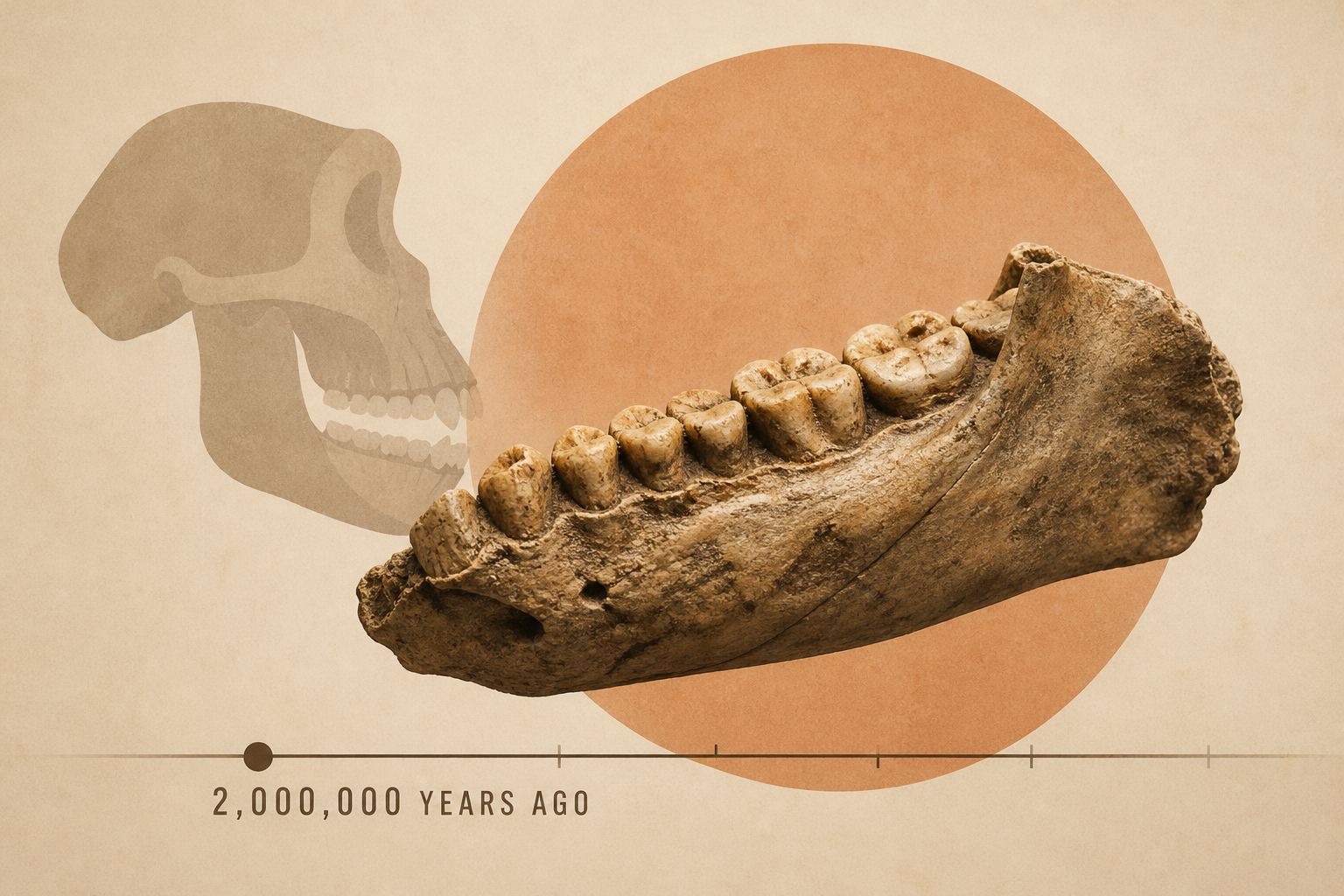
Two-million-year-old jaw ridge found in a young Australopithecus africanus fossil
Archaeology News Online Magazine • • science
Key Points:
- Researchers at La Trobe University discovered a pronounced mandibular torus, a bony ridge inside the lower jaw, in a 2.1 to 2.8 million-year-old Australopithecus africanus fossil (Sts 52b) from South Africa, pushing the known age of this trait back beyond two million years.
- The mandibular torus, commonly seen in modern humans as a harmless jaw growth, was found in a subadult specimen, challenging the idea that it develops only from prolonged chewing stress in adults.
- The ridge on Sts 52b closely resembles clinical cases in modern people, suggesting that such jaw features were present in young ancient hominins, making them feel more familiar to us.
- The absence of mandibular tori in other early human relatives like Paranthropus robustus, despite their strong chewing adaptations, indicates that chewing forces alone do not explain the trait’s formation.
- The study proposes that genetic, environmental, and functional factors likely interact to produce the mandibular torus, highlighting a complex evolutionary story of human jaw development; findings are published in Evolutionary Human Sciences.


