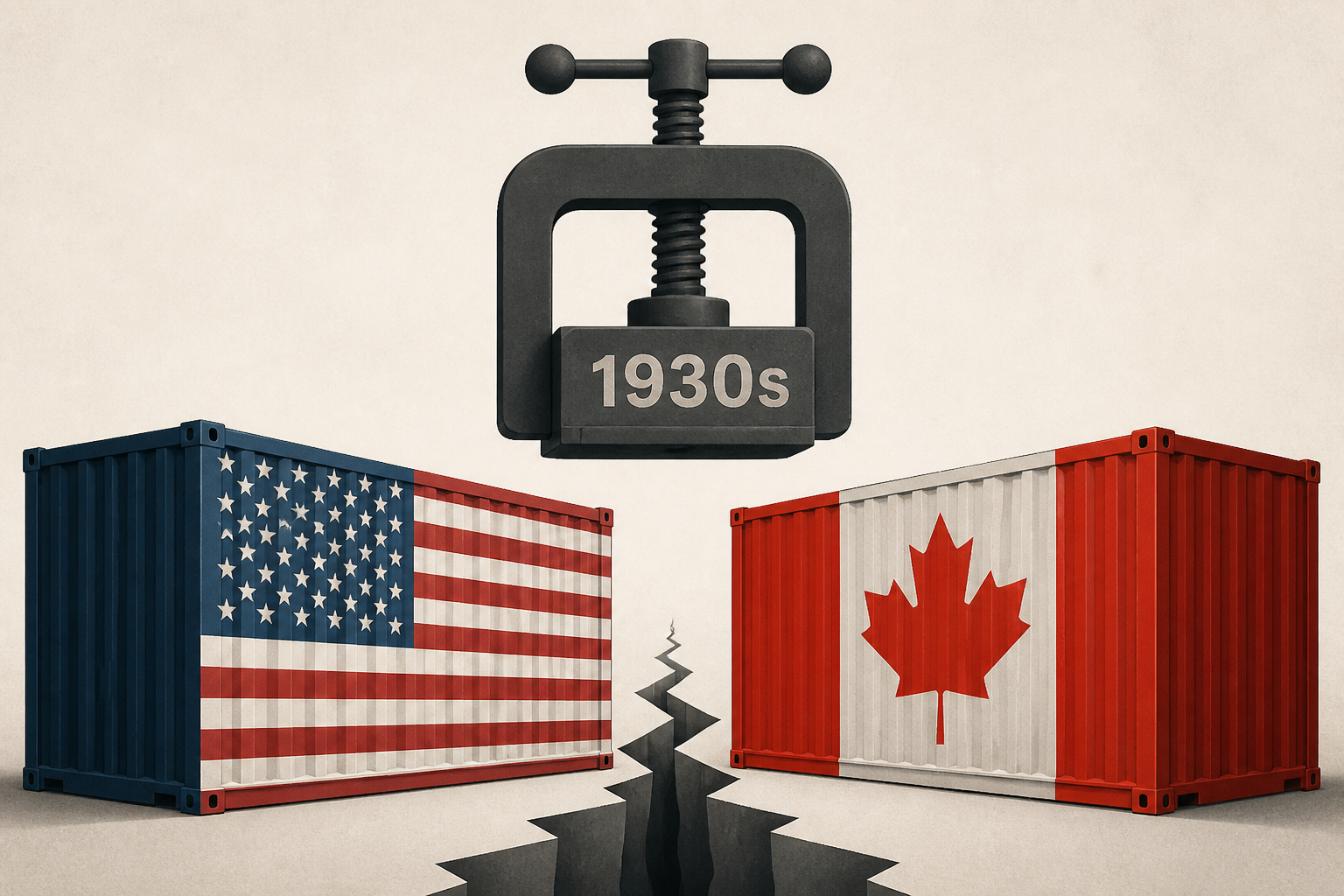
AI Generated Image
US-Canada trade war deepens as Trump revives Depression-era trade tool
The Conversation • • nation
Key Points:
- In August 2026, Canada imposed tariffs of up to 50% on hundreds of U.S. goods in response to similar U.S. tariffs on Canadian products, following the collapse of trade negotiations between the two countries.
- The U.S. invoked Section 338 of the Smoot-Hawley Tariff Act of 1930 for the first time, allowing President Trump to unilaterally impose 50% tariffs on Canadian goods due to alleged discriminatory trade practices.
- Key sticking points in the failed negotiations included U.S. resistance to reducing tariffs on steel, aluminum, and autos, and demands for Canadian trade policy alignment with U.S. interests, which Canada viewed as a threat to its sovereignty.
- The tariffs impact goods heavily traded across the U.S.-Canada border, with Canadian retaliation targeting products from U.S. swing states, potentially influencing the 2026 midterm elections and increasing costs for U.S. consumers and businesses.
- The trade war risks reversing decades of trade liberalization and economic growth fostered by the post-World War II global trading system, with uncertain political outcomes depending on future U.S. election results.


