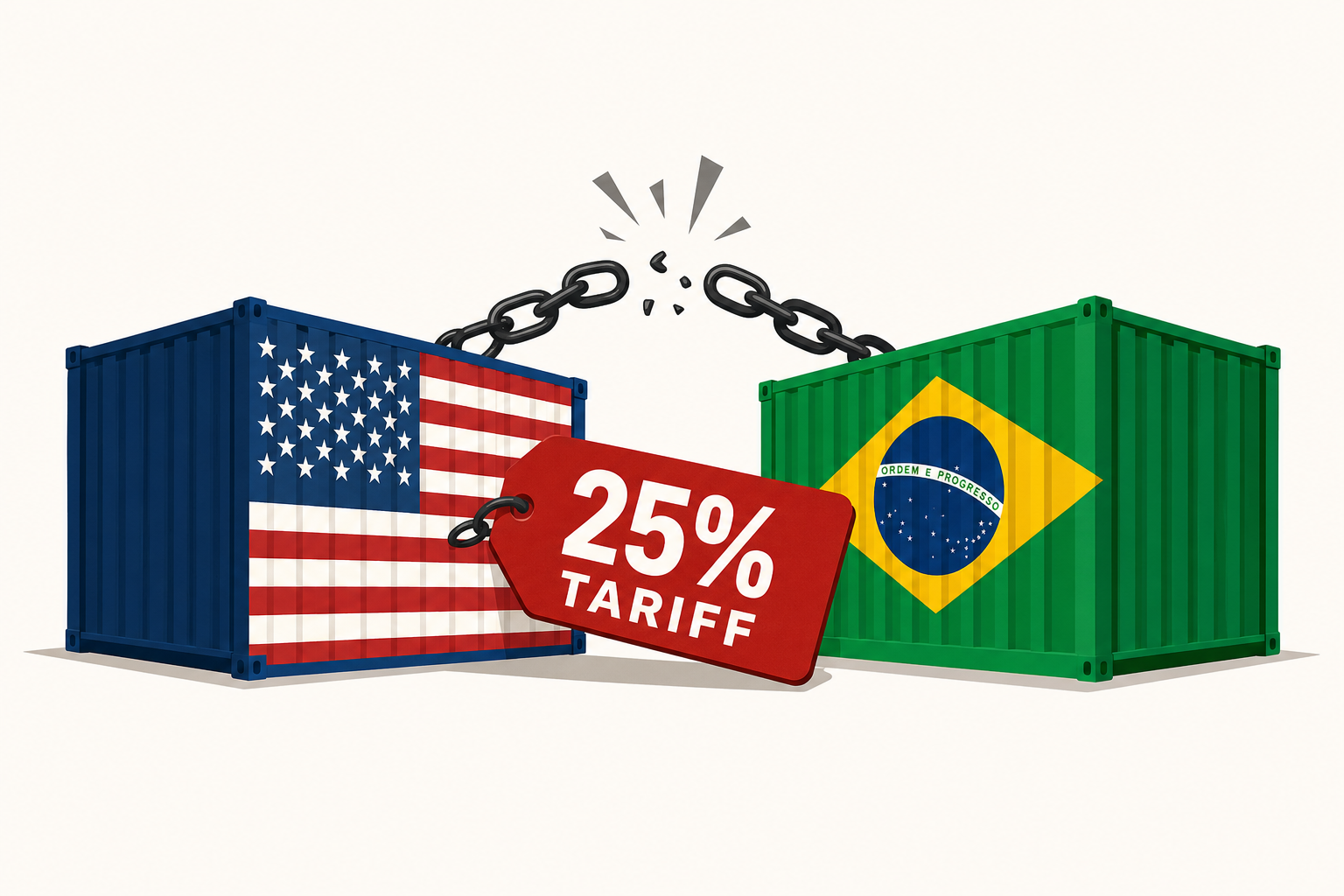
AI Generated Image
U.S. slaps 25% tariff on Brazilian goods over unfair trade practices
CNBC • • general
Key Points:
- The U.S. will impose 25% tariffs on most imports from Brazil starting July 22, following a yearlong investigation into alleged unfair trade practices by Brazil, including restrictions on American tech firms and preferential tariffs for other countries.
- The tariffs, enacted under Section 301 of the Trade Act of 1974, exclude certain products such as beef, orange juice, aircraft, and energy goods, and aim to address issues like weak intellectual property enforcement and ethanol market barriers.
- The move reignites tensions after failed negotiations with Brazil's government, with U.S. officials accusing President Luiz Inacio Lula da Silva of negotiating in bad faith and prioritizing ego over a deal.
- This action follows the U.S. Supreme Court's earlier decision that struck down former President Trump's 50% tariffs on Brazilian goods, leaving only a 10% global tariff in place, prompting the current administration to use Section 301 authority to impose new levies.
- Additionally, a separate U.S. investigation into forced labor practices in Brazil may result in an extra 12.5% tariff on Brazilian imports, with a decision expected next week.


