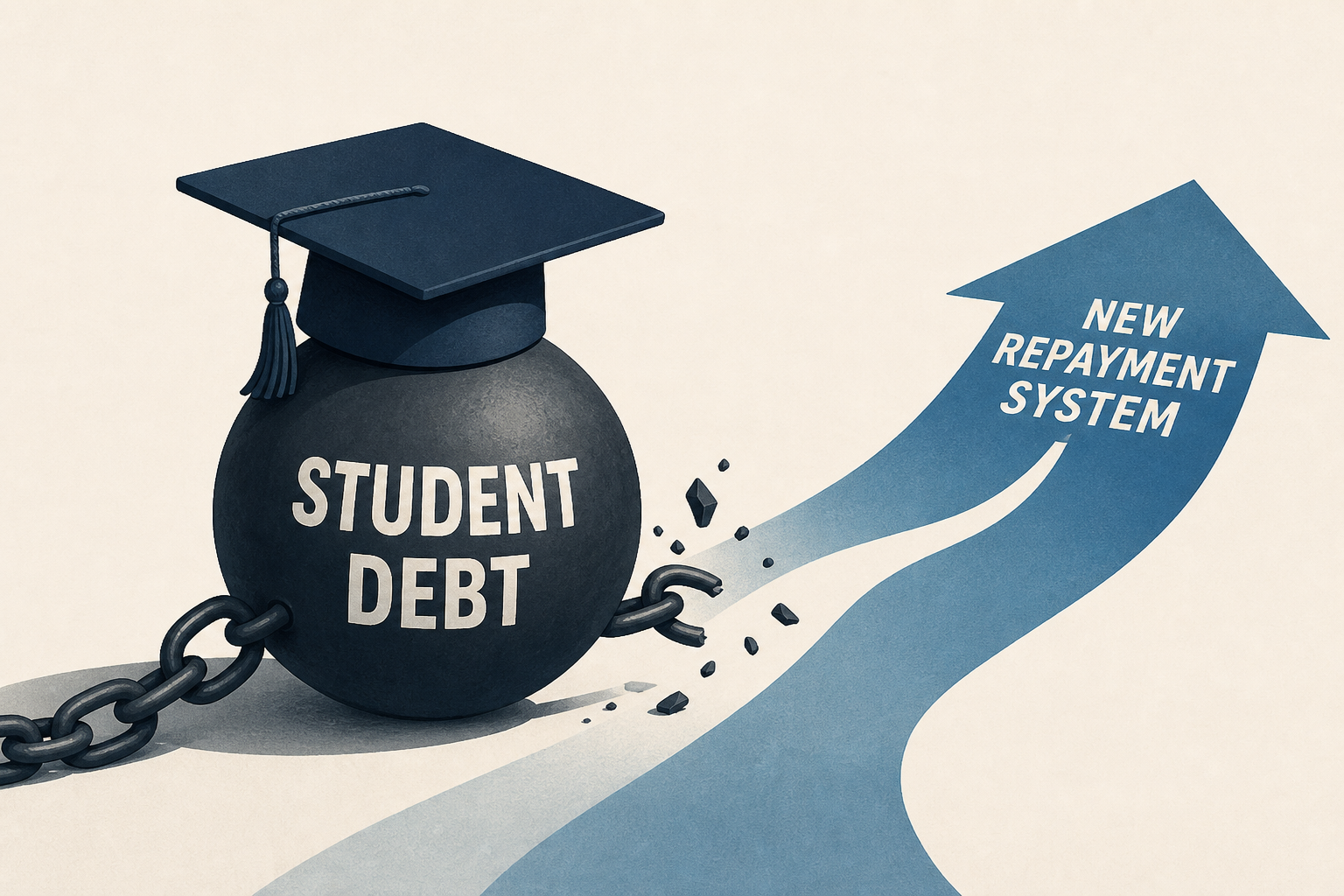
AI Generated Image
US student debt repayment system is being overhauled - here’s what to know
The Guardian • • business
Key Points:
- The U.S. student loan repayment system will undergo major changes starting 1 July, ending the Biden-era Save repayment plan following a federal appeals court ruling, and requiring borrowers to switch to different, often less forgiving, repayment options.
- Over 7 million borrowers currently on the Save plan must choose a new repayment plan within 90 days or be automatically enrolled in a fixed-income plan, which typically has higher monthly payments and no loan forgiveness.
- New repayment options for borrowers taking out loans after 1 July include the repayment assistance plan (RAP), based on adjusted gross income with forgiveness after 30 years, and the tiered standard plan, a fixed-payment option lasting 10 to 25 years.
- Experts warn that the changes, driven by the Trump administration’s policy to simplify and tighten repayment, reduce forgiveness options and could make college less affordable, impacting borrowers’ financial stability and wealth-building potential.
- Students and recent graduates express concern that the overhaul will increase financial pressure, discourage further education, and delay wealth accumulation due to higher monthly payments and stricter repayment timelines.


![Apple releases iOS 26.6 beta 2 for iPhone, here’s what to expect [U]](https://media-cdn.cashwalklabs.io/https%3A%2F%2Fs3.us-west-2.amazonaws.com%2Fimages.cashwalklabs.io%2F0_admin%2Fnews-ai-images%2F019ed1d3-3248-75fa-8981-d1d7b9ca82b6.webp?format=webp&w=120&h=80)


