AI Image
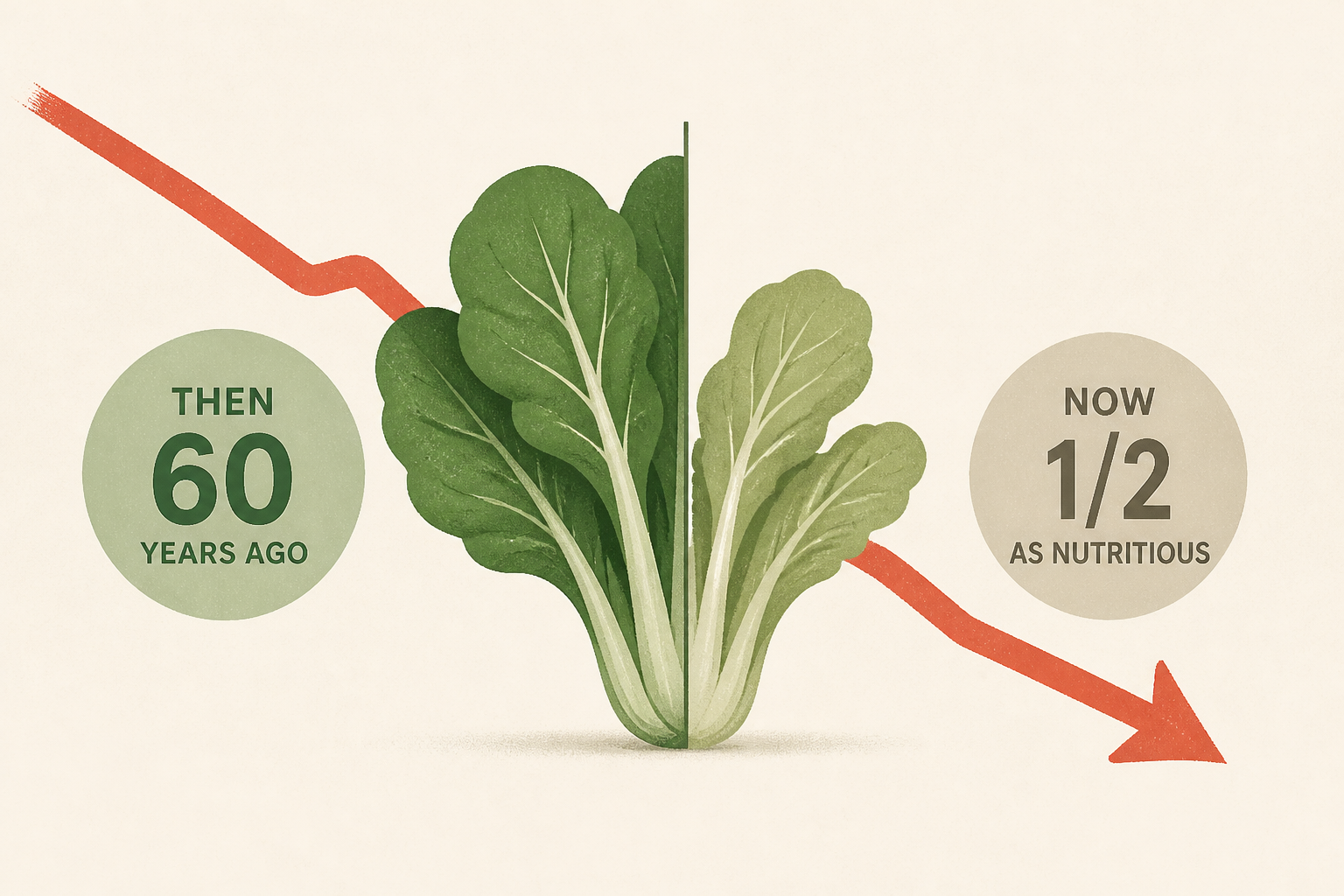
Vegetables are now half as nutritious than 60 years ago. Experts have worked out why
The Independent • • health
Key Points:
- A study by Deep Science Ventures reveals that wheat, apples, carrots, and other crops have lost 20-50% of key nutrients since the 1960s due to declining soil quality, requiring twice the amount of produce today to obtain the same mineral intake.
- The decline in nutrient density, combined with the increased use of GLP-1 weight-loss drugs like Ozempic and Mounjaro, may cause around 5 million UK working-age adults to fall below safe levels of essential vitamins and minerals.
- Despite a 215% increase in cereal yields per hectare and reduced undernutrition globally, over 2 billion people still suffer from micronutrient deficiencies, including in developed countries where diets can be calorie-rich but nutrient-poor.
- Nutrient deficiencies such as selenium, zinc, iron, and potassium have serious health consequences, including weakened immune systems, increased heart disease and stroke risk, and fatigue.
- Experts emphasize that improving soil health through sustainable farming practices is crucial to restoring nutrient density, enhancing yields, and boosting climate resilience, with current tools available to address these challenges effectively.


