AI Generated Image
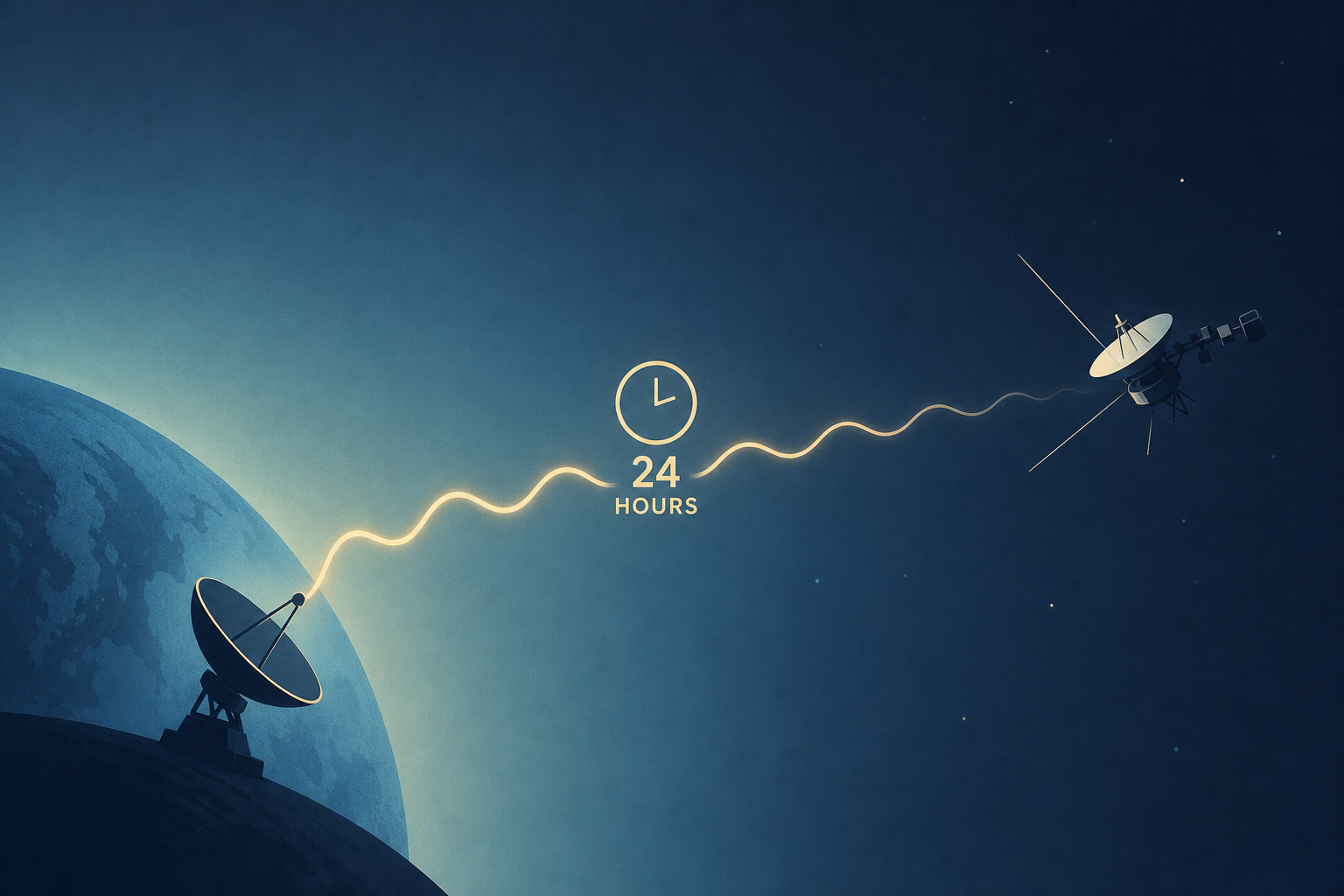
Voyager 1 launched in 1977 on a four-year mission and is still flying 49 years later, now so far away that in November 2026 a radio signal will take a full 24 hours to reach it — so when engineers say
19FortyFive • • science
Key Points:
- Voyager 1, launched in 1977 for a four-year mission, has far exceeded expectations and remains operational nearly 49 years later, currently about 15.7 billion miles from Earth and traveling at 38,000 mph.
- On November 18, 2026, Voyager 1 will reach a historic milestone of being one light-day away from Earth, meaning radio signals will take 24 hours to travel one way, making communication with the spacecraft delayed by two days.
- The spacecraft is powered by diminishing radioisotope thermoelectric generators, currently producing about 250 watts, forcing NASA engineers to shut down instruments and heaters over time to conserve power, leaving only two scientific instruments operational.
- Critical thrusters thought dead for two decades were successfully revived in 2025 to maintain Voyager 1’s antenna alignment for data transmission, highlighting ongoing efforts to extend the mission despite aging hardware and increasing risks.
- Voyager 1 is expected to transmit data until the mid-2030s before going silent, but it will continue coasting through interstellar space indefinitely, carrying the Golden Record—a time capsule of Earth’s culture and sounds—intended to last nearly a billion years.


