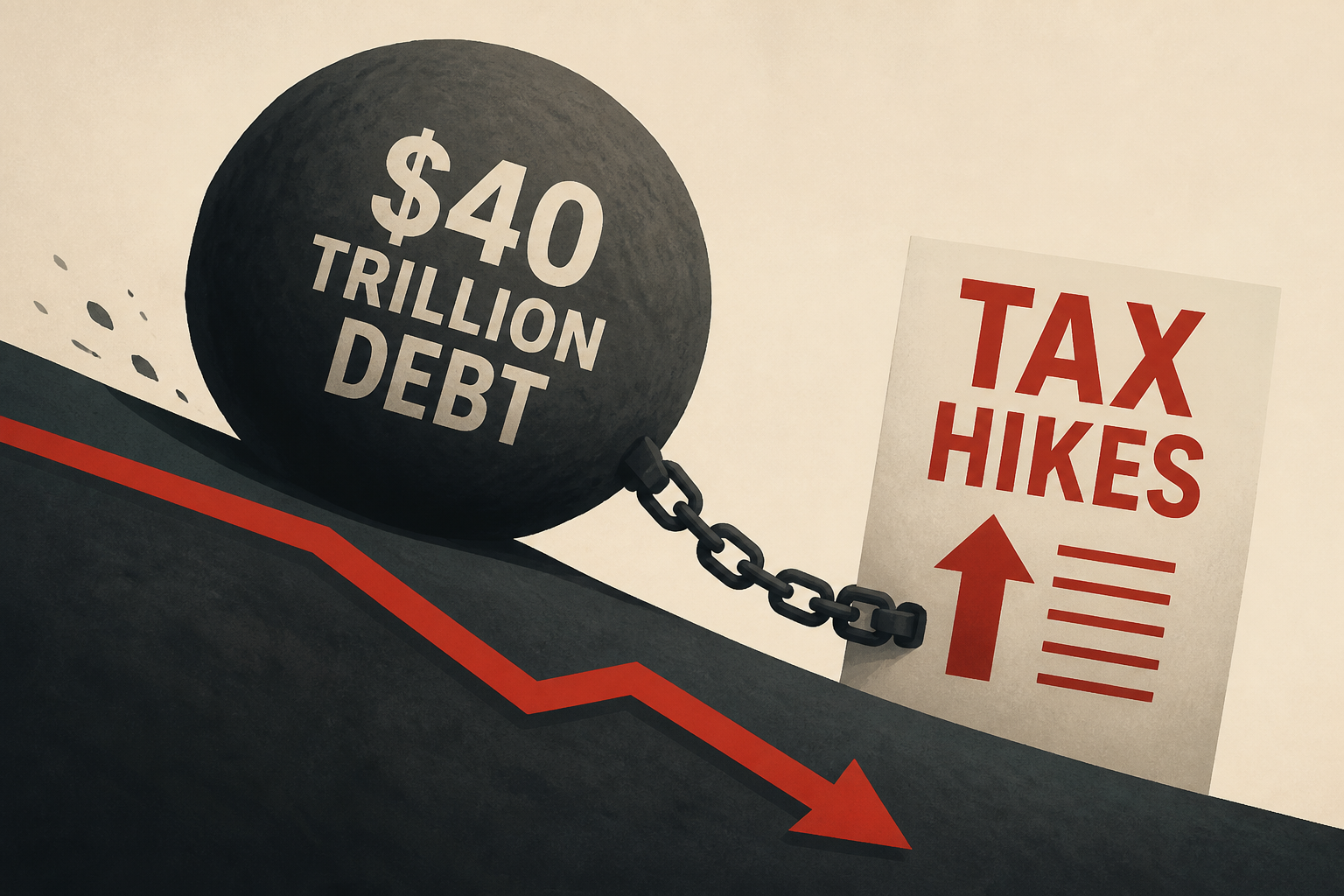
AI Generated Image
Wall Street economists issue warning that Trump’s $40 trillion debt nightmare will force brutal tax hikes
The Independent • • business
Key Points:
- President Trump promised fiscal stability by reducing federal spending and ending costly foreign conflicts, but 19 months into his second term, the national debt exceeded $40 trillion, with increased government expenditures and a costly conflict in Iran worsening fiscal conditions.
- Analysts warn the growing debt and expensive government borrowing may force future leaders to implement tough measures like higher taxes or entitlement cuts, with experts criticizing Trump’s record as fiscally unsuccessful despite inherited challenges.
- Both major parties share responsibility for the debt increase due to past tax cuts and spending, while demographic pressures from retiring baby boomers strain Social Security and Medicare funding, complicating long-term fiscal sustainability.
- Trump’s tax reforms shifted the tax burden toward wage earners and households, deviating from traditional conservative policies, and efforts to cut spending fell short, with claimed savings from government efficiency initiatives largely unverified.
- Despite Trump’s optimistic economic growth projections, experts including Federal Reserve officials caution that current capital scarcity and rising interest rates pose significant challenges to managing the national debt and sustaining economic expansion.


