AI Image
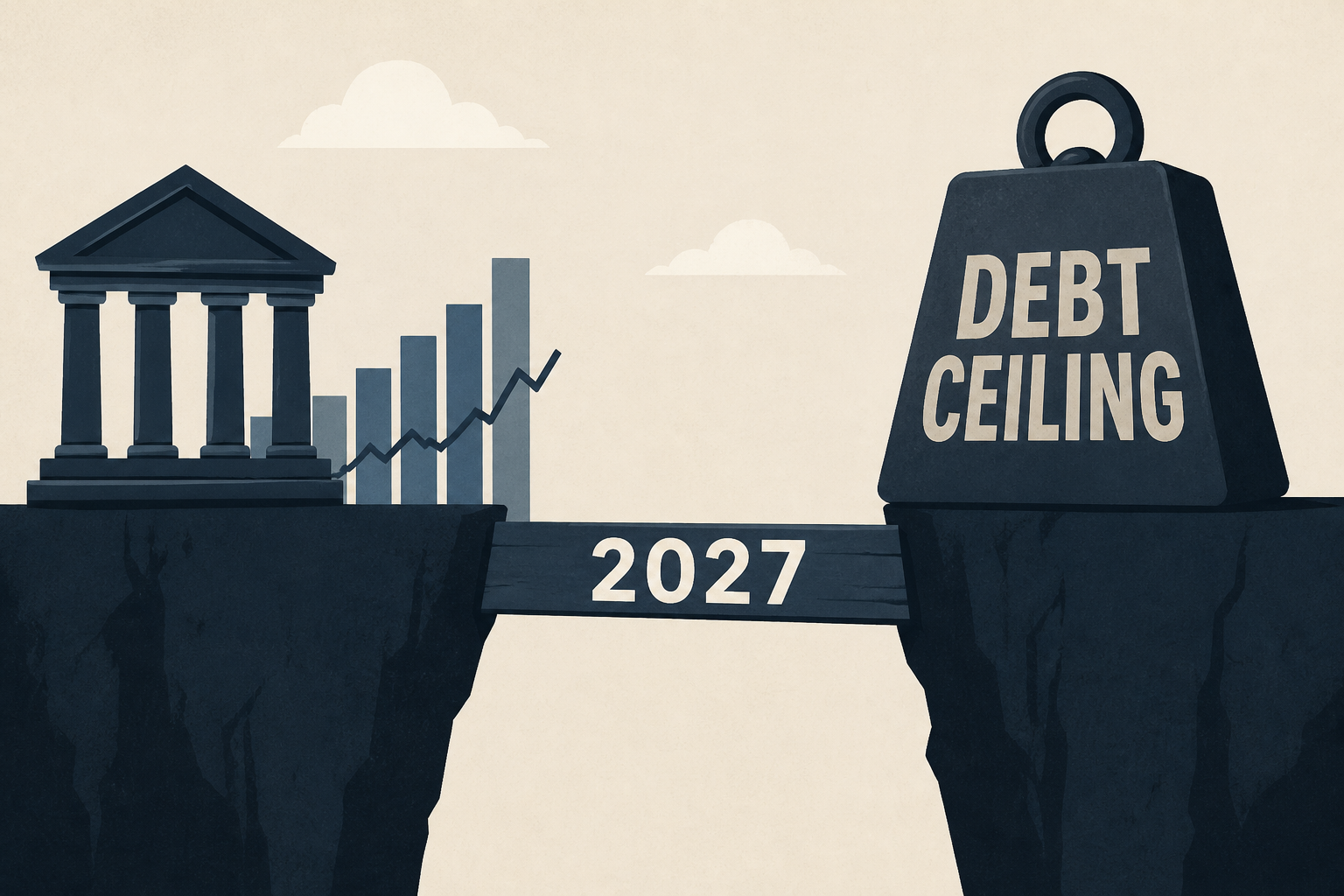
Wall Street Is Already Bracing for a 2027 Debt Ceiling Fight
24/7 Wall St. • • business
Key Points:
- Following the Democratic midterm sweep on November 4, 2026, both stocks and long-term Treasurys rose, with the SPDR S&P 500 ETF up 1.65% and the iShares 20+ Year Treasury Bond ETF increasing 0.8%.
- Democrats gained leverage over the $41.1 trillion debt ceiling, which was raised by $5 trillion in 2025, but Treasury data shows only about $754 billion room remains before reaching the limit amid planned borrowing exceeding that amount.
- The Treasury has not announced an X-date for default, but estimates place the debt ceiling breach between late winter and mid-summer 2027, with extraordinary measures potentially lasting six to nine months afterward.
- Long-term bonds, such as those held by TLT, face the highest risk in a debt ceiling standoff, as technical default or downgrades would likely increase yields and cause significant price declines, unlike short-term notes which carry less price risk.
- Upcoming Treasury refunding auctions and the October jobs report will be key indicators of market demand and risk perception, with any formal Democratic demands or updated X-date estimates potentially increasing uncertainty for long-term Treasurys.


