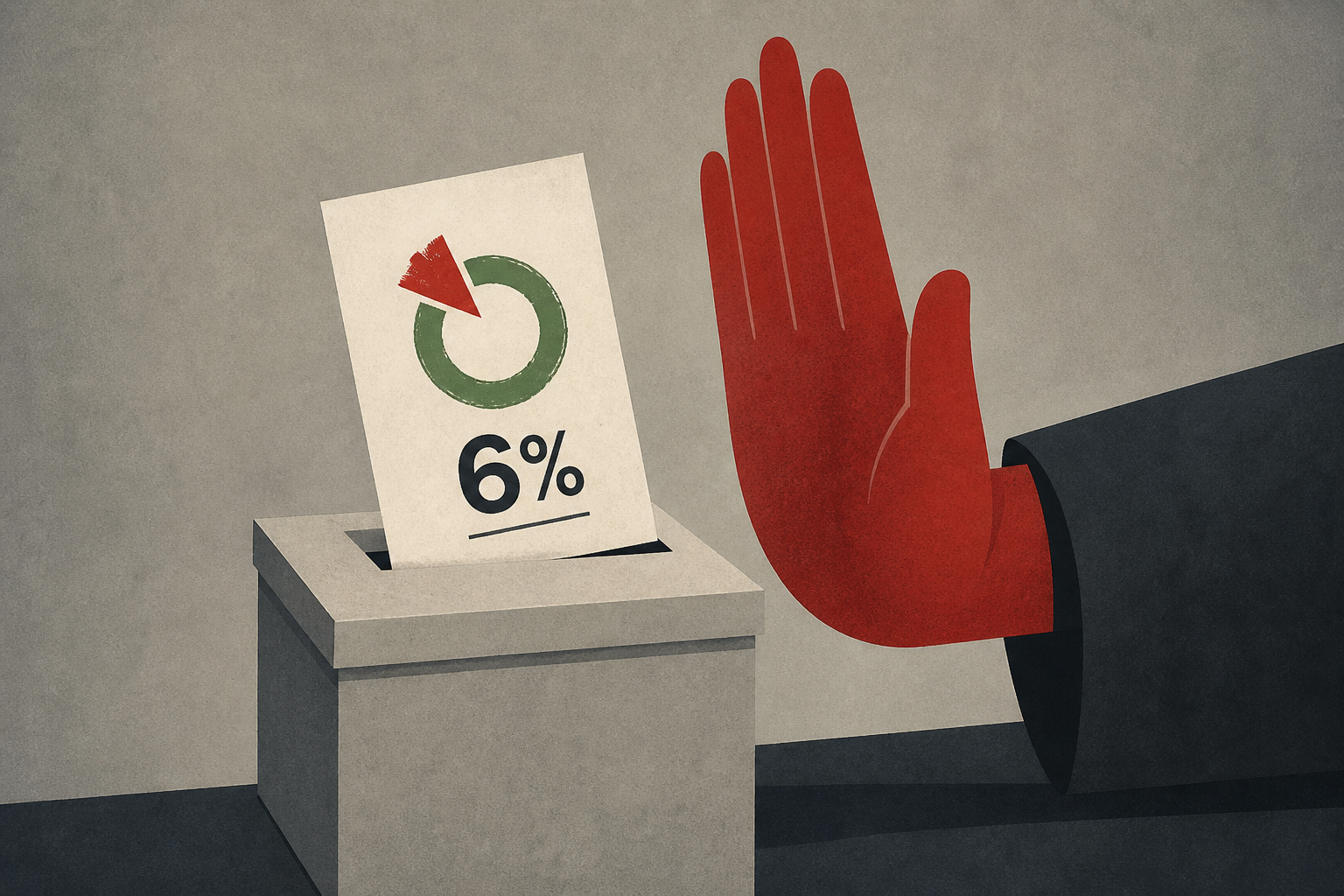
AI Generated Image
war party, Yabloko, onto the ballot to bleed protest votes. But when it started polling at 6%, the Supreme Court stepped in. — Meduza
Meduza — Новости • • world
Key Points:
- On August 10, Russia’s Supreme Court removed the opposition party Yabloko from the State Duma ballot following a suit by the far-right Rodina party, which accused Yabloko of procedural violations and foreign funding, claims Yabloko denies as politically motivated.
- Yabloko has struggled in recent elections, failing to clear the 5% threshold since 1999 and losing state funding after the 2021 election; despite this, it maintains strong regional branches and has been targeted by authorities who have labeled prominent members as “foreign agents” or extremists, barring them from running.
- Political strategists suggest Yabloko was initially registered to split the protest vote and weaken the Communist Party rather than the pro-Kremlin New People party, reflecting complex power dynamics within Russia’s political administration and security services.
- Despite official suppression, Yabloko has seen a surge in popularity among young Russians, with social media engagement rising significantly and private polls indicating support between 5% to 9% in major cities like Moscow and St. Petersburg.
- Sources close to the Kremlin indicate that President Vladimir Putin personally approves key election decisions, including Yabloko’s registration and removal, reflecting a controlled electoral environment aimed at managing opposition influence in the State Duma.


