AI Image
Watching as a giant star swallowed its neighbor and exploded
Ars Technica • • science
Key Points:
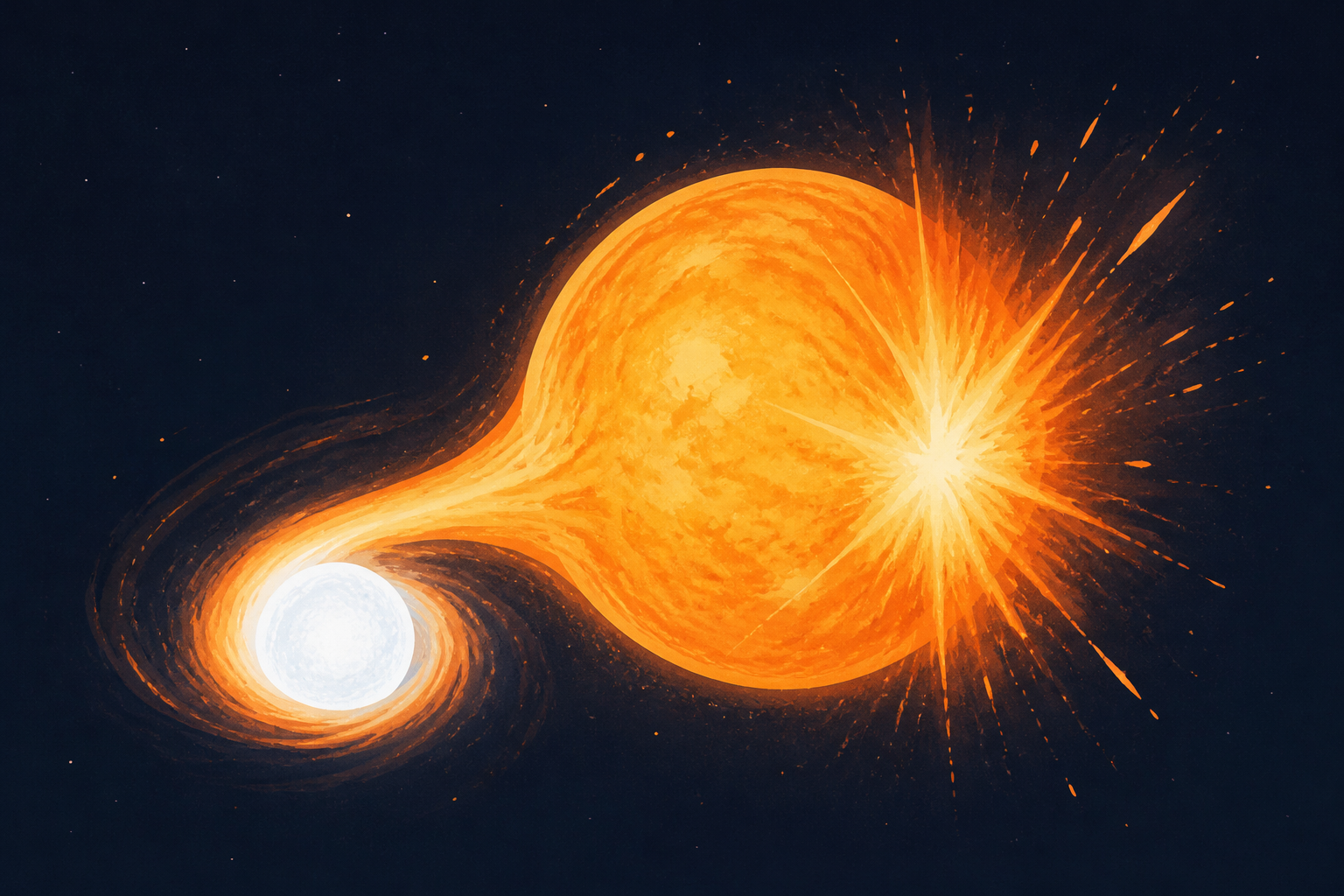
- Astronomers led by Viraj Karambelkar observed for the first time the entire process of common envelope evolution in a binary star system in the Andromeda Galaxy, where a giant star slowly engulfed its smaller companion over nearly a decade.
- The system, named AT 2025abao, showed a gradual brightening in infrared light followed by a dramatic eruption in late 2025, consistent with a luminous red nova caused by the companion plunging into the giant's core and triggering an explosive event.
- Analysis revealed that during the slow spiral-in phase, most energy was emitted as light, but the final plunge released far more energy, primarily used to eject a portion of the giant's envelope at high speeds, suggesting the companion likely merged rather than survived.
- The observations support theories that binary interactions shape hourglass-shaped nebulae around dying stars and provide new insights into the energy dynamics of common envelope events, challenging some assumptions in existing models.
- Continued monitoring of AT 2025abao aims to determine if the companion survived or merged, while future telescopes like the Vera Rubin Observatory are expected to detect many more such events in nearby galaxies, advancing understanding of stellar evolution.


