What Happens When Light Goes Boom? Part 3: Brad Bradington Sprints
Universe Today • • science
Key Points:
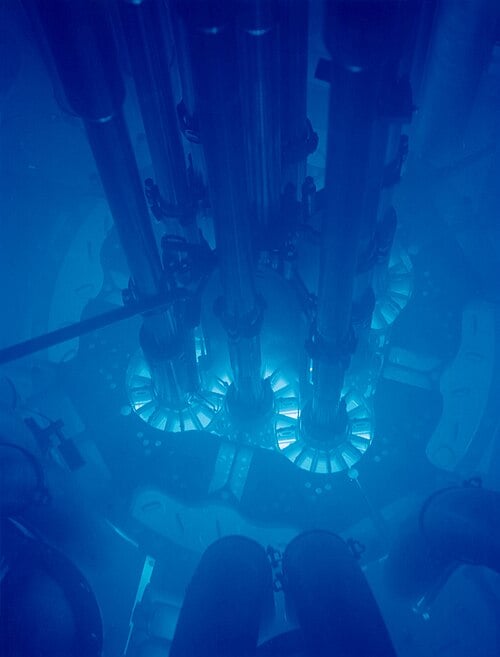
- Cherenkov radiation occurs when a charged particle moves through a material faster than light can travel in that medium, creating a coherent shockwave of light analogous to a sonic boom.
- At slower speeds, the light emitted by disturbed atoms cancels out due to interference, producing no visible glow; only at superluminal speeds in the medium does the light pile up into a visible cone.
- This effect was first observed by Pavel Cherenkov in 1934 as a blue glow in water exposed to gamma rays, caused by electrons moving faster than light's speed in water.
- The characteristic blue color of Cherenkov radiation arises because higher frequency (blue and ultraviolet) light adds up more coherently, making the glow intense and distinct.
- Cherenkov's discovery earned him the Nobel Prize in 1958, highlighting the significance of his insight into this unique electromagnetic phenomenon.


