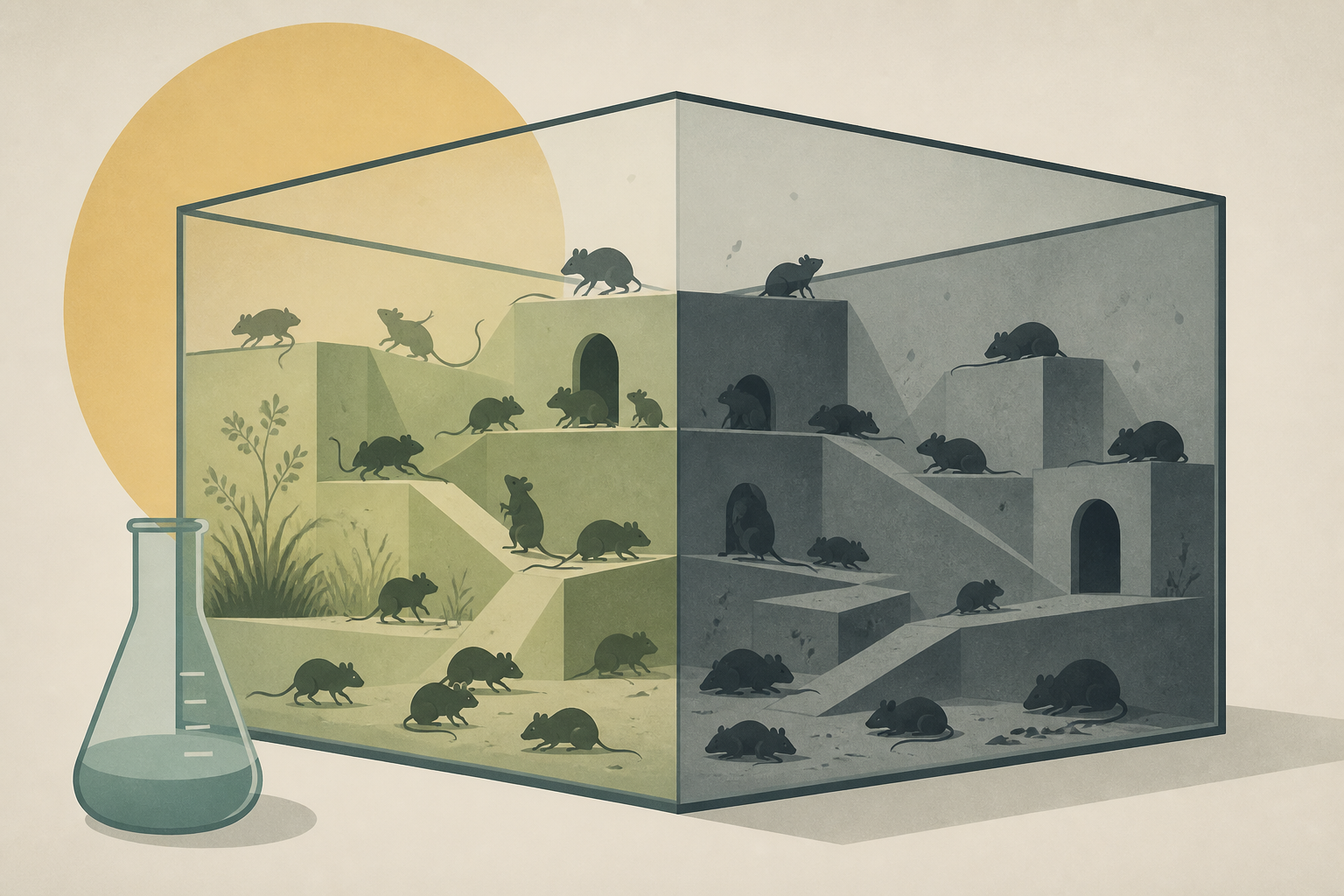
AI Generated Image
What Really Happened in Universe 25, the Famous Mouse Utopia Experiment
ZME Science • • science
Key Points:
- Universe 25 was an experiment by John B. Calhoun in 1968 where eight white mice were placed in a sealed enclosure with unlimited food, water, and shelter, but no opportunity for emigration or new territory creation.
- Initially, the mouse population grew rapidly and social structures formed, but as space became limited, social roles broke down, leading to violence, withdrawal, and a collapse in reproduction despite abundant resources.
- The experiment ended with a population decline and the emergence of "the beautiful ones," mice who were physically healthy but socially and reproductively inactive, symbolizing mental and social breakdown.
- Common interpretations that abundance or overcrowding alone caused the collapse are oversimplifications; the real issues were lack of agency, social roles, privacy, and environmental complexity.
- Universe 25 serves as a cautionary tale about the importance of meaningful social structures and environmental design rather than a straightforward warning about luxury, overpopulation, or welfare systems.


