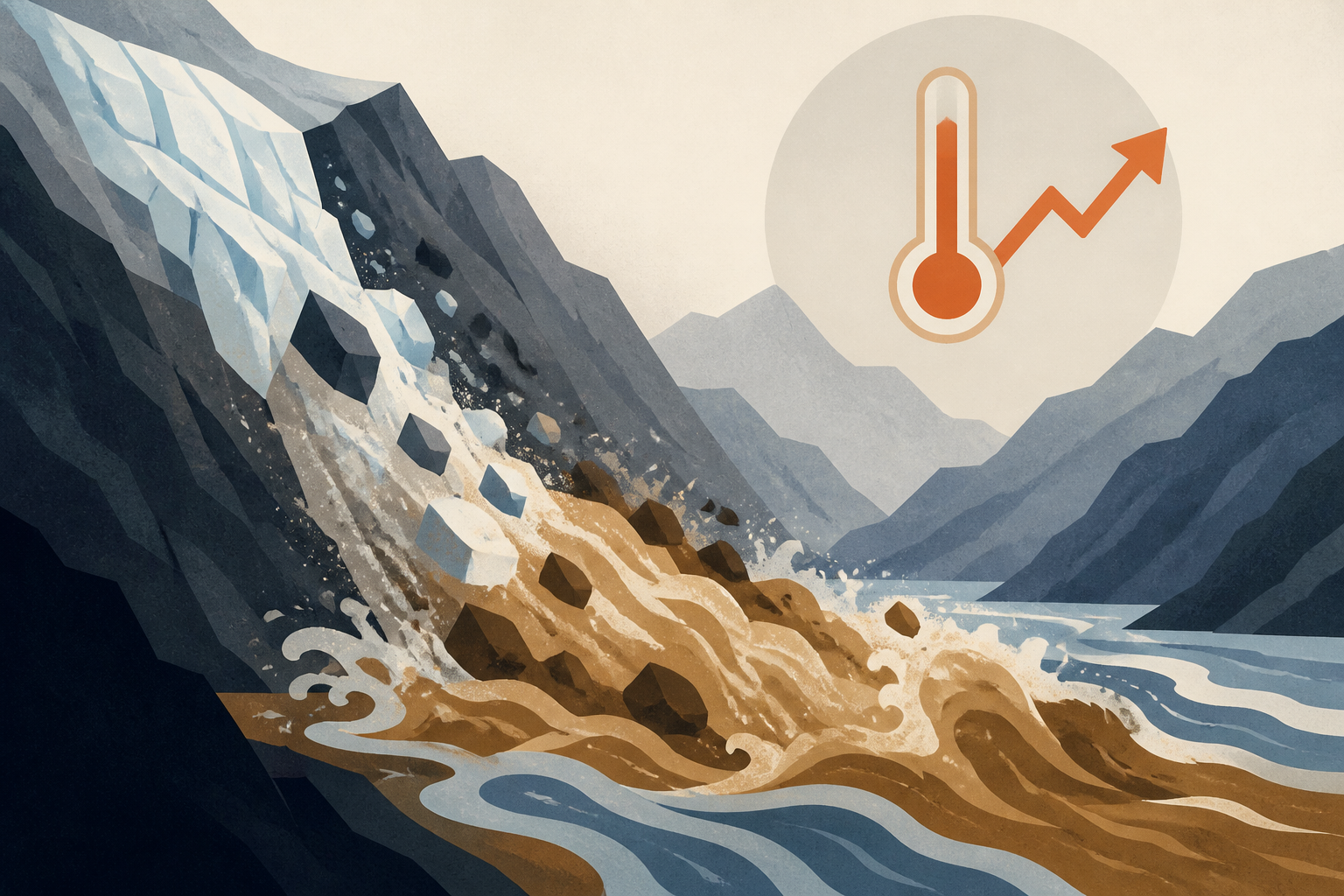
AI Generated Image
When a mountain falls: How ice and rock triggered Nepal’s catastrophic flood - and why climate change is raising the risks
The Conversation • • world
Key Points:
- The catastrophic Nepal flood on August 26, 2026, was triggered by a massive landslide of ice and rock that dammed a river temporarily before breaking and sending a deadly wall of water downstream, killing hundreds and destroying infrastructure.
- A secondary disaster occurred days later when a barrier lake formed behind debris in Tibet burst, causing additional flooding and complicating rescue efforts, highlighting the unpredictability of avalanche-dammed lakes.
- Rising temperatures and thawing permafrost are increasing the frequency and severity of such disasters in high mountain regions, as melting ice weakens slopes and creates more glacial lakes prone to outburst floods.
- The growing population and infrastructure development, especially hydropower plants in these vulnerable valleys, amplify the risk and potential impact of floods, as seen in the destruction of multiple power facilities and a major border crossing in Nepal.
- Enhancing early warning systems with seismic sensors, redundant communication methods, and comprehensive monitoring of glaciers, permafrost, and debris dams is critical to reducing future disaster risks and protecting communities in mountainous regions.


