AI Generated Image
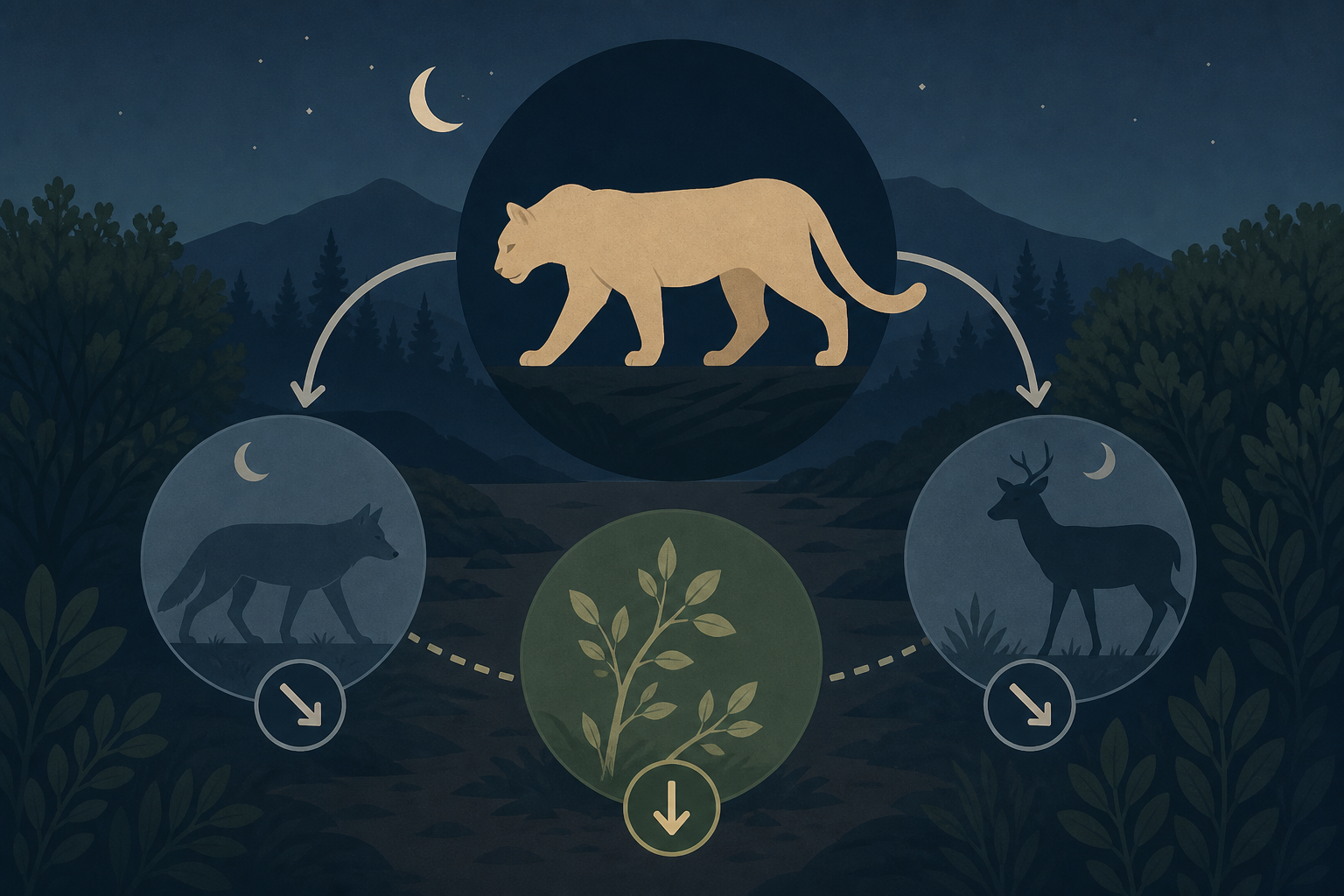
When mountain lions began appearing more often on trail cameras at a small California nature preserve, coyotes and deer shifted away from nighttime activity, and the woody plants those deer used to ea
Space Daily • • science
Key Points:
- Between 2015 and 2020, increased mountain lion visits to Stanford's Jasper Ridge Biological Preserve led to significant ecological changes, despite the preserve being too small to support resident lions.
- The study documented two trophic cascades: mountain lion presence reduced deer activity, allowing woody plants, especially young oaks, to grow substantially; simultaneously, smaller predators like coyotes and bobcats became less active, while foxes increased and rabbit numbers declined.
- These changes were driven by the "ecology of fear," where deer altered their behavior to avoid areas with mountain lion activity, reducing browsing pressure and enabling plant recovery.
- The findings highlight that small, peri-urban preserves connected to larger wilderness areas can sustain important ecological processes like trophic cascades, challenging the notion that such phenomena only occur in large, remote parks like Yellowstone.
- Researchers caution that some effects, especially on smaller animals and vegetation, may also be influenced by environmental factors, and the reasons for increased mountain lion visits remain unclear; human activity continues to impact mountain lion mortality and behavior.


