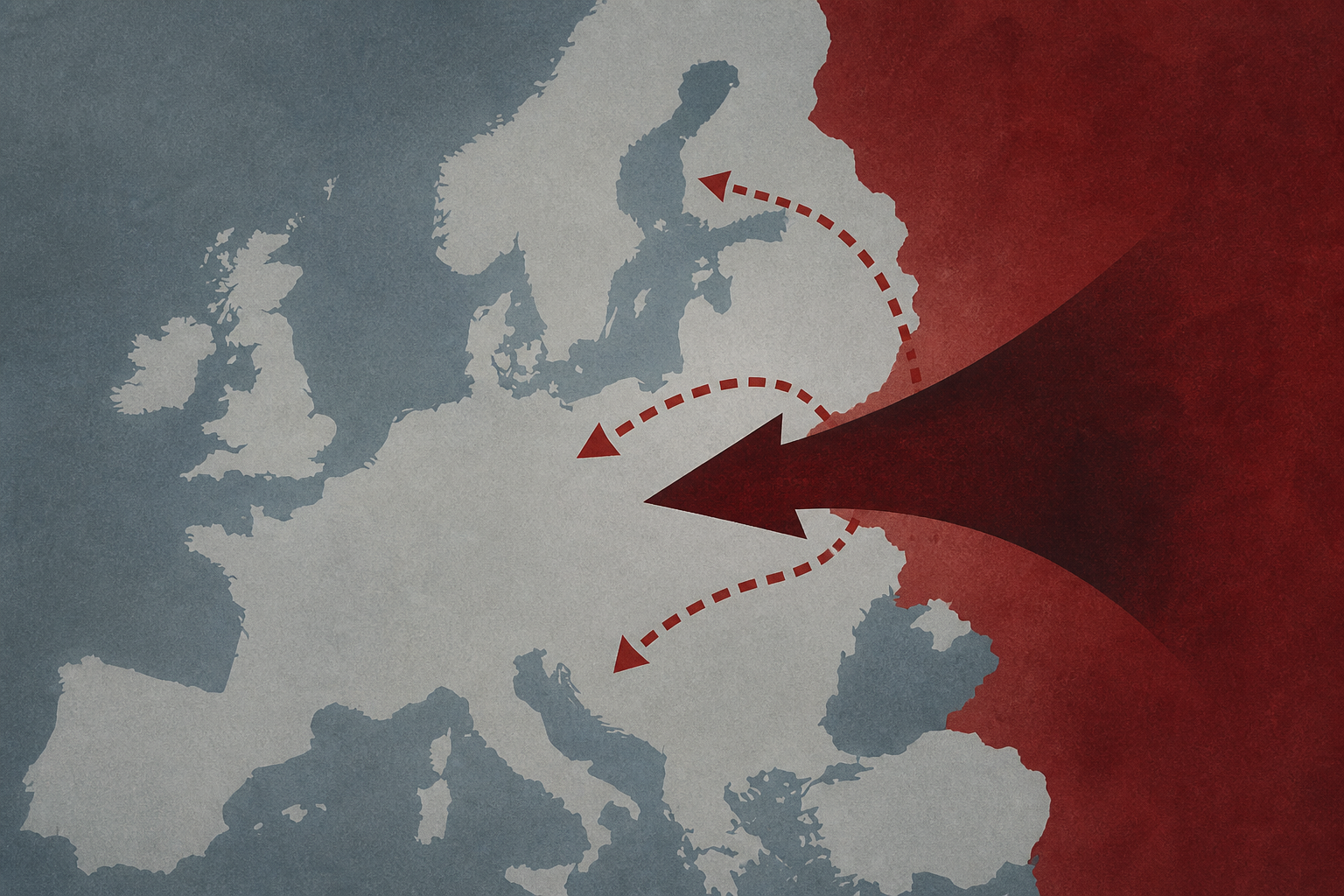
AI Generated Image
Where and how Putin could expand his war in Europe beyond Ukraine
atlanticcouncil.org • • world
Key Points:
- Russia persistently tests the Baltic states and their allies with hybrid tactics such as drone incursions, sabotage, cyberattacks, and disinformation, aiming to weaken NATO and avoid decisive retaliation.
- Poland is heavily militarized and prepared for potential Russian attacks, with significant national defense capabilities and reliance on NATO reinforcements to respond to any aggression.
- The Nordic countries face ongoing Russian hybrid warfare and have strengthened their total defense systems, military spending, and NATO integration to counter threats, especially in strategically sensitive areas like the North Calotte and Baltic islands.
- Moldova experiences hybrid and kinetic spillover from the Ukraine war, including airspace violations and infrastructure attacks, and is enhancing defense and regional security cooperation despite not being a NATO or EU member.
- Romania confronts escalating Russian provocations in the Black Sea region, including drone incursions and maritime threats, and is bolstering military infrastructure and capabilities while relying on NATO support for sustained defense.
- Germany faces increased Russian hybrid operations, including drone attacks, cyber incidents, and assassination plots, and is responding with punitive measures and enhanced coordination, though some critics call for more decisive action.
- Russia is intensifying hybrid warfare across Western Europe and the US, exploiting political polarization and mistrust to sow division and weaken alliances, aiming to undermine Western unity rather than achieve outright military victory.


