AI Image
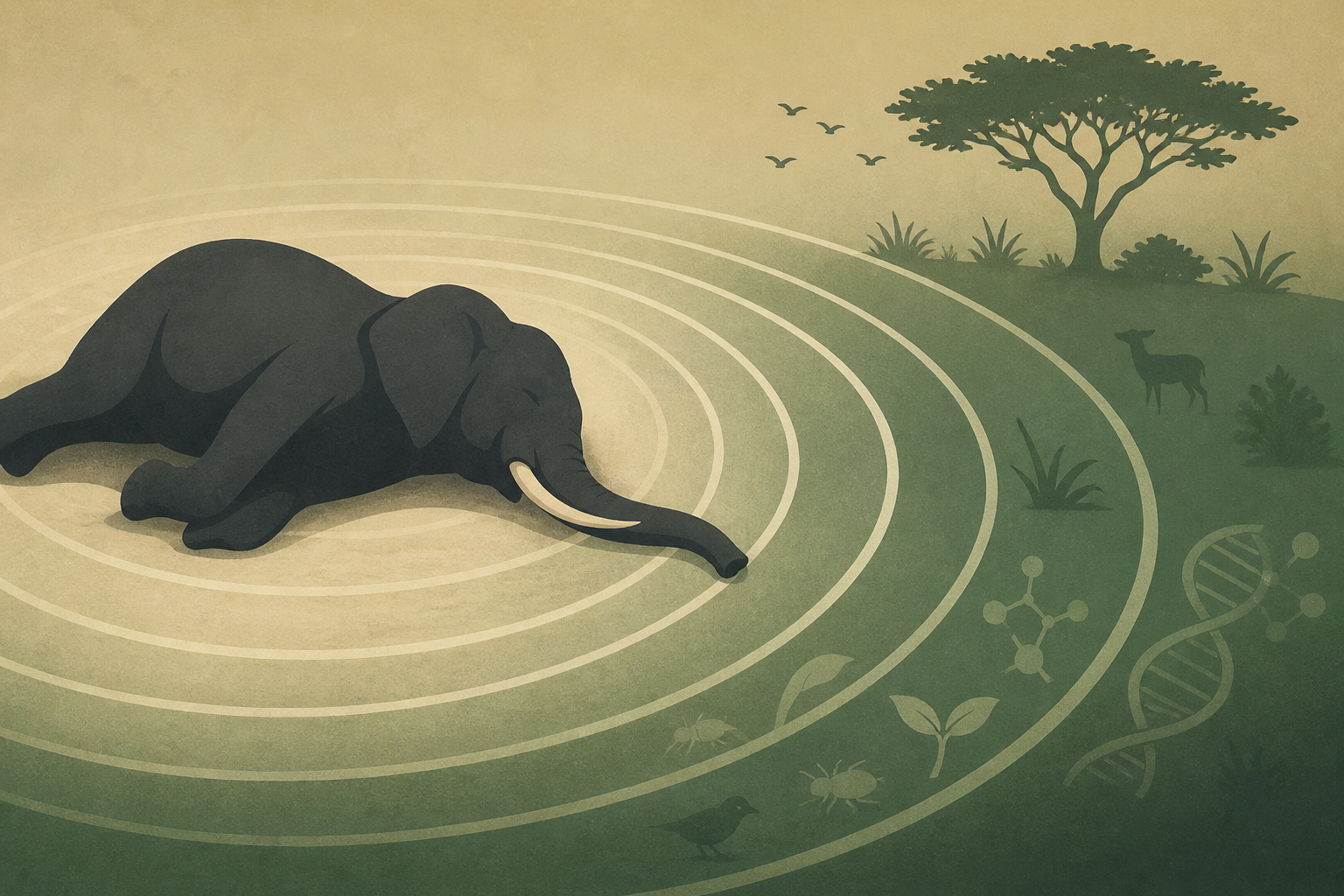
Where Elephants Fall, Their Impact Echoes for Years
Newser • • science
Key Points:
- A study in South Africa's Kruger National Park found that elephant carcasses create long-lasting ecological effects, with impacts visible up to eight years after death.
- The massive bodies initially block sunlight, killing nearby plants and causing a sharp decline in plant and microbial diversity, while releasing ammonium levels up to 3,000 times higher than normal.
- Over time, nutrient-rich grasses colonize the area, attracting grazers whose activity helps recycle nutrients back into the soil, sustaining the altered ecosystem.
- Researchers highlight that the ecological footprint of a dead elephant is significantly longer and more pronounced than that of smaller animals, indicating lasting environmental influence.
- Experts emphasize that landscapes can retain the biological and chemical signatures of large animals long after they have disappeared.


