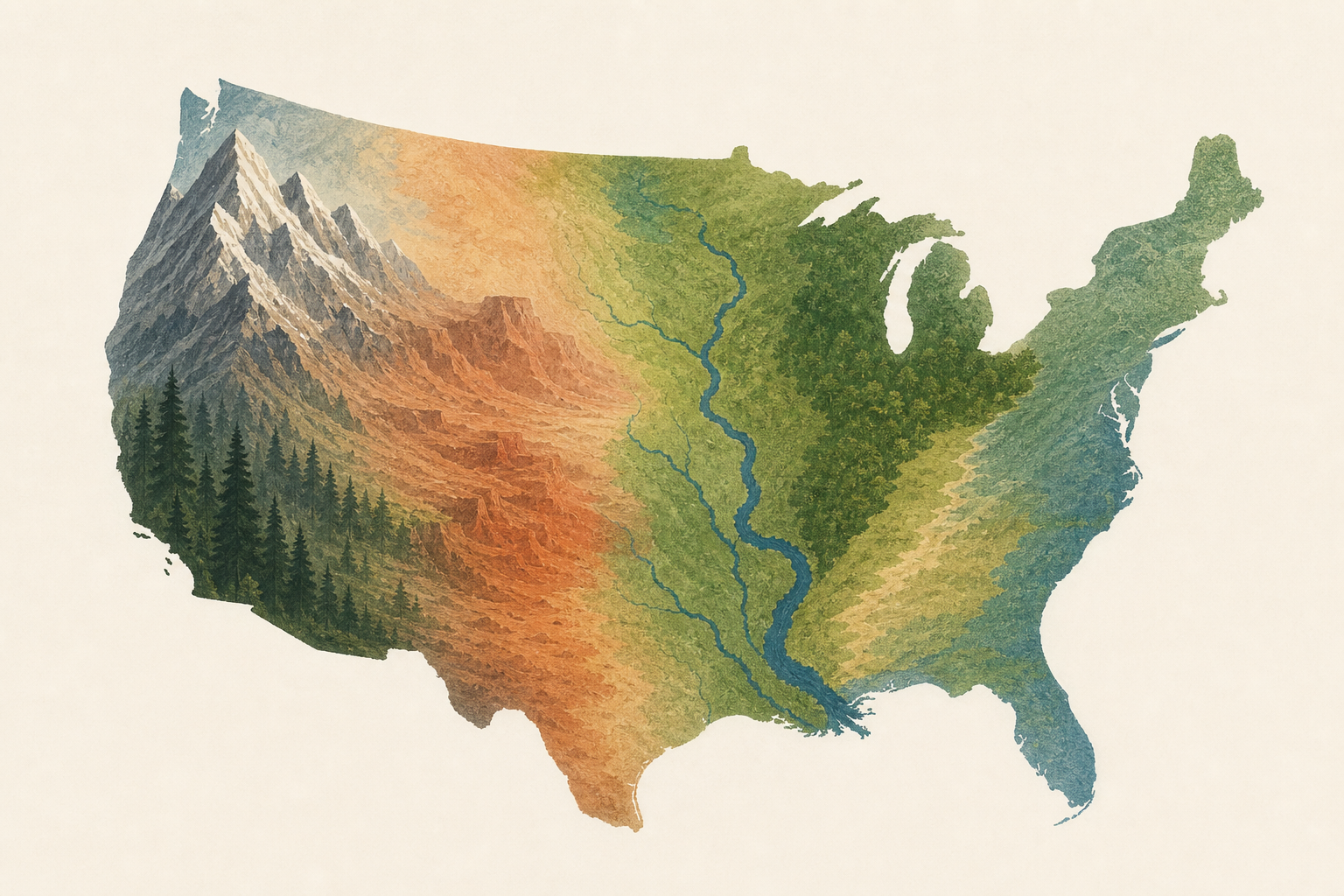
AI Generated Image
Where nature draws the map - here are 5 ways to look at the US, without state boundaries
The Conversation • • nation
Key Points:
- The Smithsonian’s National Museum of Natural History’s new exhibition, “From These Lands: Sharing Our Natural and Cultural Heritage,” explores the United States’ natural and cultural heritage beyond state boundaries by highlighting patterns in nature such as biomes, ancient seas, and animal migrations.
- Pine cones illustrate the diversity of U.S. biomes, with 43 native pine species adapted to different climates and terrains, such as the fire-adapted sand pine in the Southeast and the large Coulter pine cones in Southern California’s Mediterranean scrub.
- Fossils of ammonites found in the Great Plains and Badlands reveal that much of the central U.S. was once covered by the Western Interior Seaway during the late Mesozoic Era, showing the landscape’s long geological history.
- The exhibition highlights animal migrations that cross state and national borders, exemplified by the ruddy turnstone shorebird’s reliance on horseshoe crab eggs in Delaware Bay as a critical stopover during its Arctic migration.
- The Appalachian Mountains’ diverse topography supports the world’s greatest salamander species diversity, while the American shad’s historic migration in Chesapeake Bay reflects deep cultural ties and stewardship by the Pamunkey Indian Tribe, illustrating the intersection of natural and cultural heritage.


