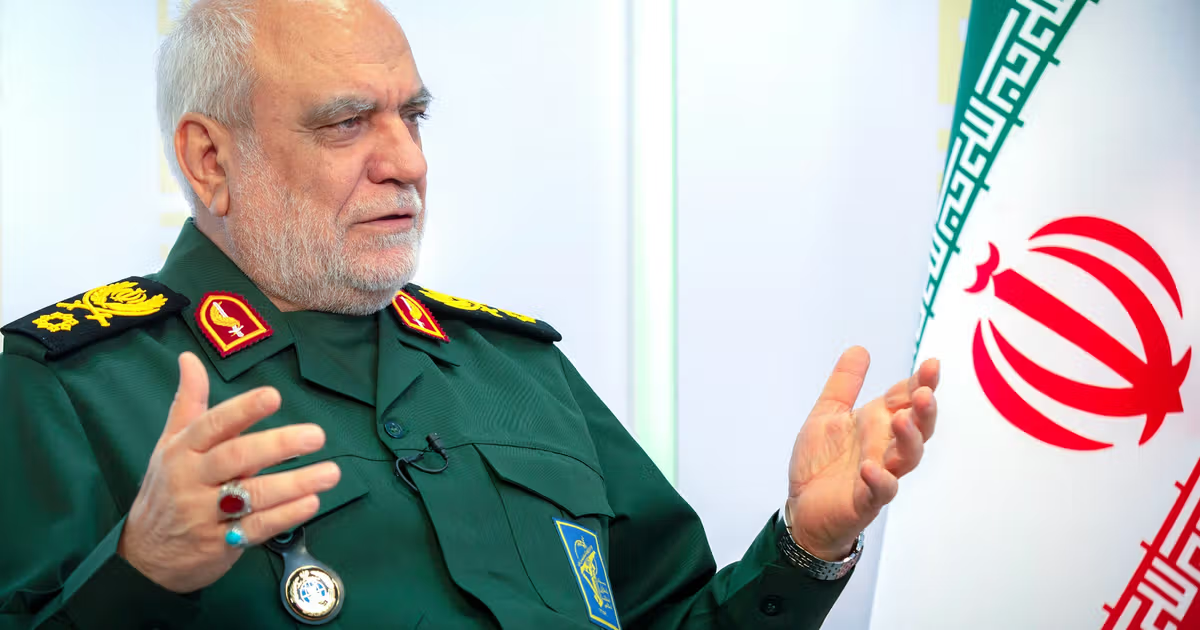
Who was Majid Khademi, and why does his killing matter?
ایران اینترنشنال • • world
Key Points:
- Pakistan has proposed a two-stage framework called the "Islamabad Accord" for an immediate ceasefire followed by broader talks to end the conflict involving the Strait of Hormuz, with Pakistan acting as the sole communication channel between the US, Iran, and regional mediators.
- Iran remains hesitant to commit to a temporary ceasefire, demanding concrete guarantees against renewed US and Israeli attacks, and signaling that the Strait of Hormuz will not return to its pre-war status without such assurances.
- The US has threatened strikes on Iran’s critical power plants and infrastructure if the Strait of Hormuz is not reopened, raising concerns about widespread blackouts, humanitarian impacts, and potential regional retaliation targeting energy and civilian systems.
- Recent targeted strikes on Iran’s dual-use scientific and industrial facilities reflect efforts to degrade the regime’s military capabilities while avoiding broad attacks on civilian infrastructure that could alienate the Iranian population.
- UAE authorities have detained money changers linked to Iran’s Revolutionary Guards in Dubai amid a crackdown on Iran’s offshore financial networks, with uncertainty remaining over whether enforcement will extend to the deeper, opaque web of shell companies facilitating Iran’s hard currency and procurement operations.


 { path { fill: %23EEEFE9 } })


