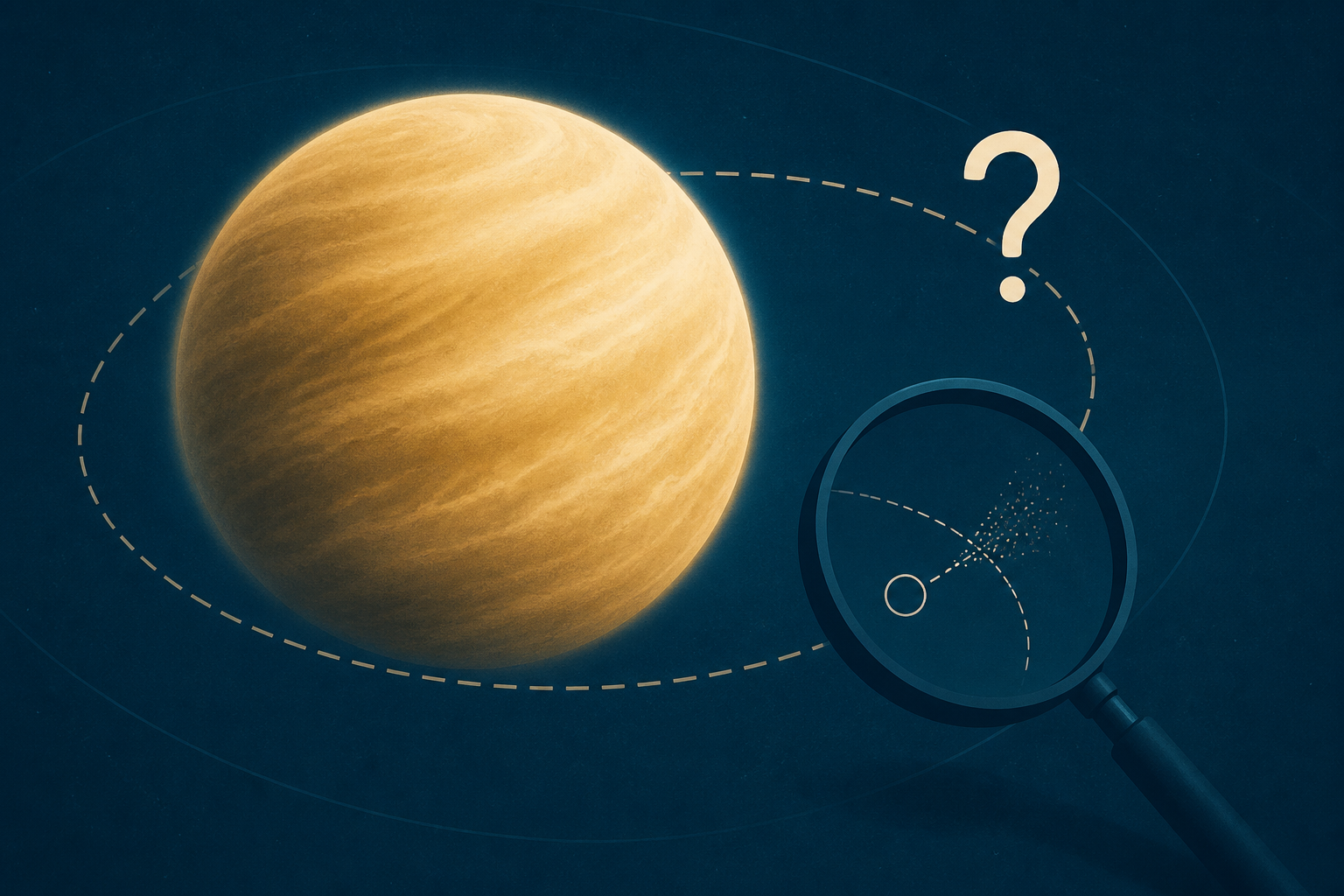
AI Generated Image
Why doesn't Venus have a moon? A new study may have the answer
Phys.org • • science
Key Points:
- Venus, often called "Earth's twin," is unusual for its opposite rotation direction, extreme surface temperatures, and lack of a moon, which has puzzled scientists for decades.
- New research using computer simulations over 4.5 billion years tested various scenarios involving a hypothetical moon's mass, orbit, and Venus's spin to understand if a moon could have existed and survived.
- The study suggests that a moon likely once existed but was destroyed after its orbit reversed and spiraled back toward Venus, a process influenced by Venus's initial spin and tidal forces.
- Researchers conclude that Venus's lack of a moon is probably due to natural initial conditions rather than a catastrophic event, highlighting a key difference in the evolutionary paths of Venus and Earth.


