AI Generated Image
Why drought at the Panama Canal matters for your wallet
CNN • • world
Key Points:
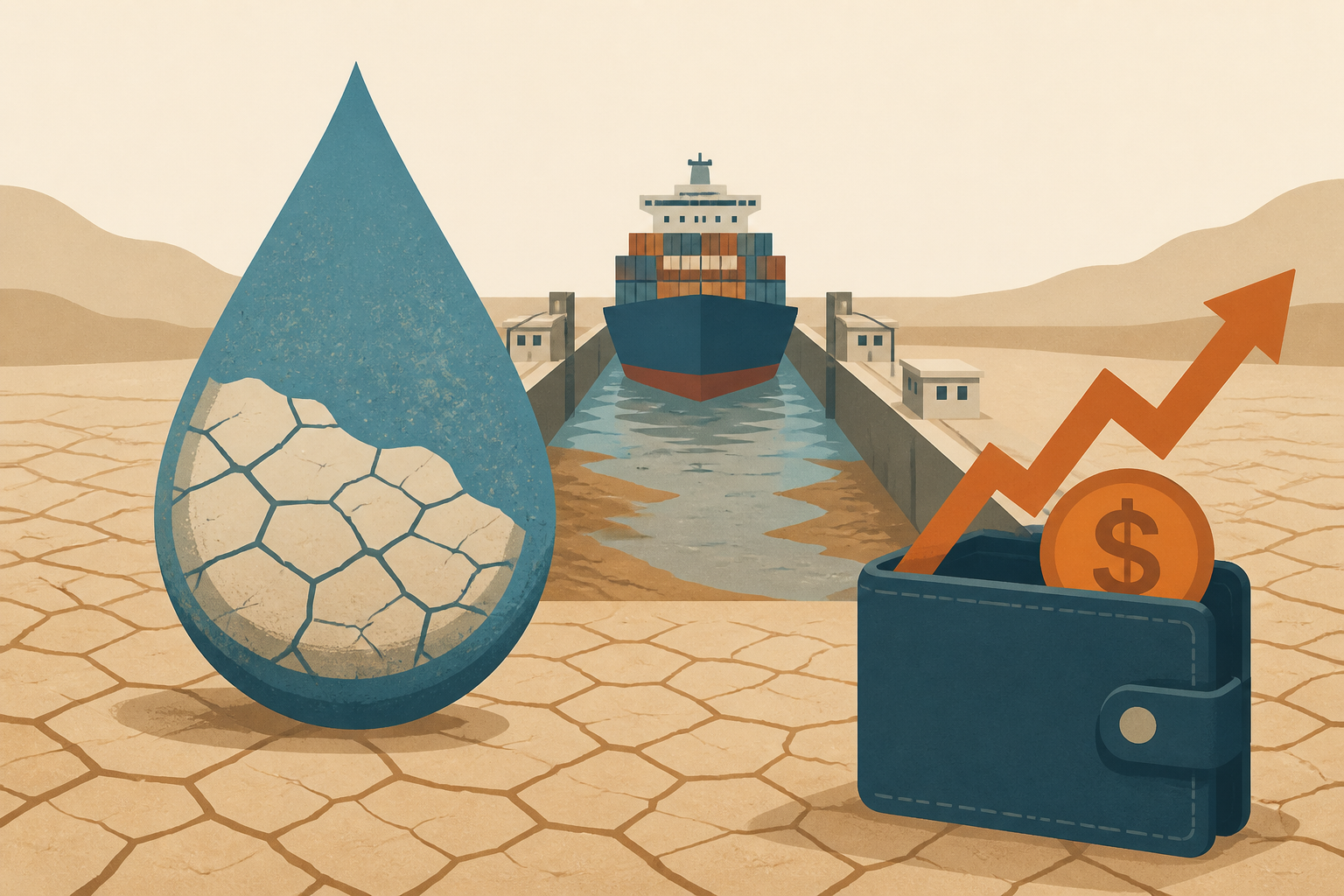
- In August, severe drought linked to a strong El Niño event has drastically reduced water levels in Panama Canal's Lake Gatun, forcing draft limits and reducing daily ship transits, which in turn lowers cargo capacity and raises shipping costs.
- The canal backlog and increased auction slot prices, including a record $4 million fast-track fee, are causing significant delays and higher fees that are expected to increase consumer prices, especially for goods reliant on timely delivery like pharmaceuticals and seasonal merchandise.
- Reduced canal capacity is pushing some shipments to reroute through US West Coast ports, straining ground transportation networks and further escalating logistics costs across the country.
- The Panama Canal's operational challenges come amid geopolitical tensions affecting global shipping routes, such as the Strait of Hormuz crisis, compounding fuel price increases and supply chain disruptions.
- While the Panama Canal Authority is exploring long-term solutions like new reservoirs and fuel pipelines to address water shortages and operational sustainability, these projects are in early stages, leaving consumers to face near-term price hikes and supply chain bottlenecks.


