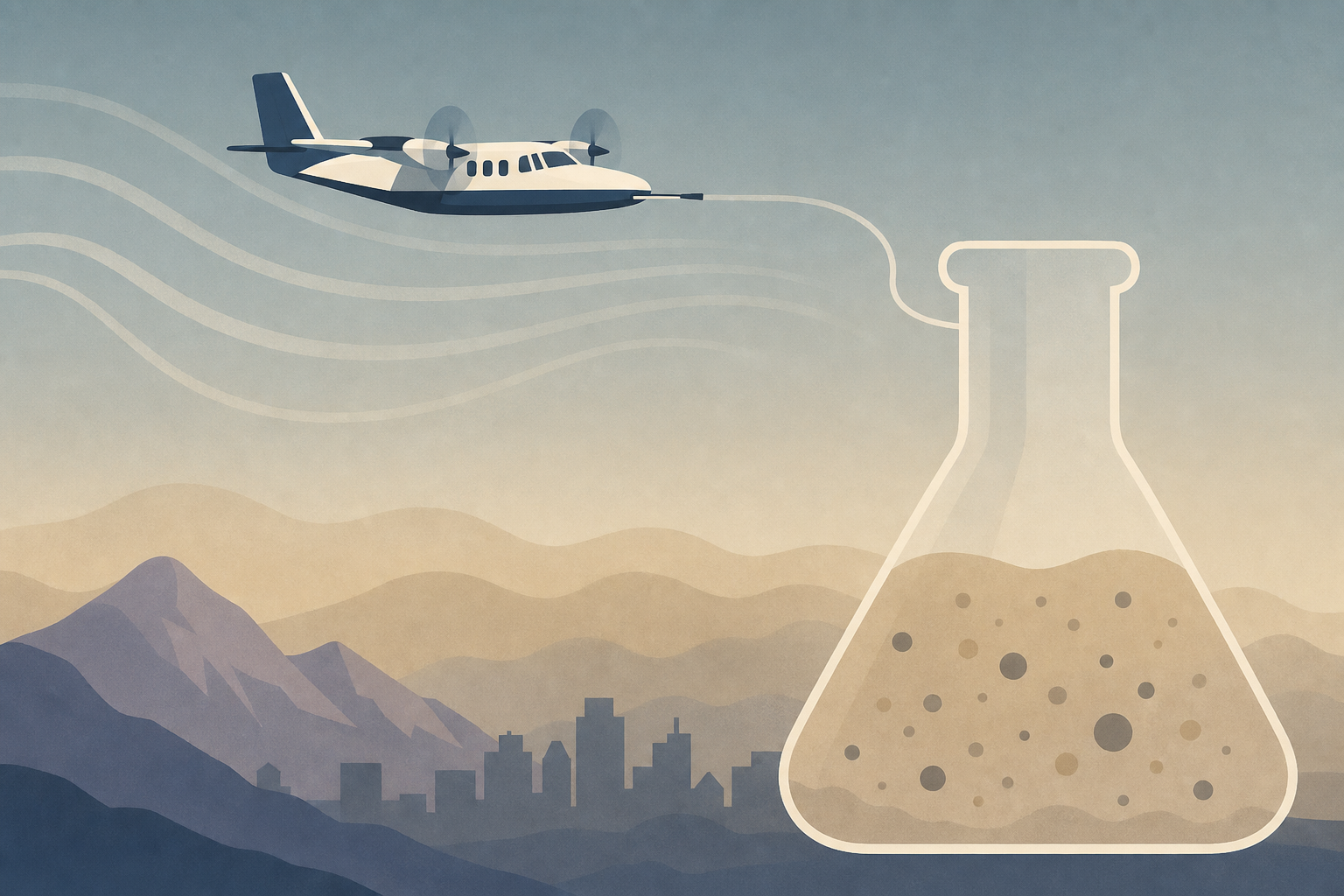
AI Generated Image
Why is Utah’s air sometimes so bad? Flying lab seeks answers
Deseret News • • science
Key Points:
- A King Air 350 research aircraft is conducting its maiden scientific mission over the Salt Lake Valley to measure ozone and its precursors, such as volatile organic compounds (VOCs) and nitrogen oxides (NOx), flying twice daily throughout August.
- This collaborative project involves multiple universities, the Utah Division of Air Quality, NASA, and the National Center for Atmospheric Research, aiming to better understand and address the complex issue of ground-level ozone pollution exacerbated by heat, drought, and wildfires.
- The plane operates at altitudes between 200 and 4,000 feet, filling a critical data gap between ground-level and satellite measurements, providing detailed "snapshots" of air quality to identify actionable solutions for reducing harmful ozone pollution.
- The research is expected to take one to three years for data analysis and publication, with graduate and post-doctoral students playing key roles, and aims to inform future public policies to improve air quality in Utah and the Intermountain West.
- Modified specifically for atmospheric research, the King Air 350 serves as a mobile laboratory, enabling precision measurements not otherwise accessible to state agencies, and represents a significant federal-state partnership in environmental science.


