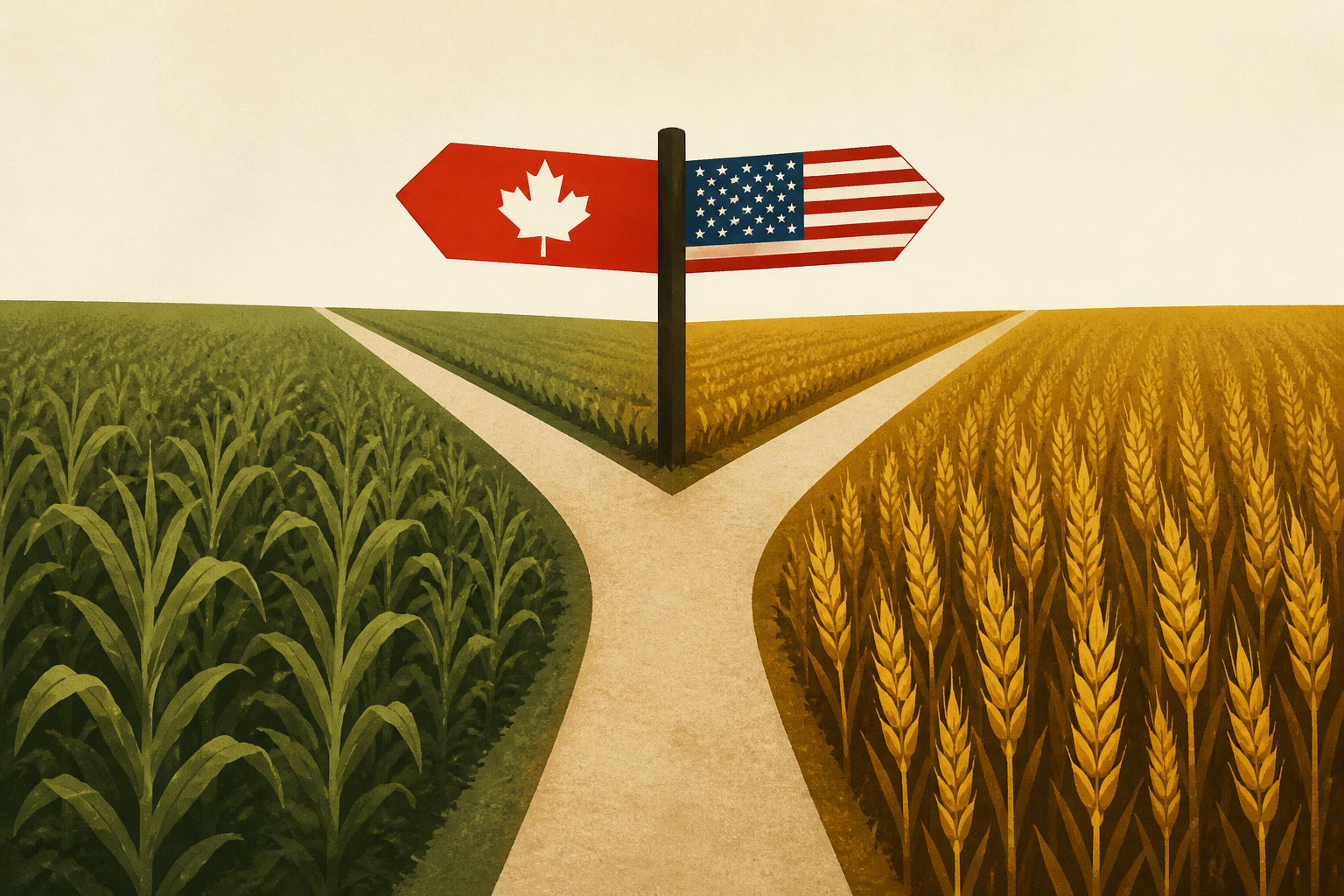
AI Generated Image
Why the US-Canada trade war could change how American farmers grow their crops for years
The Conversation • • nation
Key Points:
- The U.S.-Canada trade war escalated in August 2026 with the U.S. imposing 50% tariffs on Canadian imports worth about $20 billion, prompting Canada to retaliate with tariffs of 15% to 50% on U.S. goods, including dairy and agricultural equipment, effective September 8.
- Although Canada’s tariffs are not directly targeting American farmers, the integrated nature of U.S.-Canada agricultural trade means that tariffs raise costs for farm equipment and agricultural products, potentially leading to higher consumer prices and financial strain on U.S. farmers.
- Canada is a major supplier of potash, a key fertilizer ingredient for U.S. agriculture, and could leverage export tariffs on potash and energy resources to increase costs for American farmers, who already face high fertilizer prices due to supply disruptions from geopolitical conflicts.
- High fertilizer costs lead farmers to reduce applications of phosphorus and potassium, which build soil reserves slowly, risking smaller future harvests; uncertainty about trade policy further discourages timely fertilizer purchases, exacerbating potential yield declines.
- The long-term impact of the trade war on U.S. agriculture may manifest as reduced crop yields and higher food prices for consumers, effects that could persist beyond the duration of the tariffs themselves.


