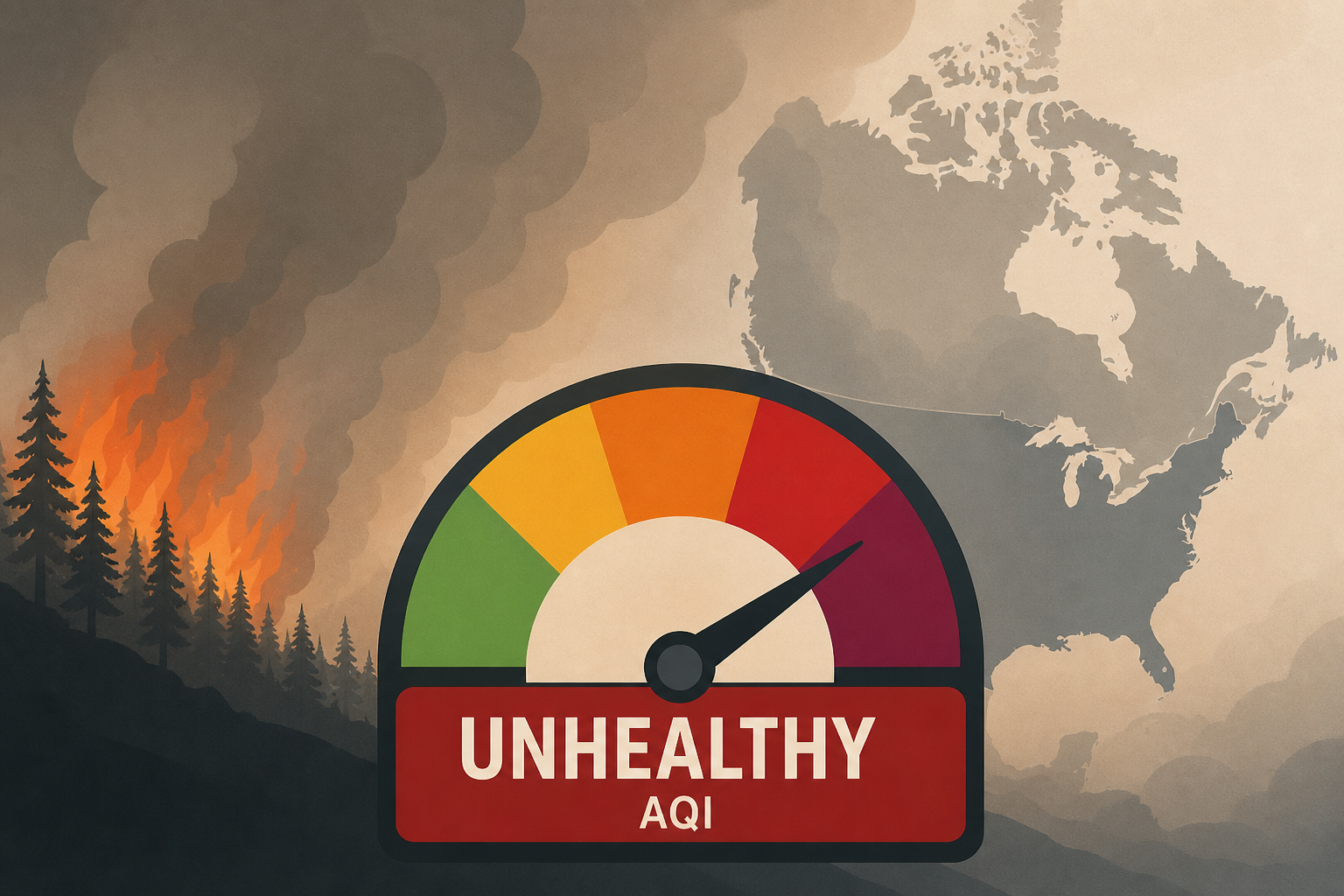
AI Generated Image
Wildfire Smoke Pushes Air Quality Index in U.S. and Canada to Unhealthy Levels: Live Updates
The New York Times • • nation
Key Points:
- High temperatures, low humidity, and strong winds have fueled extensive wildfires in Minnesota and Ontario, leading to the closure of the Boundary Waters Canoe Area Wilderness and multiple evacuation orders in surrounding counties.
- The largest fire, the Thumb Fire, has grown to over 14,000 acres and spread into Canada, prompting activation of air support and widespread hazardous smoke affecting air quality from Minnesota to New York.
- The persistent heat dome and strong jet stream winds have intensified the fires and transported smoke across much of the Midwest, Northeast, and eastern Canada, causing unhealthy to hazardous air quality levels in many areas.
- Climate change is exacerbating wildfire conditions by increasing overnight fire activity and extending fire seasons, which complicates firefighting efforts and raises public health risks due to prolonged smoke exposure.
- Authorities in Ontario have evacuated multiple communities, including First Nations reserves, and deployed extensive firefighting resources; meanwhile, air quality alerts remain in effect with residents urged to limit outdoor activities.


