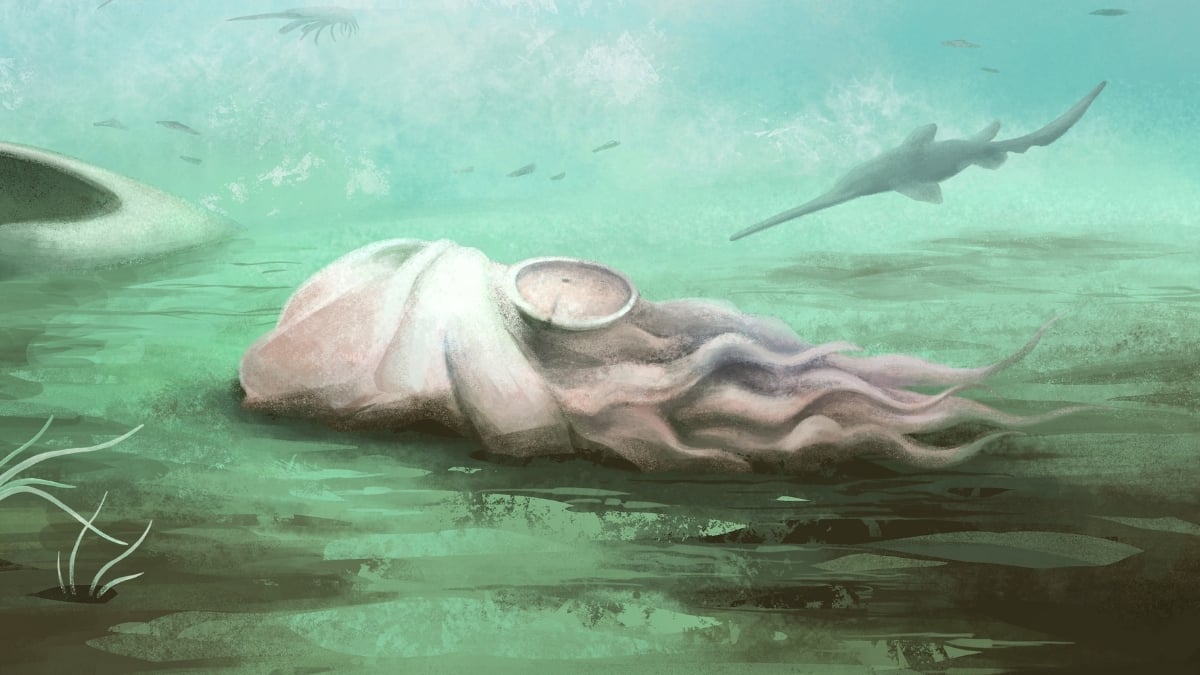
World's Oldest Known 'Octopus' Turns Out to Be An Entirely Different Animal
ScienceAlert • • general
Key Points:
- The 300-million-year-old fossil Pohlsepia mazonensis, once considered the oldest known octopus, has been reclassified as a nautiloid, a shelled cephalopod related to modern nautiluses.
- This reclassification pushes back the record of nautiloid soft tissue by about 220 million years and moves the earliest evidence for octopuses forward by approximately 150 million years.
- Using advanced synchrotron imaging, researchers discovered 11 tooth-like structures (a radula) in Pohlsepia, a feature inconsistent with octopuses but matching nautiloids, leading to the fossil's reassignment.
- The supposed ink sac in Pohlsepia lacked pigment evidence, further challenging its octopus identity and suggesting it is actually a specimen of the nautiloid Paleocadmus pohli.
- This finding necessitates revising the cephalopod family tree and highlights how new technologies can reshape our understanding of evolutionary history.


 { path { fill: %23EEEFE9 } })


