AI Image
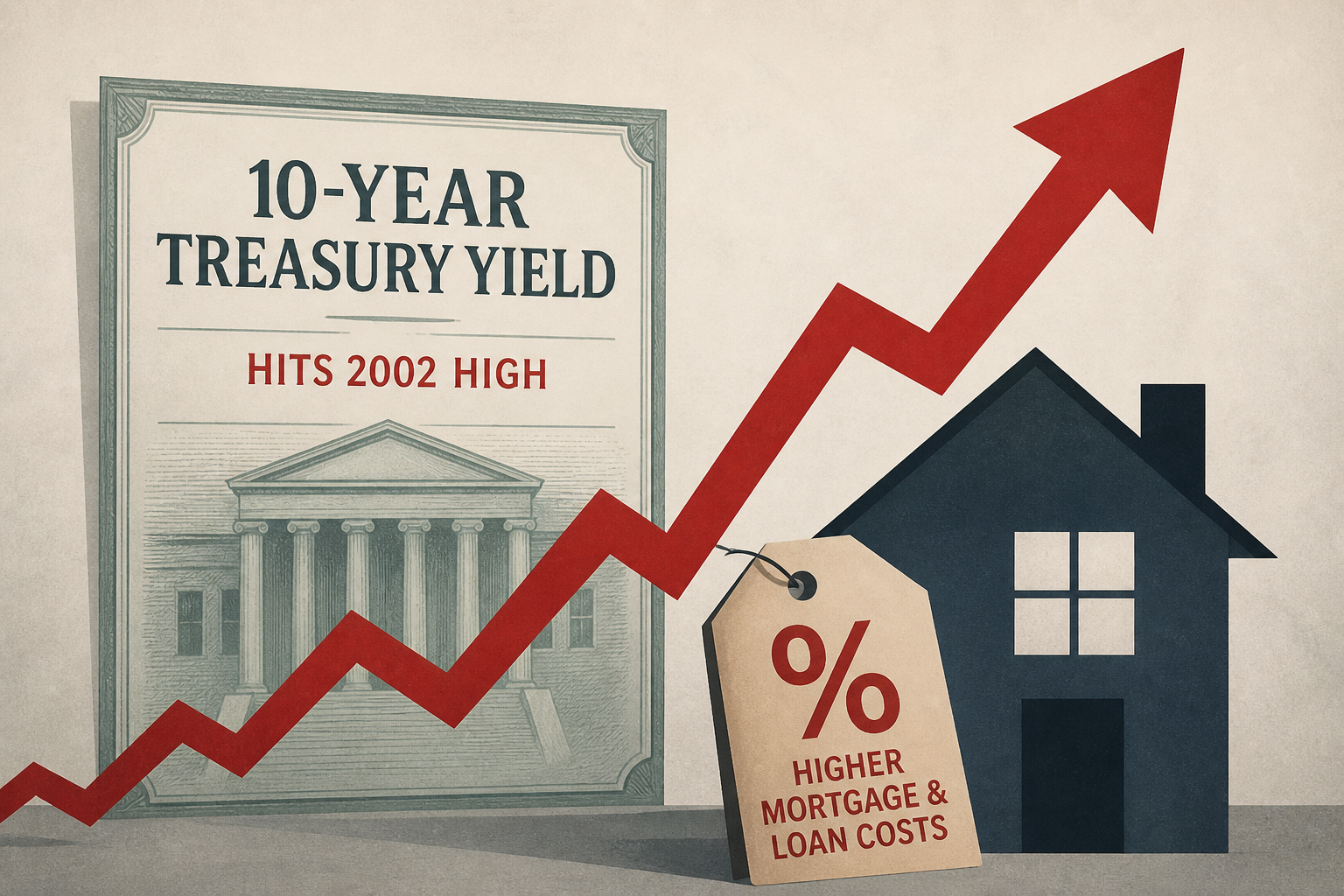
10-year Treasury yield hits 2002 high, raising mortgage and loan costs
Fox Business • • business
Key Points:
- The yield on the 10-year Treasury reached 5.34% during Thursday's trading, marking its highest level since 2002, driven by geopolitical tensions, federal budget deficits, tighter monetary policy, and increased corporate debt issuance related to AI development.
- Higher Treasury yields are increasing borrowing costs for households and businesses, potentially slowing interest rate-sensitive sectors like housing and auto sales despite a strong labor market and consumer spending.
- Adjustable-rate debts such as credit cards, home equity lines, and adjustable-rate mortgages are immediately impacted by rising rates, leading to higher payments for consumers seeking new loans.
- While higher interest rates pose challenges for borrowers, they benefit savers and fixed-income investors by offering more attractive yields on savings accounts, CDs, and bonds, improving income potential.
- Elevated long-term yields increase business financing costs and pressure stock and bond prices, but also offer opportunities for investors to secure higher income without additional corporate credit risk, though inflation and taxes remain critical factors.


