AI Generated Image
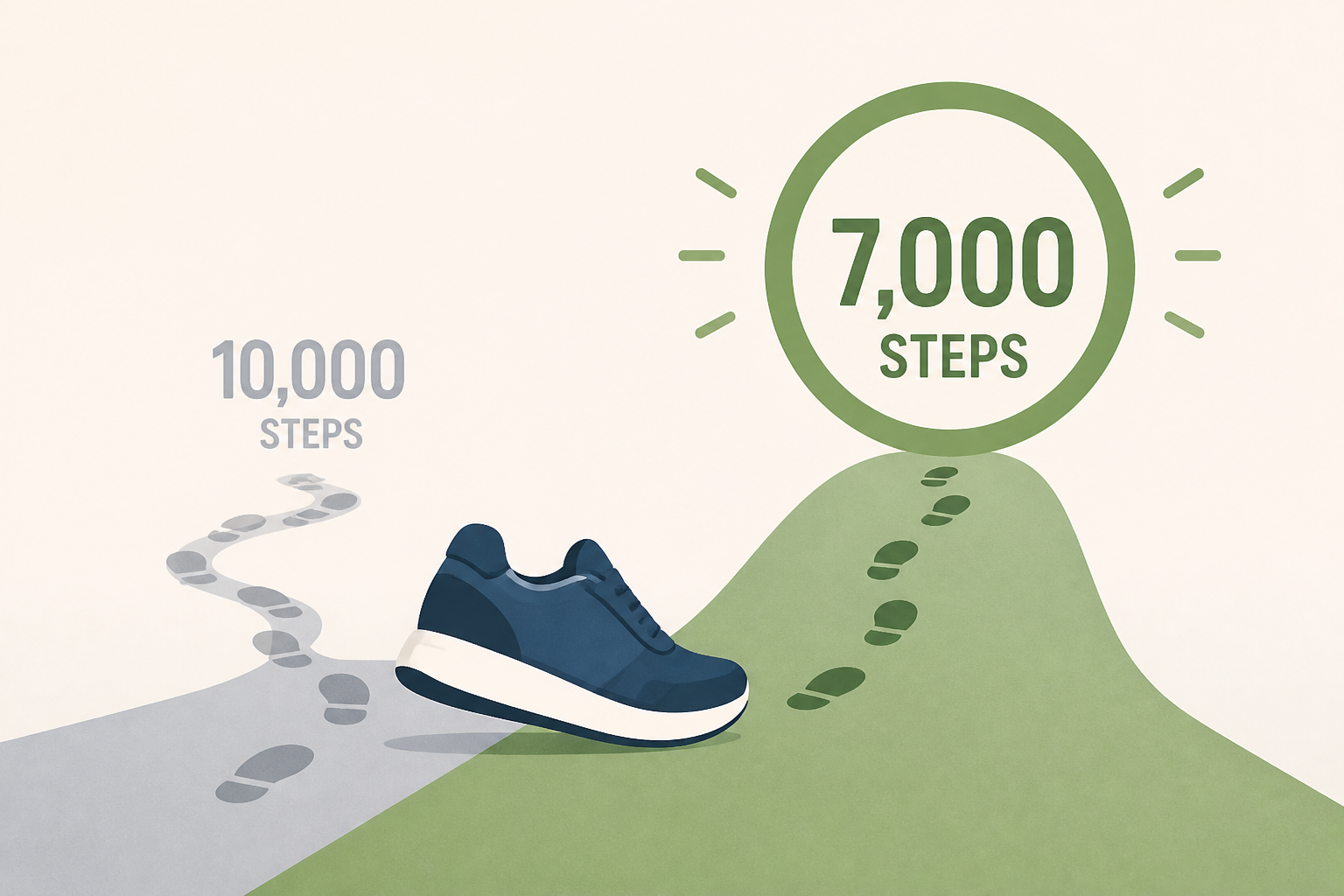
10,000 Steps? Science Says 7,000 Is the Real Target
Live 5 News • • health
Key Points:
- The popular 10,000-step daily goal originated in 1960s Japan as part of a marketing campaign for the Manpo-kei, the world’s first wearable fitness device, rather than from rigorous scientific evidence.
- Recent research, including a 2025 Lancet Public Health review, suggests significant health benefits such as reduced risks of heart disease, dementia, cancer, and premature death occur at around 7,000 steps per day, with diminishing returns beyond that point except for dementia.
- Increasing daily steps from as low as 2,000 to 4,000 can improve cardiovascular health, highlighting that consistency and gradual increases in activity are more important than hitting a fixed target like 10,000 steps.
- Fitness trackers and wearable devices help motivate users by providing tangible step goals and real-time feedback, supporting healthier habits without pressuring individuals to meet overly ambitious challenges.
- Walking remains an accessible and effective exercise for all ages, with additional benefits gained from brisk walking, strength training, breaking up sedentary time, and ensuring quality sleep for recovery.


