AI Generated Image
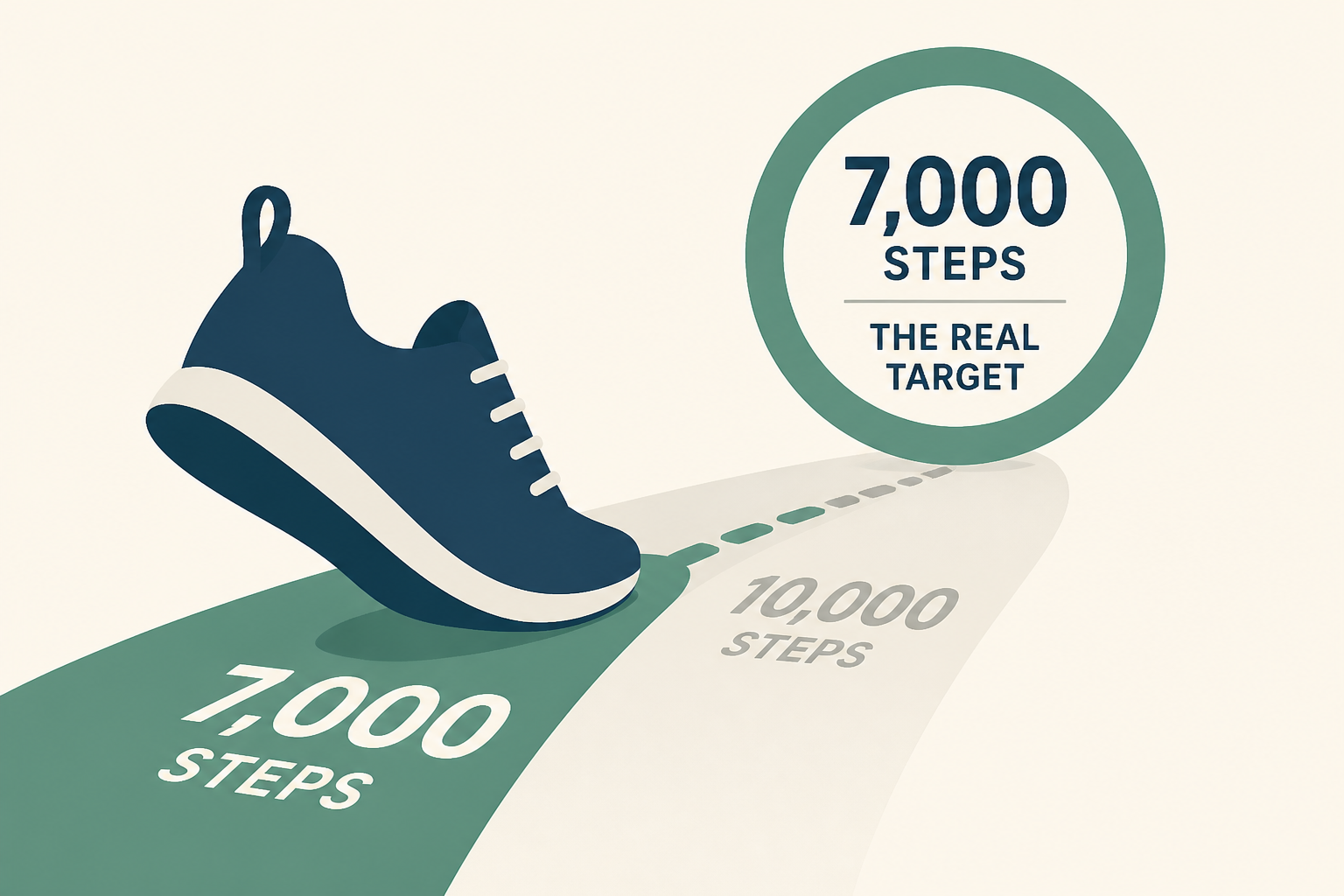
10,000 Steps? Science Says 7,000 Is the Real Target
AZ Family • • health
Key Points:
- The popular 10,000-step daily walking goal originated in 1960s Japan as part of a marketing campaign for the Manpo-kei, the world’s first wearable fitness device, rather than from solid medical research.
- Recent studies, including a 2025 review in The Lancet Public Health, show significant health benefits begin at around 7,000 steps per day, reducing risks of heart disease, dementia, cancer, depression, type 2 diabetes, falls, and premature death.
- Even increasing daily steps from 2,000 to 4,000 can improve cardiovascular health, with experts emphasizing consistency over hitting a specific target for long-term wellness benefits.
- Fitness trackers help motivate users by gamifying step counting, providing immediate feedback and psychological incentives, while modern wearables also monitor sleep, heart rate, and stress to support healthier routines.
- Walking remains an accessible, low-cost exercise that improves cardiovascular fitness, joint health, muscle strength, and mood, and is most effective when combined with brisk walking, strength training, breaking up sedentary time, and quality sleep.


