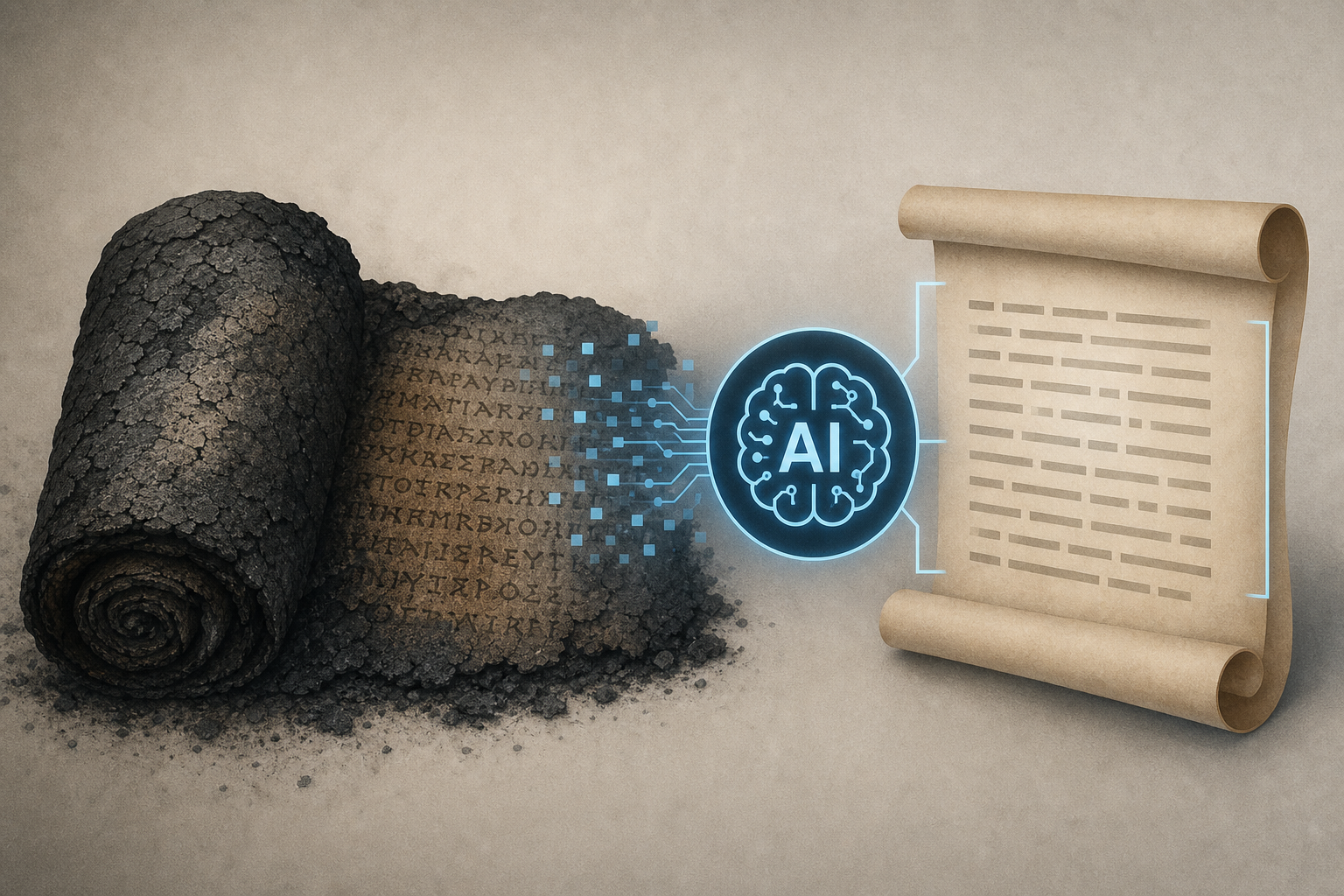
AI Generated Image
2,000-year-old scrolls buried by Mount Vesuvius eruption finally deciphered with help from AI
Live Science • • world
Key Points:
- Researchers have virtually unrolled and read two ancient scrolls buried by Mount Vesuvius nearly 2,000 years ago, revealing significant Greek texts without physically opening them.
- The scroll PHerc. 1667, dated to the 2nd or 3rd century B.C., likely contains a Stoic philosophical treatise mentioning Aristocreon, a pupil of Chrysippus, potentially adding valuable insight into early Stoic thought.
- The Vesuvius Challenge team used advanced imaging, artificial intelligence, and X-ray technology to detect ink inside the scrolls, enabling translation by papyrologists despite previous unreadability.
- Another scroll, PHerc. 139, revealed a new book title linked to Philodemus' eighth volume of "On Gods," suggesting the treatise was more extensive than previously known.
- Over 600 scrolls from Herculaneum remain unopened, with ongoing efforts to digitally read and study these ancient manuscripts preserved since the A.D. 79 eruption.


