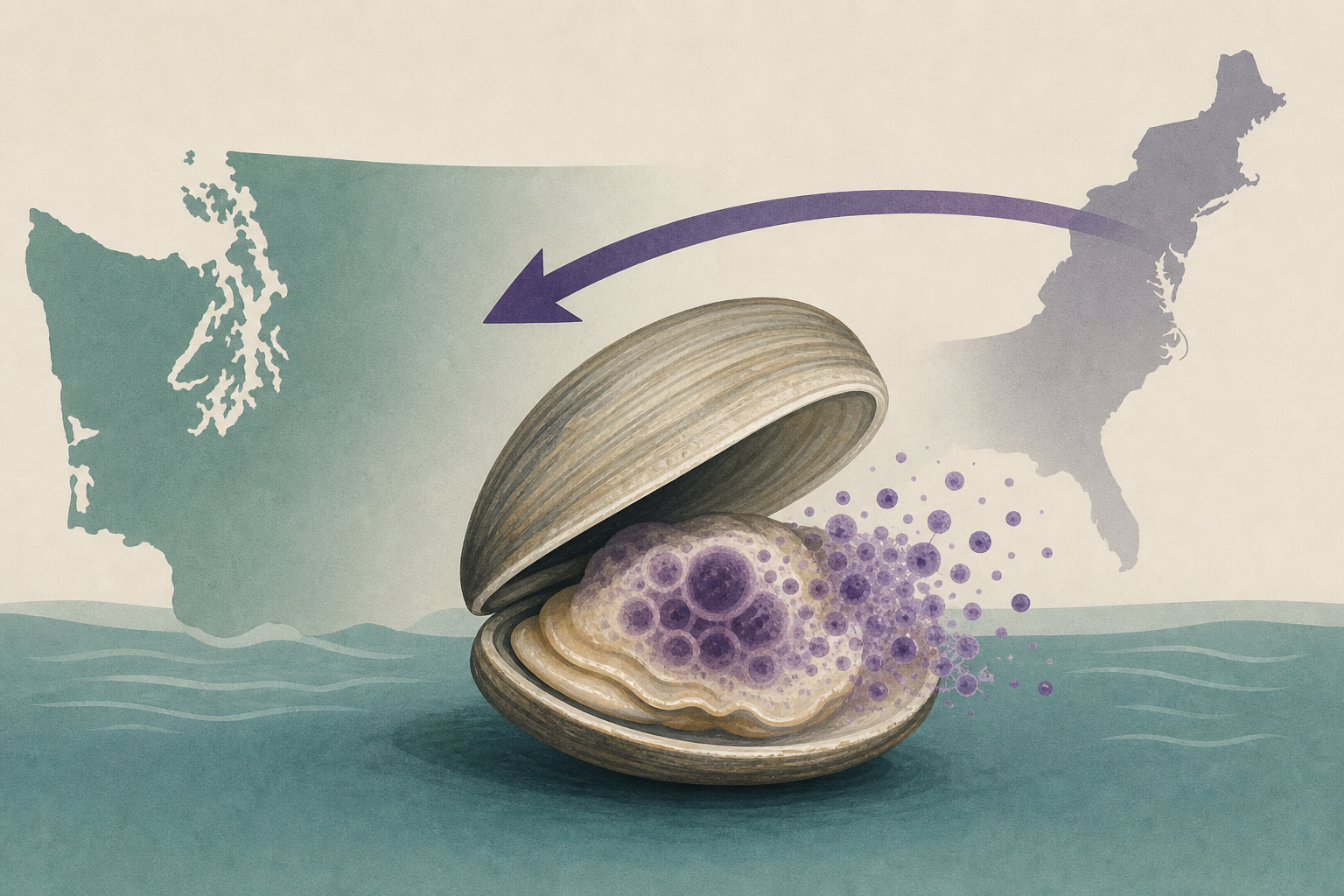
AI Generated Image
Rare contagious cancer is tearing through Washington's Puget Sound clams after East Coast jump
Yahoo • • health
Key Points:
- Scientists have identified a serious outbreak of bivalve transmissible neoplasia, a contagious cancer, in soft-shell clams in Washington's Puget Sound, with infection rates exceeding 75% at two sites by 2024.
- Genetic analysis indicates the cancer lineage likely originated from Atlantic Coast clam populations, marking a recent introduction to the Pacific Northwest.
- The disease poses ecological risks as soft-shell clams play a vital role in filtering water, recycling nutrients, and supporting marine food webs and coastal communities.
- Researchers used environmental DNA testing to detect cancer-related DNA in seawater, revealing the outbreak's presence in infected sites and nearby waters but not throughout the entire Puget Sound.
- The outbreak offers a unique opportunity to study disease susceptibility in clam species, with early evidence suggesting that Mya japonica hybrids may be less vulnerable, potentially informing conservation efforts.


