AI Image
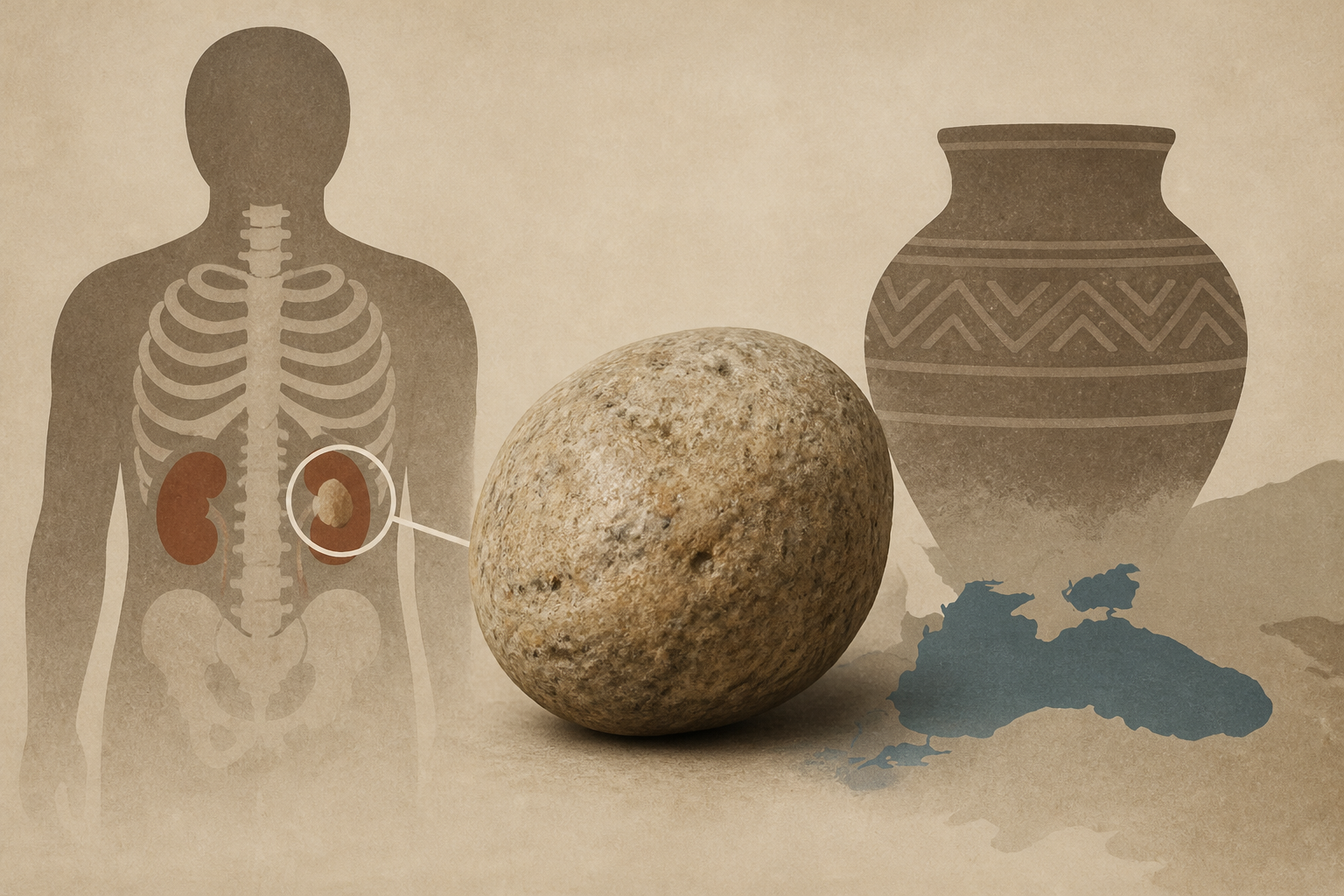
5,300-year-old kidney stone the size of a grape found in Bronze Age man's burial near Black Sea
Live Science • • health
Key Points:
- A Bronze Age man buried near the Black Sea around 5,300 years ago likely suffered from a chronic urinary tract infection (UTI), as evidenced by a grape-sized kidney or bladder stone found in his burial.
- Analysis of the stone revealed the presence of whitlockite, a rare calcium salt associated with bacterial infections, supporting the conclusion that the man had a long-term urogenital infection.
- The man’s skeleton showed signs of a physically demanding life with multiple healed fractures and degenerative joint disease, consistent with the labor-intensive lifestyle of Early Bronze Age steppe societies.
- The urinary tract stone would have caused considerable pain and discomfort, potentially impacting his quality of life, though it remains unclear if it contributed directly to his death.
- Researchers suggest that complications from the stone, such as obstruction or secondary infections, could have been fatal in the absence of modern antibiotics.


