AI Generated Image
6 Things That Can Happen When You Start Eating More Protein
Health: Trusted and Empathetic Health and Wellness Information • • health
Key Points:
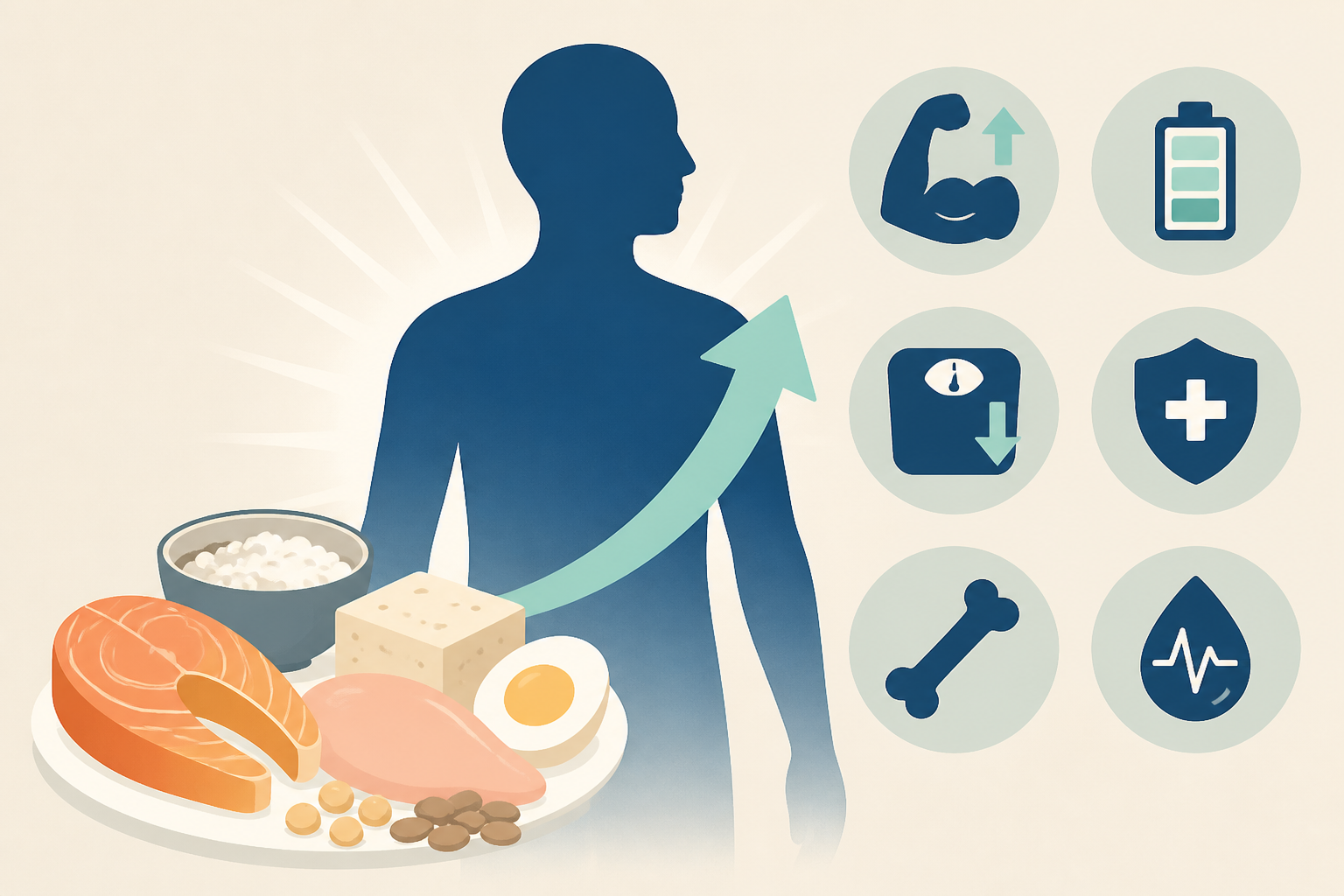
- High-protein diets can increase the release of appetite-regulating hormones, leading to longer-lasting feelings of fullness, potentially due to slower gastric emptying and the fat content of protein.
- Protein digestion requires more energy than carbohydrates or fats, providing a temporary boost to metabolism, although this effect diminishes over time unless protein intake remains very high.
- Protein intake supports muscle repair and growth by stimulating muscle protein synthesis, especially within 24-48 hours post-exercise, enhancing recovery, reducing soreness, and improving performance.
- Significant changes in body composition from high-protein diets typically require consistent resistance training, as muscle growth depends on repeated muscle breakdown and rebuilding over months.
- Increased protein consumption can affect digestion and the gut microbiome, sometimes causing constipation, and places additional workload on the kidneys, with recommended protein intake limits varying by activity level.


