AI Image
A 1,600-Year-Old Baby Had a Single Eye Socket. Ancient DNA Finally Revealed Why
ZME Science • • world
Key Points:
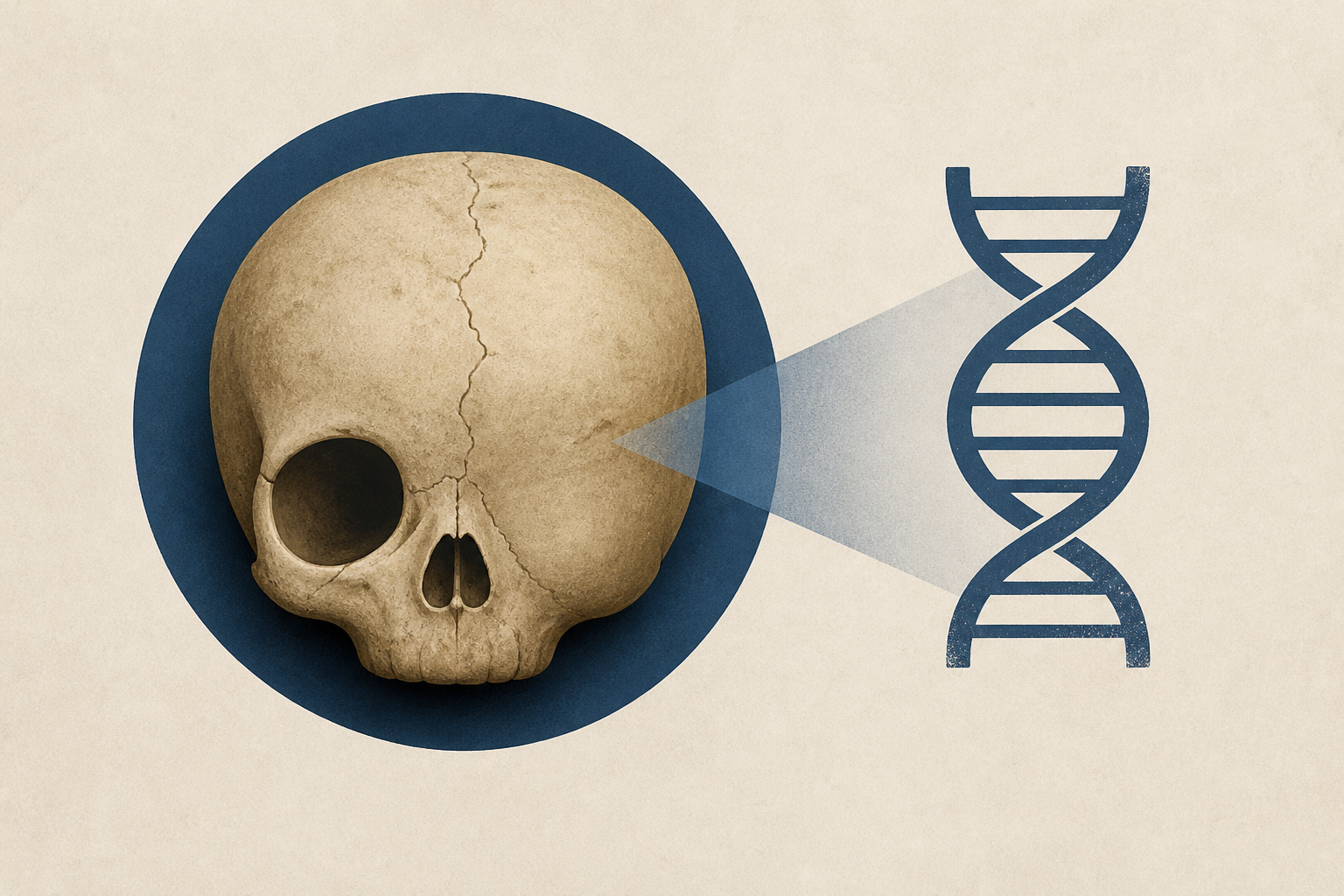
- Archaeologists uncovered the remains of a 1,600-year-old Nasca infant in Peru with cyclopia, a rare and typically fatal birth defect characterized by a single central eye socket and severe facial abnormalities.
- Genetic analysis revealed the infant had trisomy 13 (Patau syndrome), a chromosomal disorder causing severe brain and facial malformations, explaining the cyclopia condition.
- The infant's teeth suggested she may have lived for two to four months, but her skeletal development resembled that of a newborn, leaving uncertainty about her survival duration after birth.
- Burial practices indicate the Nasca community treated the infant similarly to other children, with no special funerary treatment despite her severe disability, suggesting inclusion in societal burial traditions.
- This discovery adds to growing evidence that ancient cultures sometimes cared for and buried children with severe genetic conditions, providing insights into early human responses to disability.


