AI Generated Image
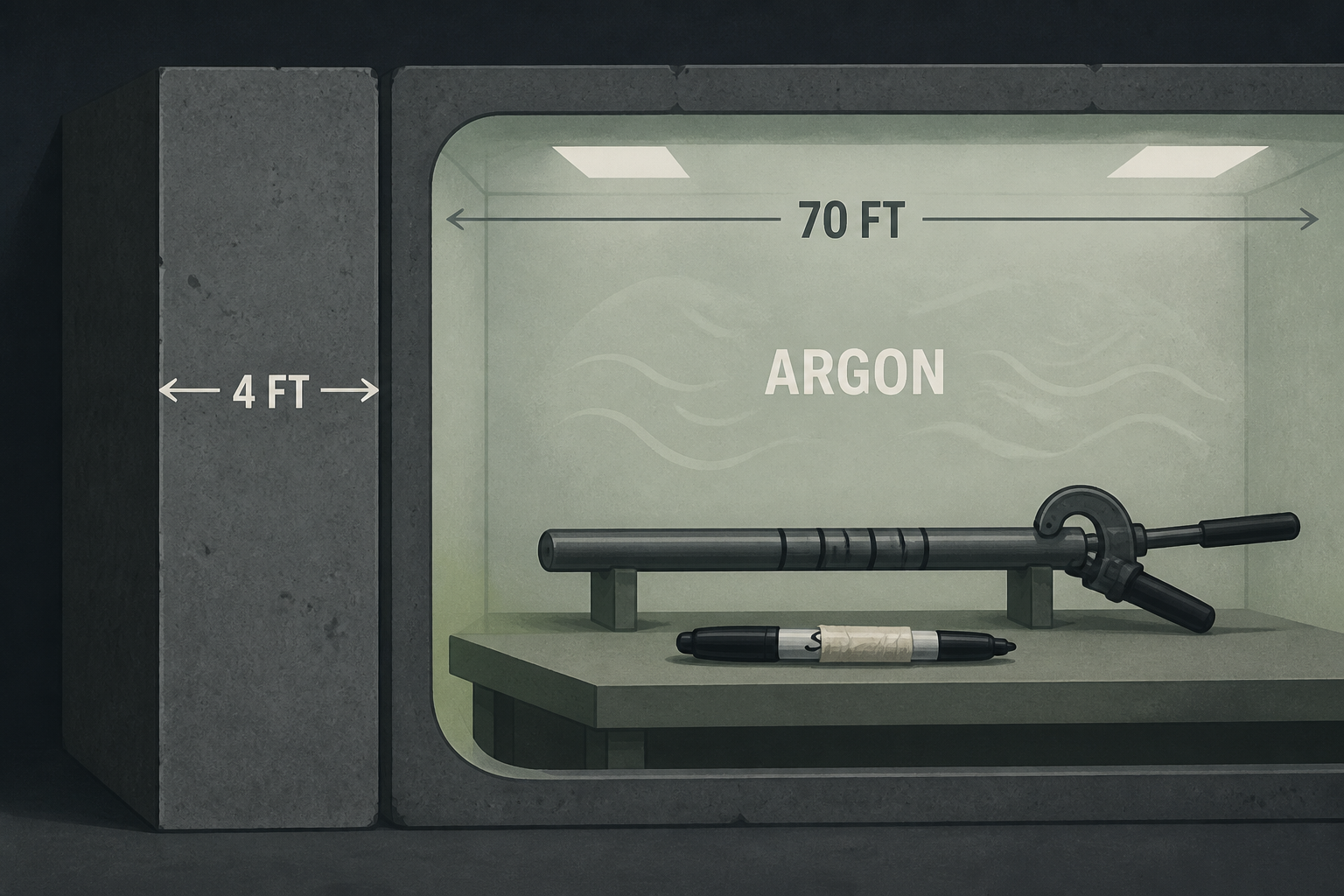
A 70-foot room in Idaho full of argon, behind four feet of concrete, is where America cuts open used fuel rods, the cuts get marked with a Sharpie wrapped in tape, a plumber’s pipe cutter does the rou
Autonocion.com • • business
Key Points:
- The Hot Fuel Examination Facility (HFEF) at Idaho National Laboratory, operational since 1975, was designated a Nuclear Historic Landmark in August 2024 and remains highly active with a full schedule of fuel examination work.
- HFEF is the largest inert atmosphere hot cell in the U.S., using argon gas and heavy shielding to safely handle and analyze irradiated nuclear fuel rods remotely through manipulators behind leaded glass.
- The facility supports critical nuclear research, including post-irradiation examination, sodium loop experiments at the transient test reactor TREAT, and handling of next-generation fuels from commercial reactors.
- Underneath HFEF is the Neutron Radiography Reactor (NRAD), a 250-kilowatt reactor that provides neutron imaging to inspect fuel rods non-destructively and supports new microreactor testing.
- A major upcoming task involves receiving and opening a large dry storage cask containing 32 high-burnup fuel assemblies from Virginia's North Anna plant, expected around 2027, requiring HFEF's unique capabilities to handle the heavy, instrumented cask.


