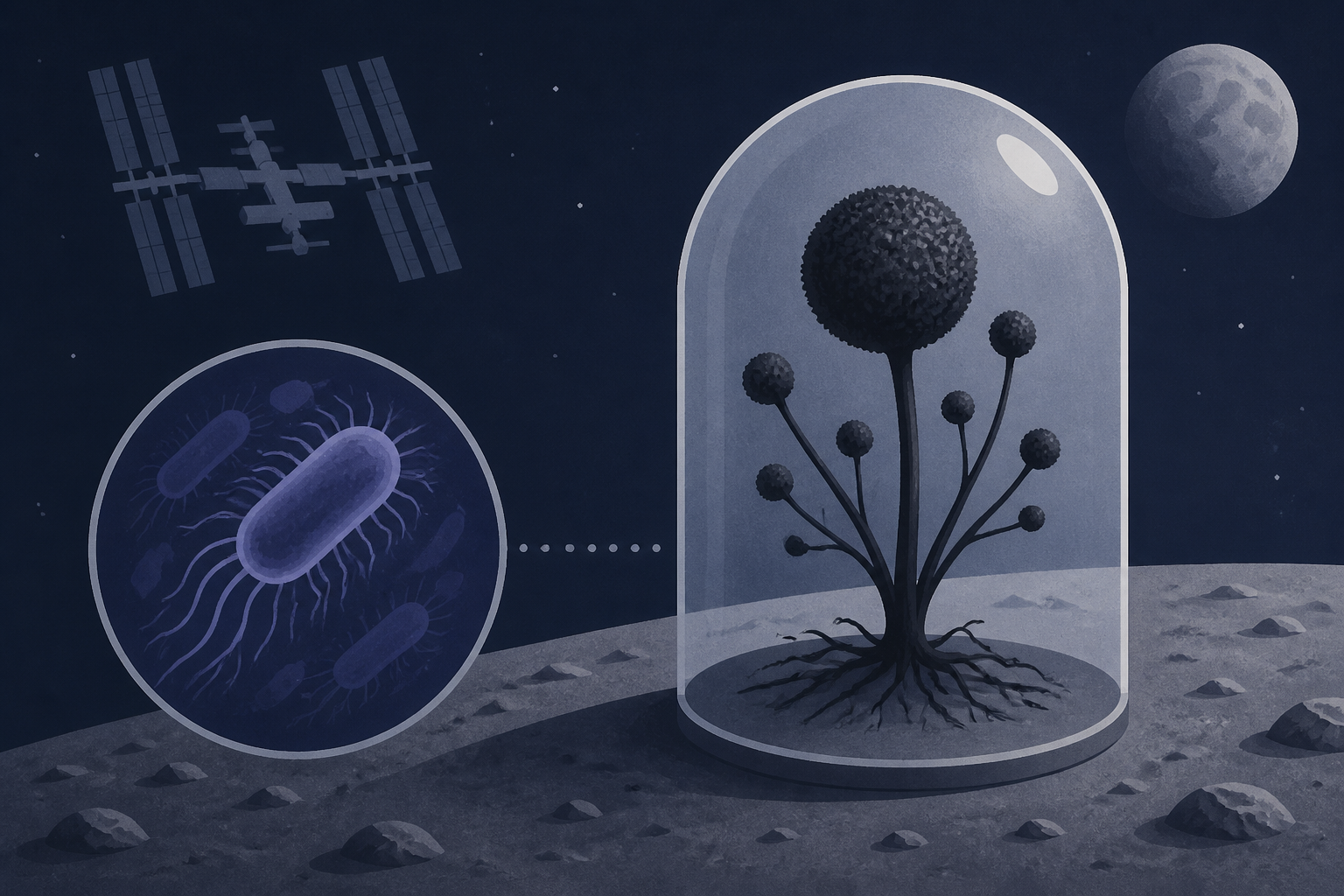
AI Generated Image
A black fungus that thrives in damp bathrooms and has been found aboard the ISS was the toughest organism in NASA's new Moon-survival study — even outperforming a bacterium famous for being one of the
Space Daily • • science
Key Points:
- A NASA-led study published in August 2026 identified small niches near the lunar south pole where Earth-origin microbes, especially the fungus Aspergillus niger, could remain viable for days despite harsh lunar conditions.
- Aspergillus niger showed the highest resistance to ultraviolet radiation among tested organisms, surpassing even Deinococcus radiodurans, known for its exceptional radiation tolerance.
- The study combined laboratory data with detailed lunar topography and illumination models to predict survival zones but emphasized that these microbes would remain dormant and not grow or reproduce on the Moon.
- Shadows cast by lunar terrain features create microhabitats with reduced ultraviolet exposure, allowing spores to potentially survive for up to a week in certain permanently shadowed regions near candidate exploration sites.
- While microbial survival poses no risk of lunar colonization, it raises concerns about contamination that could confound scientific investigations of the Moon’s pristine environment, highlighting the need for strict planetary protection measures and controlled microbial experiments.


