AI Generated Image
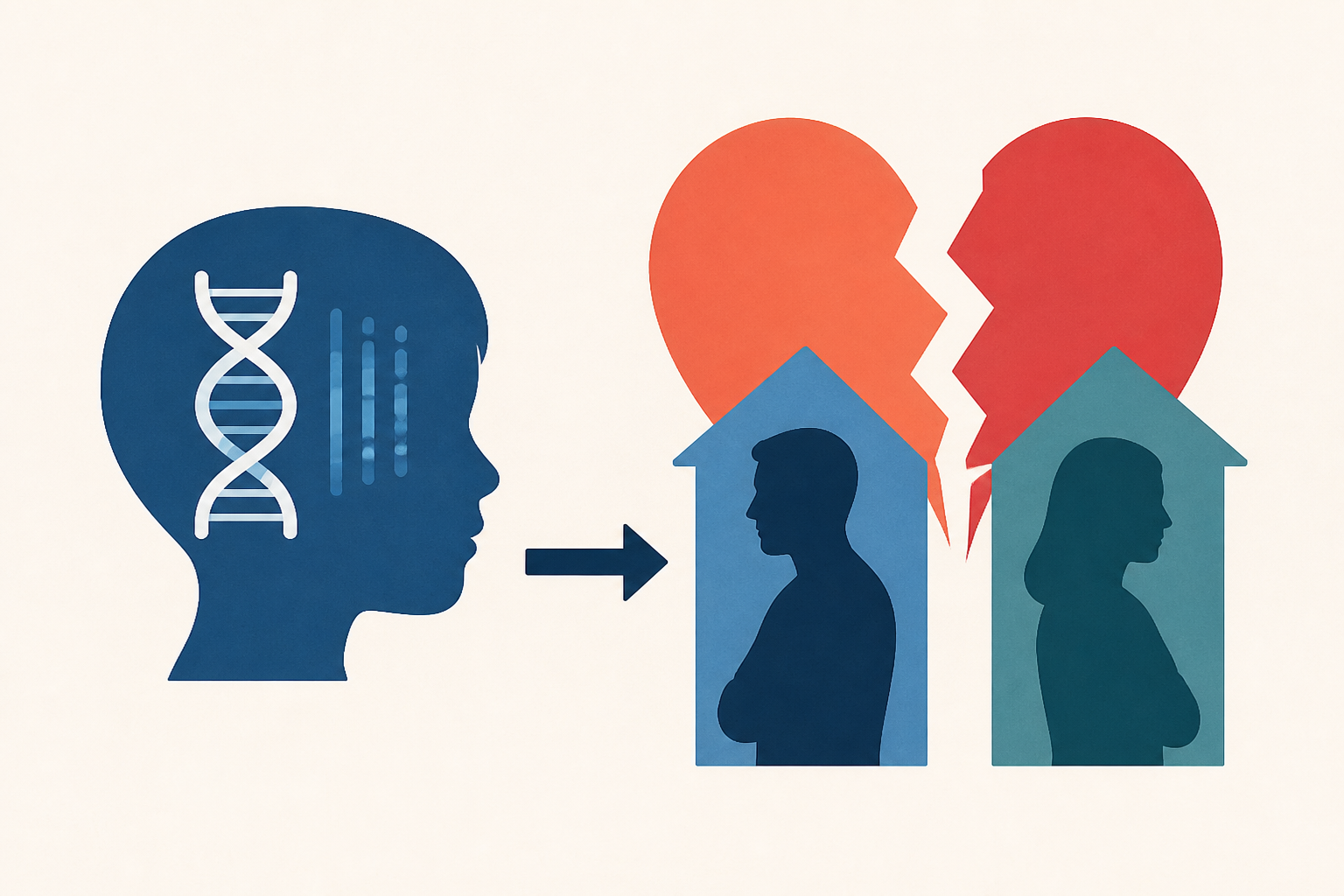
A child's genetic profile for ADHD can predict their parents' risk of separation
PsyPost • • health
Key Points:
- New research published in PNAS finds that children with a higher polygenic index for ADHD are more likely to have parents who separate or divorce, indicating that children's inherited traits can influence parental life decisions.
- The study analyzed genetic and administrative data from 40,000 Norwegian family trios, controlling for parental genetics, and found that increased genetic risk for ADHD in children predicted a 7% relative increase in parental partnership dissolution.
- The effect was more pronounced in families with daughters, where a one standard deviation increase in the ADHD polygenic index corresponded to an 11% increase in parental separation odds, possibly due to underdiagnosed ADHD symptoms in girls.
- Socioeconomic status and maternal age also moderated outcomes: higher-educated families showed a 15% increase in separation risk with higher child ADHD genetic risk, while older maternal age was linked to increased separation risk and, separately, a higher child anxiety index predicted increased parental marriage likelihood.
- The study's findings are limited by its Norwegian context, sample biases toward higher socioeconomic status, and the constraints of polygenic indices derived from European-ancestry populations, which may affect generalizability and predictive accuracy.


