AI Image
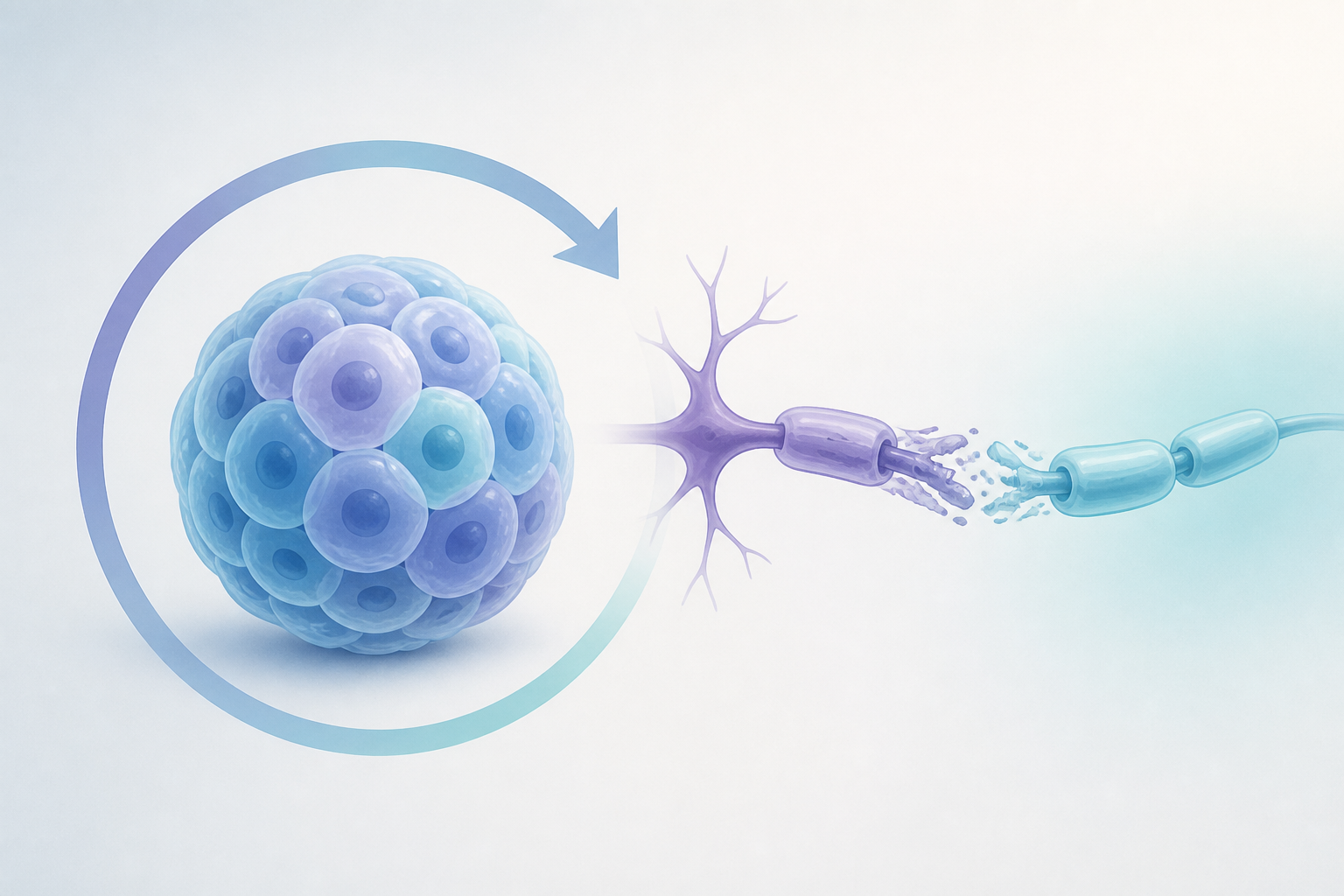
A human-induced pluripotent stem cell-derived spheroid model to investigate myelin injury and repair
Nature • • health
Key Points:
- Researchers engineered iPSC-derived CNS spheroids enriched with mature myelinating oligodendrocytes and functional microglia by seeding separately differentiated iPSC-derived macrophage-like precursor cells, which matured into microglia within the spheroids, mimicking early CNS development.
- LPC treatment induced significant myelin fragmentation and demyelination in spheroids without causing overt microglial activation; microglia responded by phagocytosing myelin debris, confirmed via colocalization studies and electron microscopy.
- Single-cell RNA sequencing 24 hours post-LPC revealed gene expression changes in oligodendrocytes, OPCs, and microglia that closely mirror those observed in human MS lesions, validating the spheroid model's relevance for studying MS pathology.
- Following LPC-induced demyelination, OPCs proliferated and differentiated into new myelinating oligodendrocytes, forming compact myelin sheaths over weeks, as demonstrated by EdU incorporation, immunostaining, and electron microscopy.
- Treatment with the remyelinating drug clemastine fumarate after LPC exposure significantly enhanced the generation of new myelinating oligodendrocytes in spheroids, highlighting the model's utility for therapeutic screening.


