AI Image
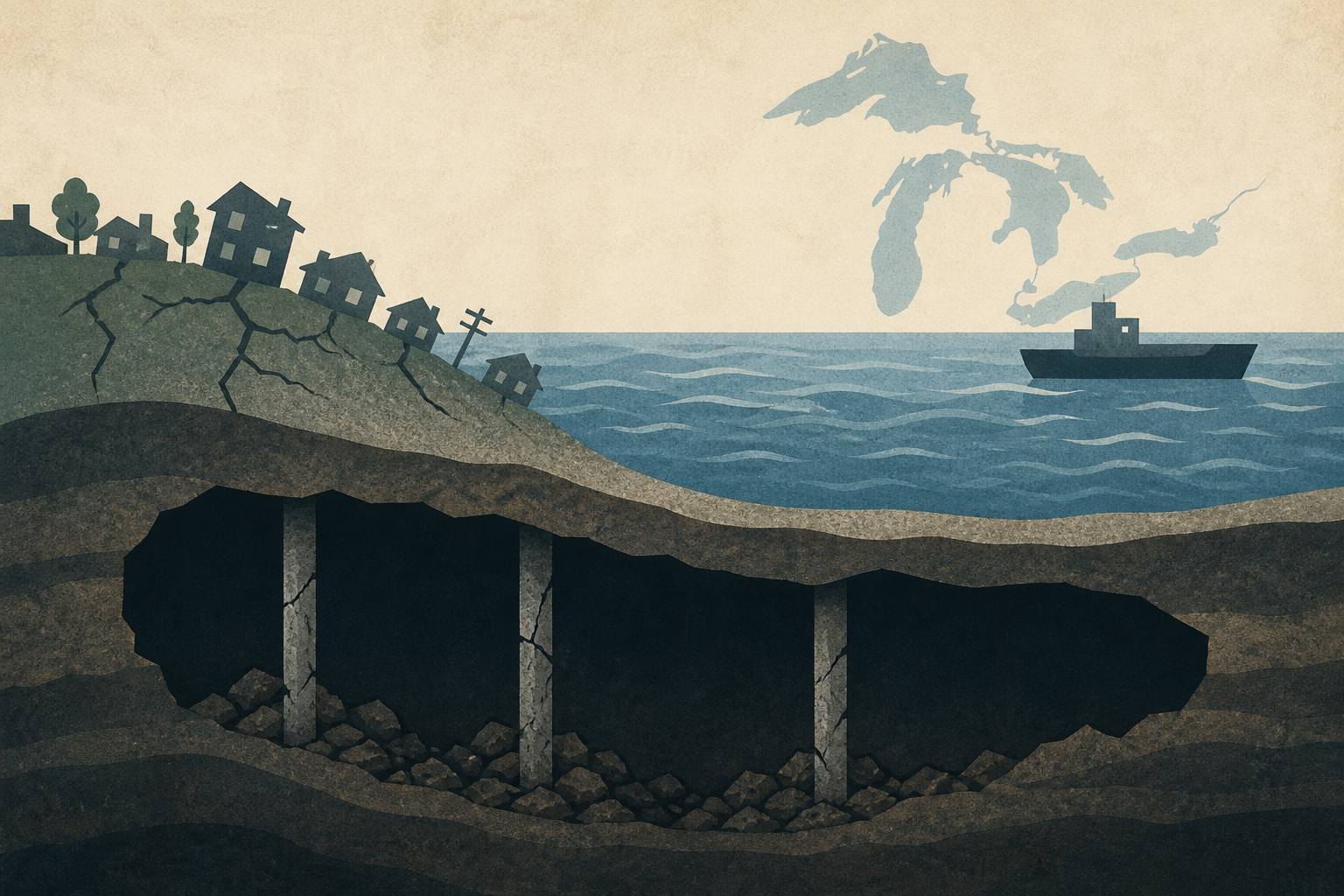
A lake drained. Neighborhoods sank. What mine disasters around the world reveal as Morton Salt investigates beneath Lake Erie.
Cleveland.com • • business
Key Points:
- Morton Salt’s mine near Lake Erie was evacuated on October 22 due to a significant water inflow about 2,000 feet underground, halting operations and raising concerns about the water’s source, volume, and containment.
- Past salt mine disasters in Louisiana (1980), New York (1994), Brazil, and Romania illustrate varied consequences of water intrusion, including ground subsidence, sinkholes, environmental contamination, and prolonged damage even after mining stops.
- Experts highlight that incoming water can dissolve salt and enlarge underground breaches, complicating containment efforts, but geological differences mean each incident’s outcome is unique and not directly predictive of Morton’s situation.
- Ohio officials currently report no immediate threat to Lake Erie’s ecosystem or drinking water, and ongoing federal investigations aim to assess mine safety before resuming operations.
- Satellite monitoring and ground measurements from other cases emphasize the importance of early detection of underground instability, as significant ground deformation may occur long before visible surface damage appears.


