AI Image
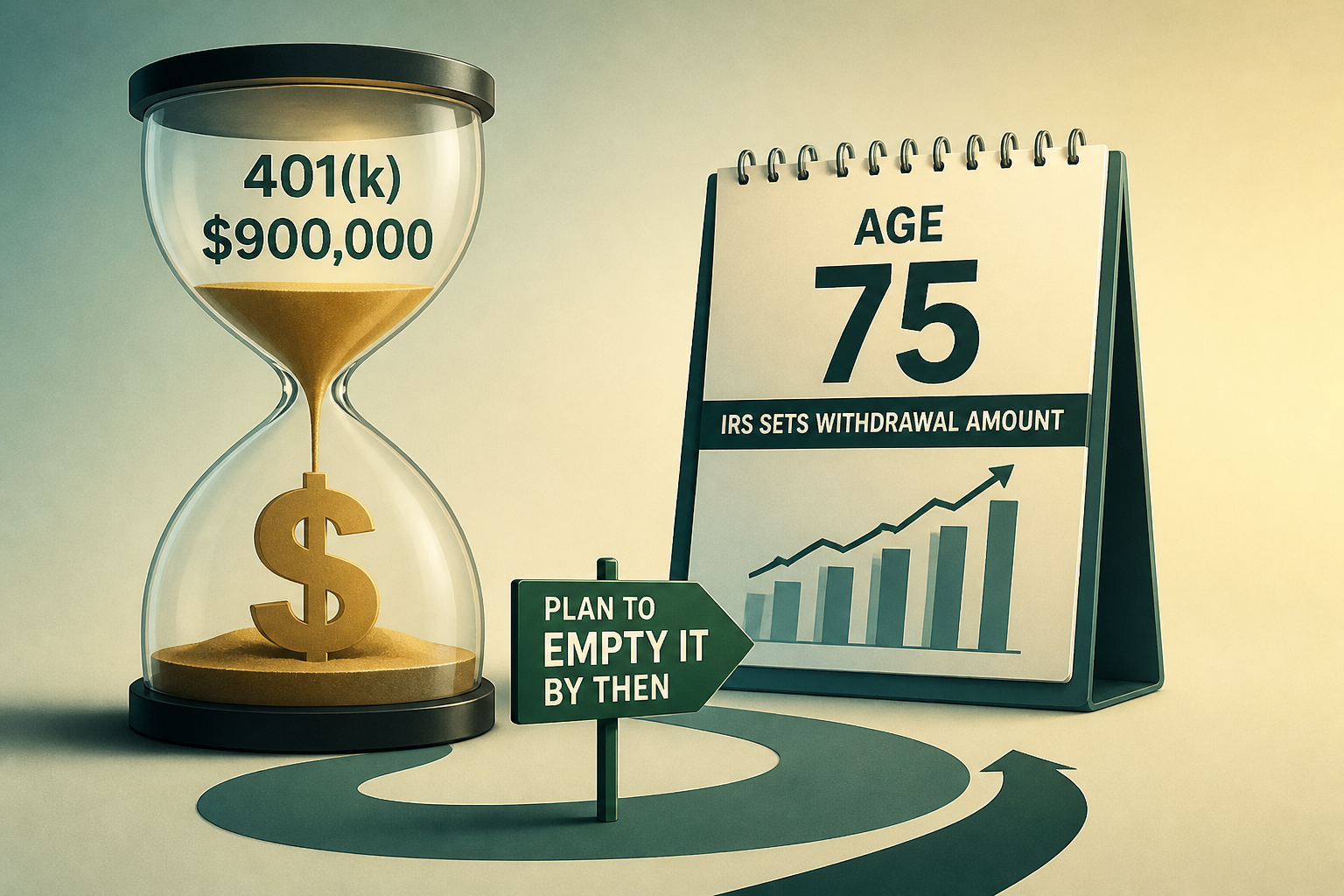
At 75, the IRS Will Set the Withdrawal Amount on a $900,000 401(k). Affluent Investors Over 60 Are Making Sure It's Empty by Then
24/7 Wall St. • • business
Key Points:
- Individuals born in 1960 or later must begin required minimum distributions (RMDs) from traditional 401(k)s at age 75, with penalties for missed withdrawals, while Roth IRAs do not have RMDs during the owner's lifetime.
- A 62-year-old with $900,000 in a 401(k) aiming to empty the account by 75 would need to withdraw about $91,250 annually, incurring an effective federal tax rate near 7%, which is lower than potential future rates.
- Leaving the account untouched until 75 could lead to higher tax burdens, especially when combined with Social Security benefits, potentially resulting in an effective marginal tax rate around 41% due to benefit taxation and Medicare surcharges.
- Converting portions of the 401(k) to a Roth IRA starting at age 62 can minimize future tax and Medicare premium impacts because Medicare uses income from two years prior to set premiums, creating a strategic window for conversions.
- Key retirement planning steps include calculating the annual withdrawal needed to avoid RMD penalties, managing conversions to stay within favorable tax brackets and Medicare thresholds, and paying conversion taxes with non-retirement funds to maximize Roth growth benefits.


