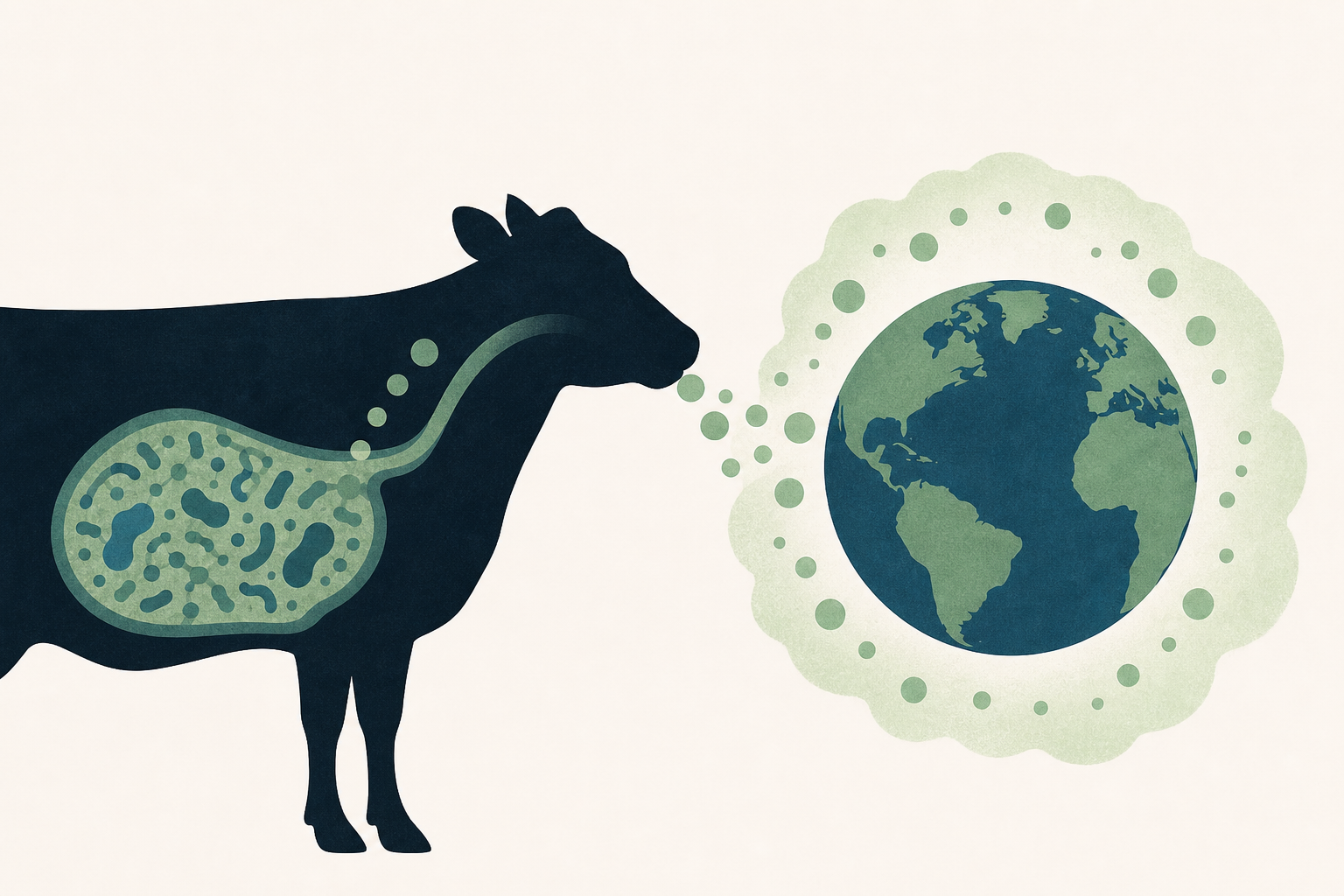
AI Generated Image
A New Way That a Cow’s Inner World Shapes Earth’s Atmosphere
Quanta Magazine • • general
Key Points:
- Cows’ rumens host a complex microbial ecosystem where ciliates, large single-celled predators, produce hydrogen gas via a newly discovered organelle called the hydrogenobody, fueling methane-producing methanogens.
- Methane from ruminant livestock accounts for about one-third of atmospheric methane, contributing roughly 30% to global temperature rise over 150 years, but methane decays faster than CO2, making it a key target for climate mitigation.
- A 2026 Science study sequenced 450 rumen ciliate genomes, revealing diverse hydrogenases localized in hydrogenobodies on ciliates’ membranes, linking these organelles to methane emissions and highlighting isotrich ciliates as major methane contributors.
- Targeting ciliates or their hydrogenobodies offers new strategies to reduce livestock methane, potentially improving the efficacy of feed additives like Bovaer and enabling more precise methane mitigation without disrupting rumen digestion.
- Despite advances, gaps remain in understanding the full biochemical and ecological pathways of methane production in the rumen, with diet and microbial interactions needing further study to optimize mitigation efforts.


