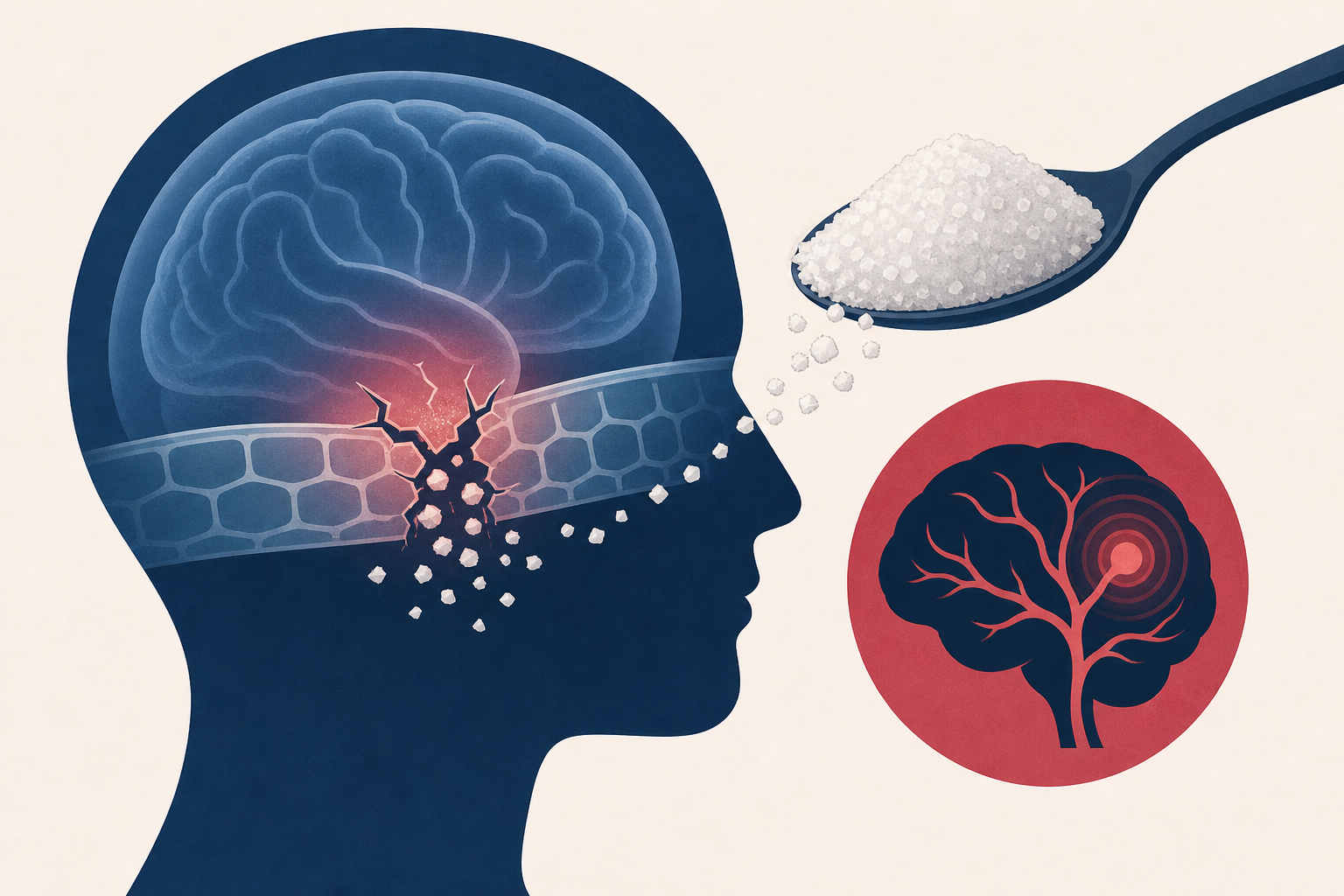
AI Generated Image
One Common Sweetener May Increase Stroke Risk by Damaging The Brain's Protective Barrier
ScienceAlert • • health
Key Points:
- Researchers from the University of Colorado, Boulder found that erythritol, a common artificial sweetener, damages brain endothelial cells that form the blood-brain barrier, potentially increasing stroke risk.
- Erythritol exposure in lab-grown cells reduced nitric oxide production (which relaxes blood vessels) and increased endothelin-1 (which constricts vessels), impairing blood flow and clot breakdown.
- These cellular effects may explain previous epidemiological links between higher erythritol levels and greater risk of ischemic stroke and possibly heart attack, though this study focused only on brain cells.
- The study was conducted in vitro, so real-world implications remain uncertain; the human body also naturally produces erythritol, complicating direct conclusions about dietary intake.
- Researchers recommend caution in erythritol consumption and call for further clinical studies to assess its long-term health effects, challenging the notion that non-nutritive sweeteners are completely safe.


