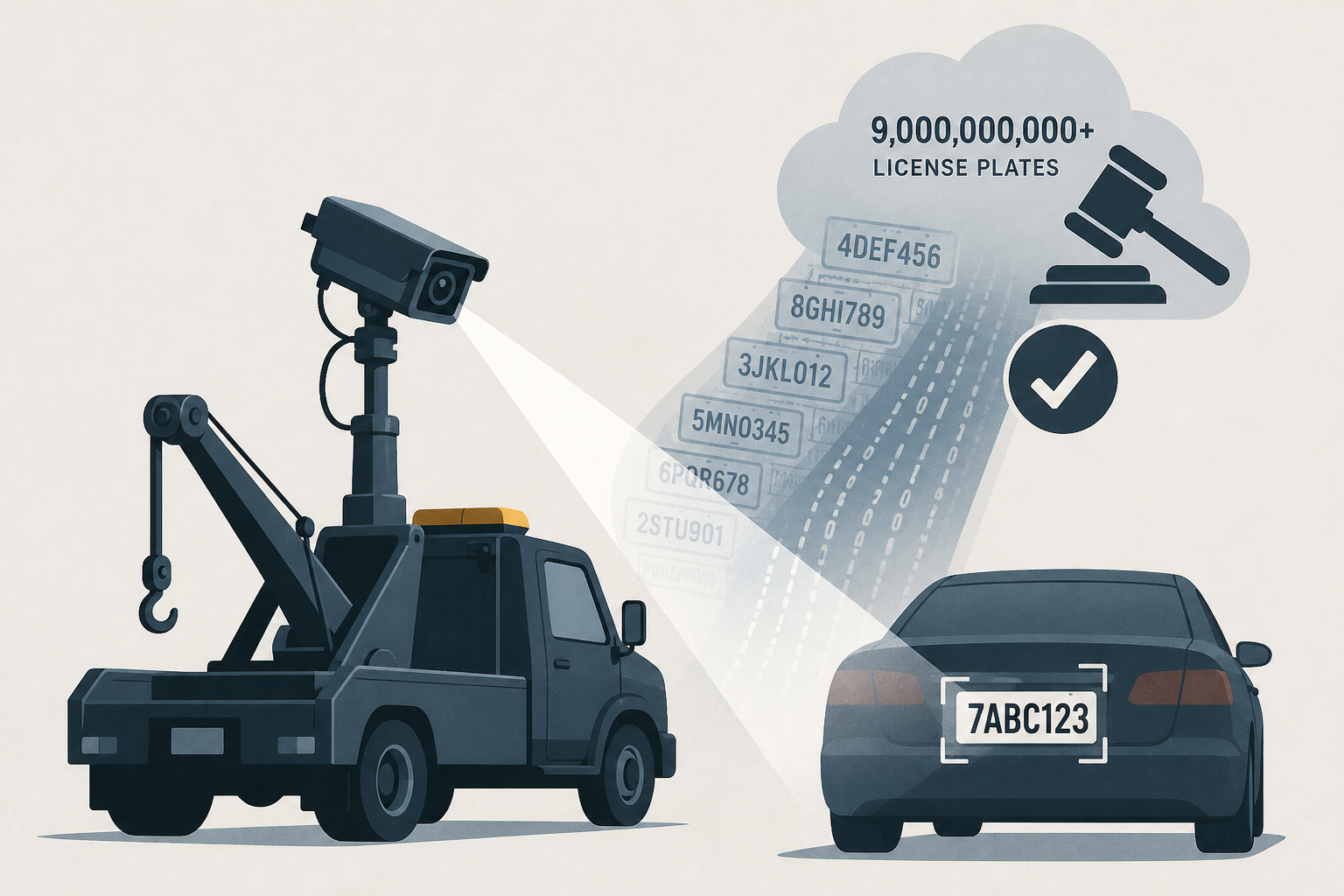
AI Generated Image
A Private Surveillance Network Built on Tow Trucks Has Scanned 9 Billion License Plates. California Courts Just Said That's Fine
Yahoo • • business
Key Points:
- A California Court of Appeal ruling upheld a decision that a driver, Guillermo Mata, lacked legal standing to sue Digital Recognition Network (DRN) for collecting his license plate data without harm, despite over fifteen scans of his plates over several years.
- California's 2015 Automated License Plate Recognition (ALPR) law, intended to regulate license plate surveillance, imposes minimal restrictions on private companies like DRN, allowing them to collect, store, and monetize vast amounts of vehicle location data with few limitations.
- DRN and similar companies often mount plate-scanning cameras on tow trucks and repossession vehicles, building massive private databases—over nine billion images—without the knowledge or consent of the vehicle owners.
- Courts require plaintiffs to prove concrete harm, such as stalking or identity theft, from data misuse to have standing, effectively preventing lawsuits based solely on the invasion of privacy from being tracked and stored in these databases.
- While government use of ALPR faces increasing scrutiny and restrictions, private sector surveillance continues largely unchecked, raising concerns about accountability, data security, and the commercialization of individuals' location histories without warrants or consent.


