AI Image
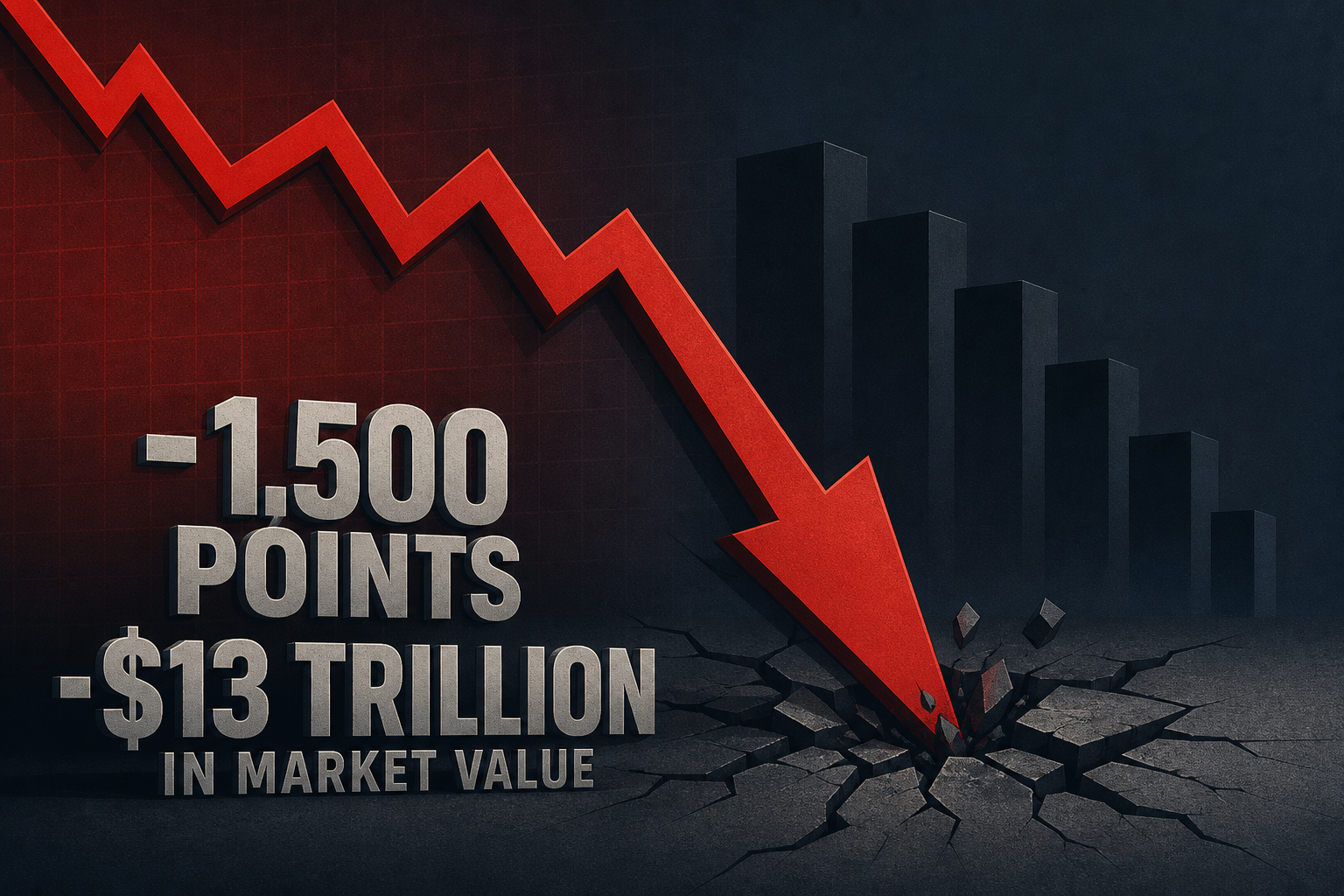
A Repeat Of 'Black Monday' Would Send The S&P 500 Down More Than 1,500 Points And Wipe Out More Than $13 Trillion In Stock Market Value
24/7 Wall St. • • business
Key Points:
- On the 39th anniversary of the 1987 Black Monday crash, the S&P 500 and Nasdaq experienced their worst week since June 2026, with the S&P 500 down 1.1% and Nasdaq down 2.1%, while the Dow fell 0.3%.
- Applying the 1987 crash's percentage declines to current levels would imply a massive drop of about 1,568 points for the S&P 500 and 11,750 points for the Dow, equating to approximately $14 trillion in market value lost, though this is purely hypothetical arithmetic, not a forecast.
- The 1987 crash was triggered by factors like tax legislation concerns, trade deficits, overvalued stocks, and portfolio insurance-driven program trading, with the Federal Reserve intervening quickly to provide liquidity and stabilize markets.
- Modern market safeguards such as circuit breakers now limit the potential for a single-day crash of 1987 magnitude by halting trading after specific percentage declines to prevent panic selling.
- Investor sentiment is cautious amid AI sector concerns, with some strategists warning of a potential bubble burst in AI stocks by 2027-2028, while others remain optimistic about earnings growth; upcoming earnings reports and AI capital spending will be key indicators to watch.


