AI Image
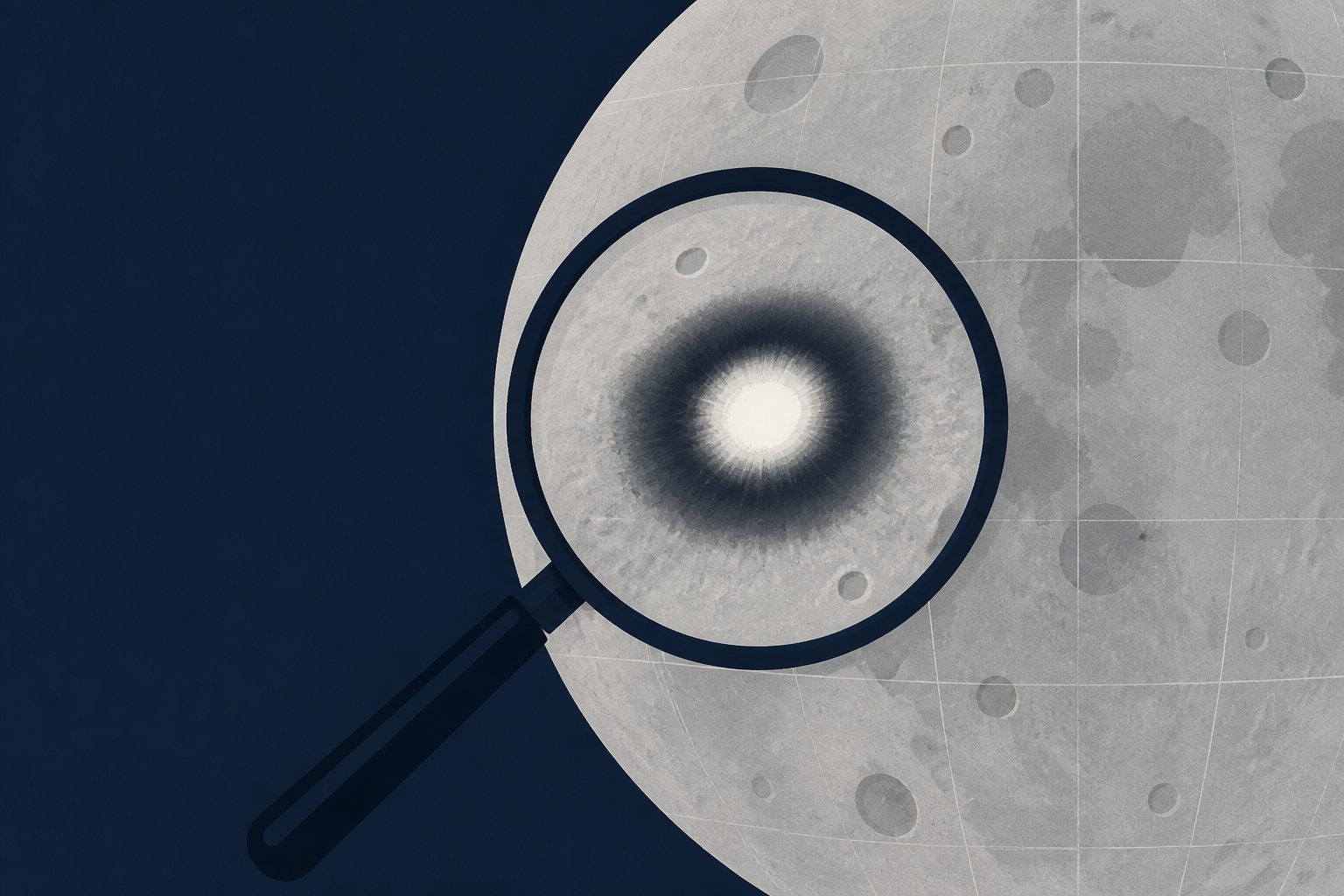
A routine quality check on a Moon map turned up a bright spot ringed by a dark halo, and it marked a 222-metre crater that did not exist before spring 2024, the largest newly formed crater yet found a
Space Daily • • general
Key Points:
- On 24 October 2025, Robert Wagner discovered the largest newly formed lunar impact crater, named McGetchin, measuring 222 meters wide on the Moon's eastern near side, formed between April and May 2024.
- The impact released energy estimated at 6.5 x 10^10 kilojoules, significantly exceeding previous records, and created a 43-meter-deep crater with a distinctive lopsided rim due to varying subsurface materials.
- The Lunar Reconnaissance Orbiter's Wide-Angle Camera detected a bright halo and extensive ejecta blanket around the crater, with disturbance effects reaching up to 140 kilometers away, indicating a powerful and unusual impact event.
- Thermal observations revealed a seven-kilometer-wide cold spot around McGetchin, caused by decompacted lunar soil that cools more rapidly at night; such cold spots are common around fresh craters but fade over tens of thousands to millions of years.
- McGetchin is the largest crater observed forming during the 17-year orbital imaging archive, offering a rare opportunity to study fresh impact effects and crater aging processes on the Moon, with future in-situ exploration suggested to better understand surface changes.


