AI Generated Image
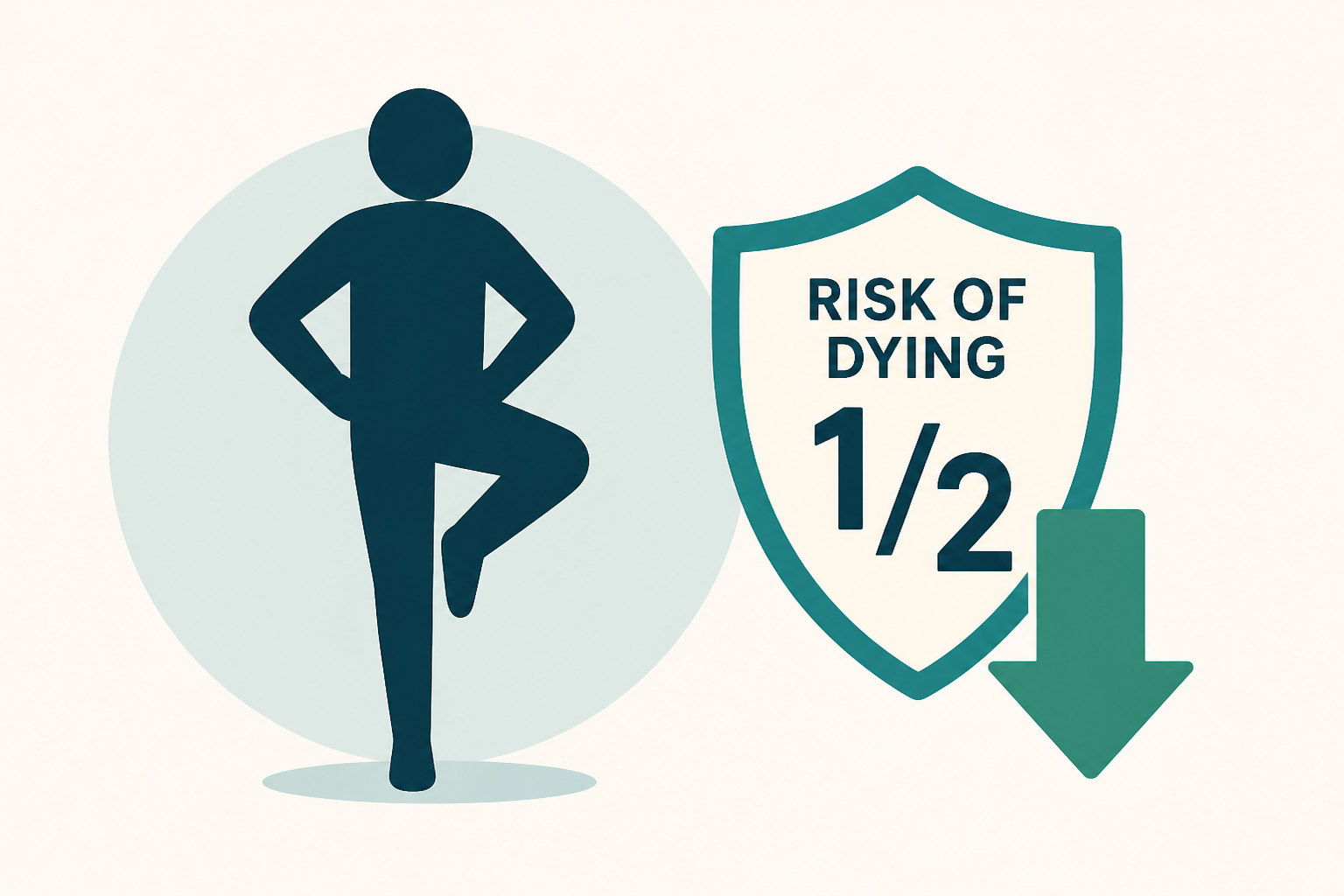
Acing a one-leg test could cut your risk of dying in half
New York Post • • health
Key Points:
- A study involving over 13,000 adults aged 65+ in Taiwan found that better performance on simple physical fitness tests, especially those assessing balance and agility, is linked to significantly lower mortality risk over seven years.
- The "8-foot up-and-go" test, measuring balance and agility, was the strongest predictor, with top performers having a 59% lower risk of death compared to the lowest scorers; the one-leg balance test also showed a 50% mortality risk reduction for top scorers.
- Lower-body strength, assessed by chair stands, and heart and lung endurance, measured by a two-minute step test, were also strongly associated with reduced mortality, while increased flexibility beyond a moderate range did not confer additional longevity benefits.
- The study revealed sex differences: balance and agility were most important for men’s longevity, while for women, lower-body strength was equally crucial, likely due to higher osteoporosis prevalence impacting bone health.
- Researchers recommend incorporating these simple, at-home fitness assessments into routine medical checkups to help identify older adults at higher risk of physical decline and guide targeted interventions to maintain independence and reduce fall risk.


