AI Image
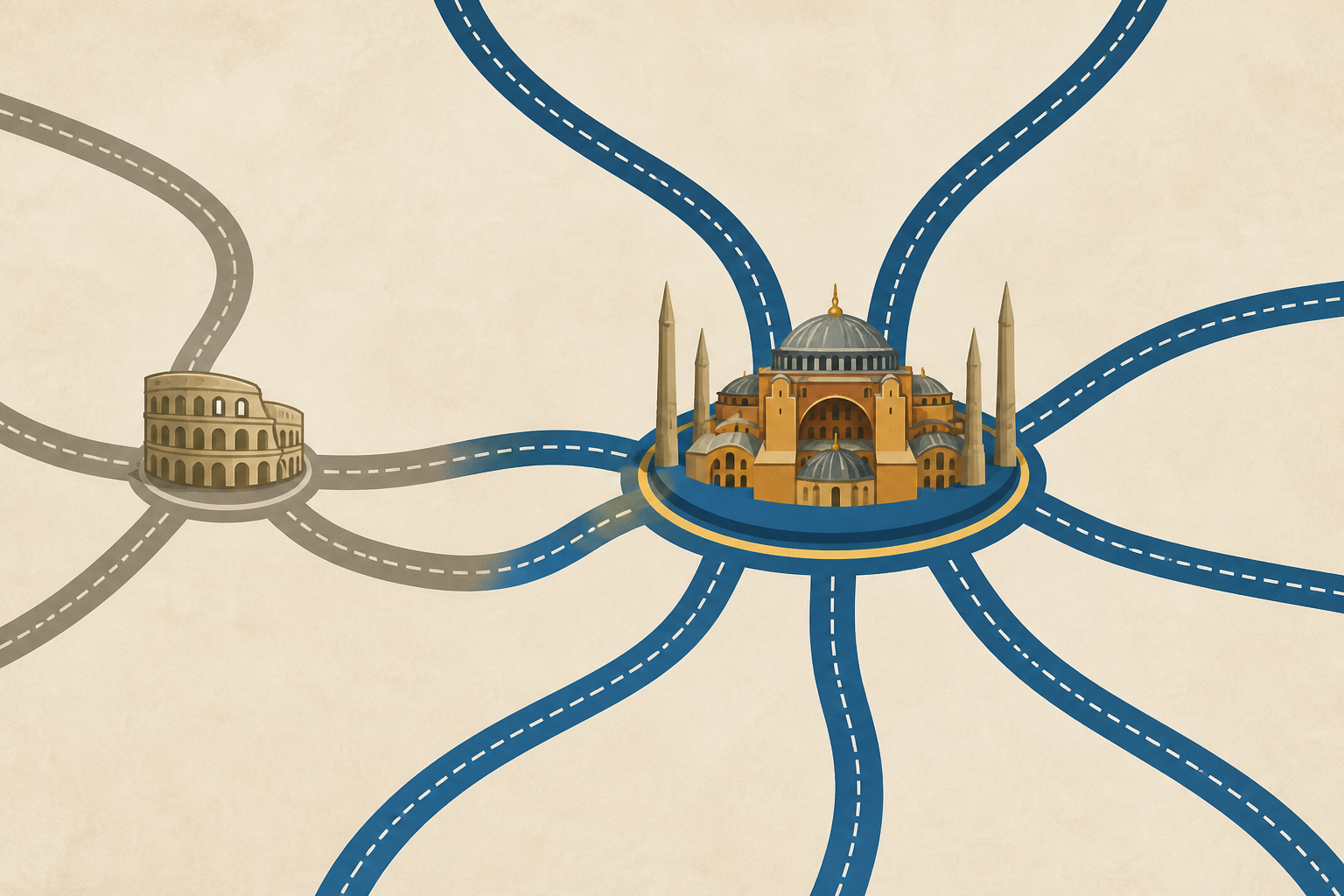
'All roads lead to Rome'? New study says Constantinople was the hub instead
Fox News • • world
Key Points:
- A new study analyzing 190,000 miles of Roman roads challenges the saying "All roads lead to Rome," revealing that provincial capitals, especially Constantinople, played central roles in the empire's road network.
- Constantinople became a major hub for overland travel after Emperor Constantine made it the imperial capital in the fourth century A.D., due to its strategic location between Europe and Asia.
- The proverb "All roads lead to Rome," which originated in the medieval period, should not be taken literally, as some Roman roads, such as those in Britain, did not lead to Rome.
- While Rome remained the political, military, and ideological center of the empire, the study highlights the importance of other cities and the primarily military purpose of Roman roads, which later supported economic activities.
- Despite the impressive engineering of Roman roads, maritime transportation was the main mode of connectivity and goods transport across the empire, being more cost-effective than overland routes.


