AI Image
What has happened since Trump killed US EV tax credits?
USA Today • • business
Key Points:
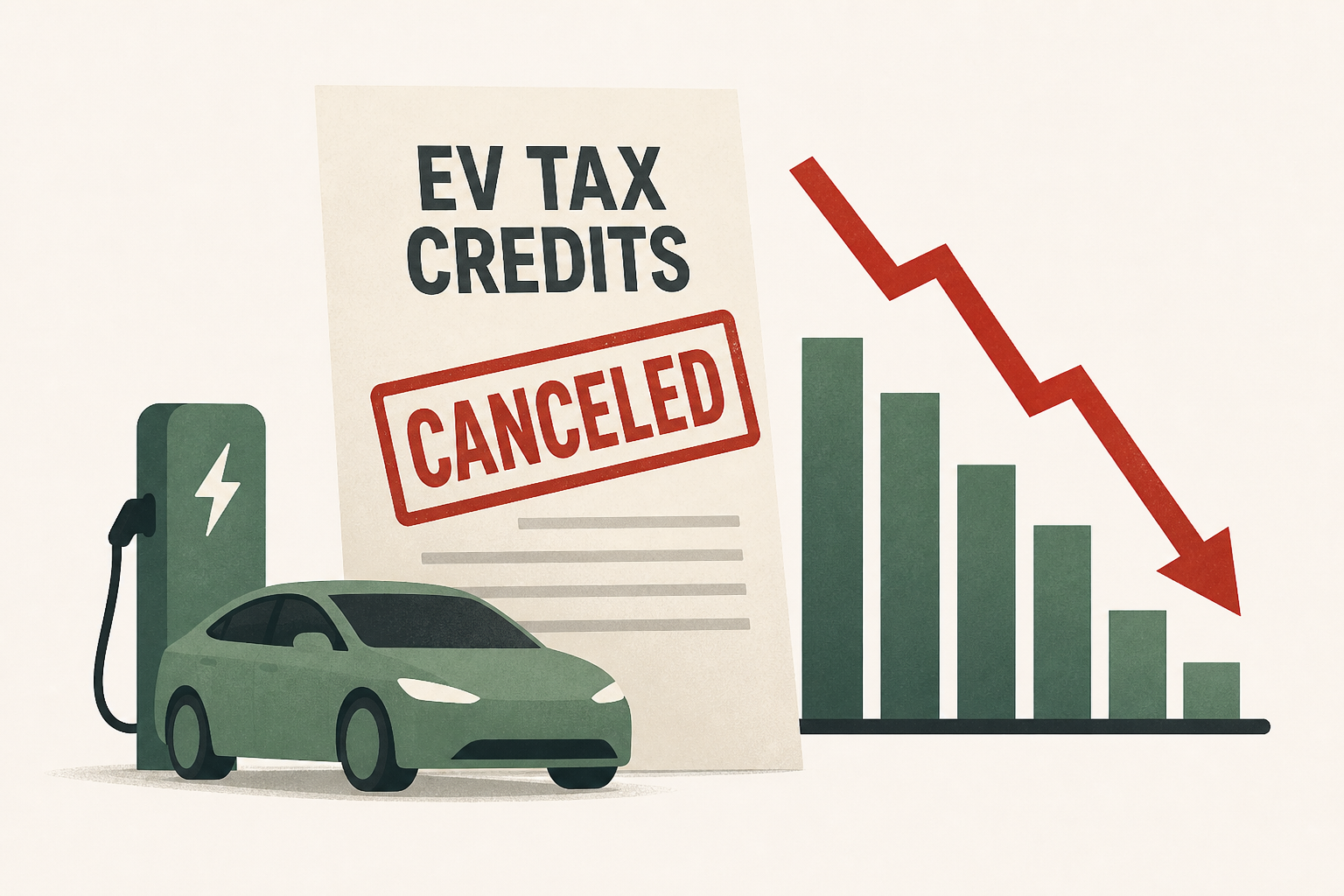
- The federal government's $7,500 EV tax credit was eliminated on September 30, 2025, leading to a nearly 24% decline in U.S. electric vehicle sales in the first half of 2026 compared to the same period in 2025.
- Following the tax credit expiration, several automakers scaled back EV production plans, with Ford transitioning its F-150 Lightning to a hybrid model, Honda canceling planned EV models, Lamborghini abandoning fully electric car plans, and Tesla planning to end production of Model S and Model X.
- Despite the downturn, EV sales showed a 14% increase in the second quarter of 2026 over the first quarter, aided by rising gas prices and state-level incentives like California's $3,750 instant rebate for first-time EV buyers.
- Market trends indicate a maturing EV sector with increased availability of lower-priced models and growing used EV inventory, while hybrid sales are forecasted to grow by approximately 9% in early 2026.
- Polling reveals that younger Americans (under 35) are significantly more likely to consider purchasing EVs within five years than older adults, with age now a stronger predictor of EV interest than political affiliation.


